dual-use
(13)
At LEAD, the goal is to get the boot
The Swedish incubator sends its graduates off with a golden shoe. Getting there means turning clever technology into something customers will pay for - a discipline now reaching NATO’s innovation network.
TheFactory wants to get your startup into the right room
The Oslo accelerator pairs founders with customers, mentors and early capital. Its next test: bringing that formula to defence and security, where a good pitch is only the beginning.

The VC Betting That Space Is an Earth Business
Sidney Nakahodo left the World Bank to fund rocket welders, orbital robots and satellite-data startups. His pitch to skeptics: the most useful thing about space is what it does for the planet you can already see out the window.
The Firm That Builds Companies From a CIA Playbook
Most venture firms wait for founders to walk in the door. Red Cell Partners writes the idea first, then goes hunting for the people to build it - a studio model borrowed straight from the intelligence community.
The Venture Fund Where the Partners Used to Run the Missions
New North Ventures backs founders building for both the Pentagon and the marketplace - a dual-use bet led by former intelligence operators and the entrepreneur who built Dyn.

The Recruiter and the Rocket Scientist Funding America's Hard Tech
A recruiter who once staffed early Snap and Tinder teamed up with a rocket engineer to fund the companies most VCs can't read a spec sheet for - and got the Space Force to sign first.

The VC Firm Where the Founders Salute First
Justin Nahama and three partners are betting that the discipline that runs toward gunfire also builds companies. Their first fund is oversubscribed, their portfolio has raised over $350 million, and a $50 million second fund is now open.
Bulzi, Inc.
Bulzi, Inc. (styled Bulzī, pronounced 'bulls-eye') is a dual-use technology company that uses edge-AI and Internet of Things (IoT) sensors to deliver situational awareness, security, and safety solutions. Originally built to measure out-of-home advertising audiences by passively detecting nearby mobile devices, Bulzi adapted its RF-sensing platform for defense and public-safety missions with roughly $2M in SBIR funding from the U.S. Air Force and Army. Its products span passive C5ISR sensing (SAFER), base access control (z-BASE), and medical-grade vital-signs monitoring (BioSCOUT), serving warfighters and first responders alongside commercial advertising customers.

ANELLO Photonics
ANELLO Photonics is a Santa Clara, California semiconductor and navigation company that builds SiPhOG, described as the world's smallest high-precision silicon photonic optical gyroscope. By shrinking fiber-optic-class gyroscope performance onto a chip, ANELLO delivers inertial measurement units (IMUs) and full inertial navigation systems (INS) that keep vehicles, drones, ships and robots positioned accurately when GPS/GNSS signals are jammed, spoofed or simply unavailable - across land, air and sea. Founded in 2018 by silicon-photonics pioneer Dr. Mario Paniccia and MEMS/inertial-sensor veteran Mike Horton, the company serves defense, maritime, aerospace, agriculture, construction, mining and autonomous-vehicle markets.
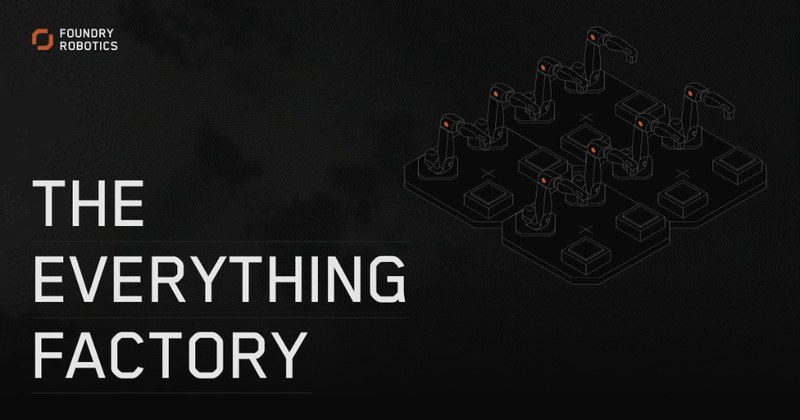
Foundry Robotics
Foundry Robotics is a San Francisco startup building 'The Everything Factory' - an AI-first, assembly-focused contract manufacturer that uses Vision-Language-Action (VLA) foundation models to run flexible robotic assembly cells. Instead of retooling a line for every new product, Foundry aims to let general-purpose robots switch between building drones, robot dogs, battery packs and satellite components on demand. Founded in 2025 by ex-Ghost Robotics and Scale AI robotics lead Adarsh Kulkarni, the company positions itself as a dual-use manufacturer serving both commercial customers and the U.S. Department of Defense, backed by a seed round led by Khosla Ventures and Garuda Ventures.
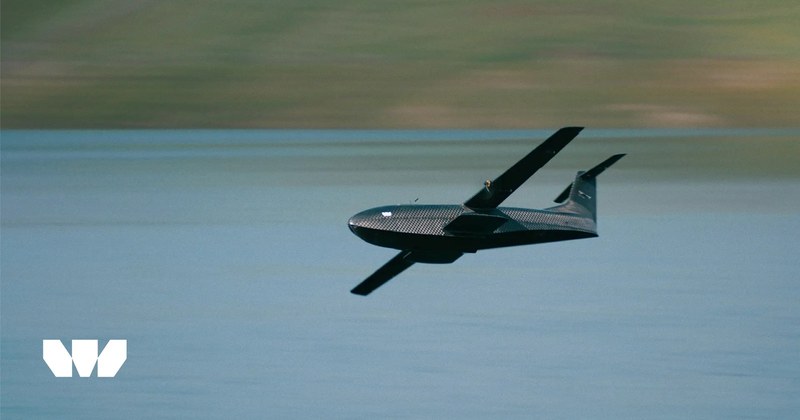
Poseidon Aerospace
Poseidon Aerospace is a San Francisco startup building unmanned cargo aircraft designed to move heavy loads to places without runways. Founded in 2024 by ex-Amazon engineer David Zagaynov and ex-Lockheed Martin engineer Parker Tenney, the company is developing two purpose-built autonomous platforms - Egret, a short takeoff and landing aircraft, and Heron, an amphibious seaplane - each engineered to carry up to two tons roughly 1,500 miles. Backed by an $11M seed round led by Tamarack Global, Poseidon aims to slash the cost-per-ton-mile of air logistics for both commercial feeder routes and contested military supply missions, with first full-scale flight tests targeted for mid-2026.
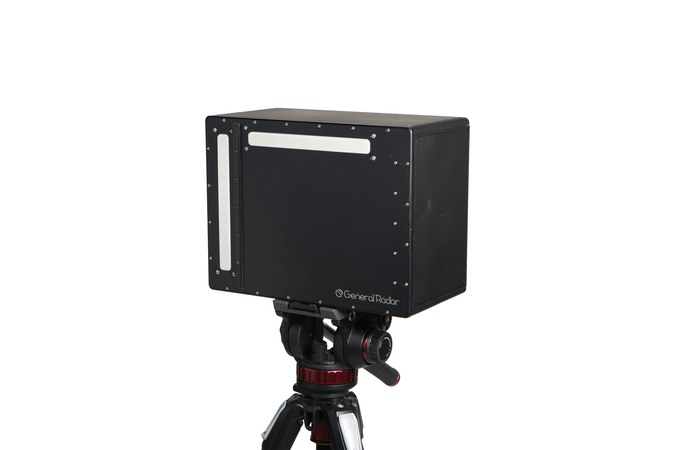
General Radar Corp.
General Radar Corp. is a Menlo Park deep-tech company building high-resolution, software-defined phased-array (AESA) radar systems for aerospace, defense, wind energy, autonomy, and weather markets. Founded in 2016 by former NASA/JPL engineer Dmitry Turbiner, the company pairs a GaN AESA front-end with digital beam-forming and GPU supercomputing to deliver radars it says are dramatically higher resolution and roughly 20x cheaper than legacy aerospace radar - largely from commercial off-the-shelf parts. It raised a $22M Series A in 2022, bringing total funding to roughly $47.5M.

Nominal
Nominal builds the software stack that lets hardware engineering teams test, validate, and operate complex physical systems - fighter jets, nuclear reactors, satellites, rockets, robots - as fast as software teams ship code. Its platform unifies high-frequency telemetry, logs, video, and simulation data so teams can analyze and trust every test. Founded in 2022 by veterans of the U.S. Navy, Anduril, Palantir, and Lockheed Martin, Nominal reached a $1 billion valuation in 2026 and now counts four of the five largest defense contractors among its customers.