civic-tech
(21)
Tiffany Pang-Cadengo and the problem between the agencies
She left an engineering job at Instacart to help cities respond to homelessness. Outreach Grid began with a deceptively practical question: how could the people helping the same person share what they knew?

Sunil Rajaraman and the business of paying attention
He turned screenwriters into a writing marketplace and helped bring The Bold Italic back to life. After losing a city council race, Sunil Rajaraman found his next business in the meetings most people skip.
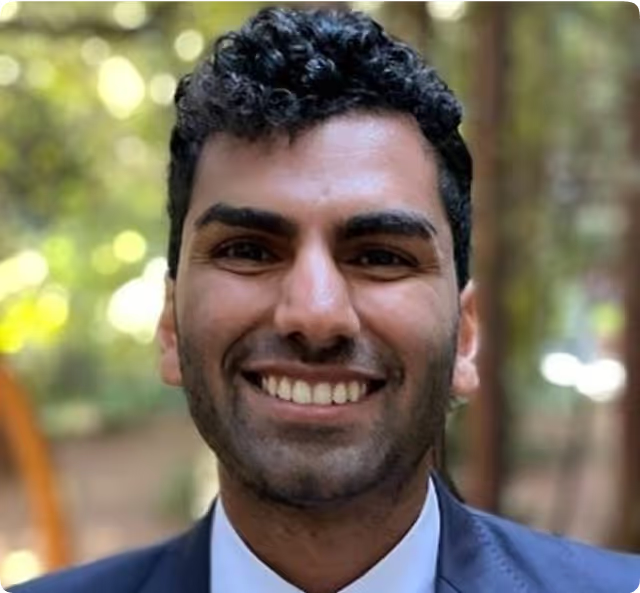
Dhruv Maheshwari Is Turning the Stop Sign Into a Feedback Loop
Before Obvio put AI cameras beside Maryland intersections, Maheshwari spent a decade testing one idea: technology matters most when it changes what people do in the real world.

David Geilhufe Has Spent 30 Years Making Nonprofit Technology Less of a Chore
From an improvised missing-person database after Hurricane Katrina to AI built for grantmakers, the Resilia CEO keeps returning to one practical question: what can technology take off a nonprofit’s plate?

Eyal Feder-Levy
Eyal Feder-Levy is the co-founder and CEO of Zencity, a govtech company that uses AI to turn millions of resident interactions into actionable insight for local governments. An urban planner by training who came up through nonprofit community work in South Tel Aviv, he started Zencity in 2015 to give cities a routine 'finger on the pulse' of their communities. Under his leadership the company has raised roughly $93M, works across six countries, and serves hundreds of government agencies reaching hundreds of millions of residents.

Hsin Hsiao
Hsin Hsiao (蕭新晟), also known as 蕭A, is the co-founder and CEO of OenTech (應援科技), a Taipei-based fintech building a one-stop integrated payment cloud platform that combines third-party payment processing with supporter-relationship management. A physicist turned software engineer, he trained at UCLA and Stony Brook before working across New York startups, co-launched the crowdsourced 'National Treasure' archival project through Taiwan's g0v civic-tech community, and ran for Taipei City Council in 2018. Since founding OenTech, he has grown it to more than 3,000 organizations, secured a NT$100 million Series A in 2025, and pushed payment security and agentic-commerce standards in Taiwan.

Jutta Friedrichs
Jutta Friedrichs is a German-born designer and co-founder of Soofa, the Cambridge, MA company that makes solar-powered digital signs for city sidewalks. Before Soofa she ran the MÜ furniture studio in Shanghai, co-founded Xindao's in-house design team, won two Red Dot Awards, an iF Design Award and an Elle Decoration Award, and earned a Masters at the Harvard Graduate School of Design. She mentors at the Harvard Innovation Lab and works at the seam of hardware, human-centered design, and the civic public realm.

Andrew Kieve
Andrew Kieve is the co-founder and CEO of Tolemi, a Boston civic-technology company whose BuildingBlocks platform stitches together the messy, siloed property data that cities sit on and turns it into maps and insights officials can actually act on. Originally launched as OpportunitySpace in 2013 and rebranded after a 2017 run through Y Combinator, Tolemi now helps state and local governments fight blight, enforce housing codes, and protect affordable housing across dozens of American cities. A Stanford and IESE graduate and former Innosight consultant, Kieve has spent more than a decade convincing governments that the answer to neighborhood decline is hiding in their own databases.

Chris Foreman
Chris Foreman is the co-founder and CEO of Marketplace.city, a Chicago-based govtech platform that helps local governments find, validate, and buy new technology with the help of real pricing, contract, and outcome data. Before building Marketplace.city, he scaled AvePoint's Americas business from a small team to more than 1,200 employees across 15 countries and launched its public-sector subsidiary, where the company won three straight Microsoft Partner of the Year awards. A Northwestern political science graduate, he has spent 15-plus years in enterprise software and now spends his days trying to drag government buying out of the PDF era.

Mariel Reed
Mariel Reed is the co-founder and CEO of Pavilion (formerly CoProcure), a San Francisco software company building a search engine for the $2 trillion world of state and local government purchasing. A Georgetown valedictorian who taught in Xinjiang and helped Coursera expand across Asia before working inside San Francisco's Mayor's Office, she became obsessed with one unglamorous lever for changing lives at scale: procurement. Pavilion lets public servants find and reuse contracts other agencies have already competitively bid, cutting months of duplicated paperwork. She launched it during the COVID-19 pandemic and grew it from a two-person team into a venture-backed company.

Tiffany Pang
Tiffany Pang is the co-founder and CEO of Outreach Grid (Appledore, Inc.), a software platform that helps cities, outreach workers, law enforcement, and nonprofits coordinate the work of reducing homelessness. A San Francisco native and Yale-trained neuroscientist turned software engineer, she left a Silicon Valley job to build tools that connect the people working on the streets with the agencies that can house and help. Her work earned a spot on Forbes' 30 Under 30 for Social Entrepreneurs, and Outreach Grid has expanded to communities across multiple U.S. states.

Alex Niemczewski
Alex Niemczewski is the co-founder and CEO of BallotReady, the nonpartisan online voter guide that covers every race and referendum on the ballot across all 50 states. She built the first version for herself before the 2014 midterms because she didn't know how to vote for the down-ballot offices nobody talks about - water reclamation commissioner, judges, mosquito abatement boards. A University of Chicago philosophy graduate who taught coding and ran a research-design consultancy, she turned a personal frustration into a civic engagement platform that informs millions of voters and powers tools for campaigns and advocacy groups.

Fletcher Wilson
Fletcher Wilson is the co-founder and CEO of Throne Labs, the company behind the largest network of connected public restrooms in the United States. A mechanical engineer trained at Penn and Stanford, he spent nearly a decade building InterVene, a medical-device startup, before turning his attention in 2020 to a problem hiding in plain sight: the disappearance of clean, accessible public bathrooms. Throne's solar-powered, sensor-equipped units deploy in under two hours, are free to use, and have logged more than a million uses across 20-plus cities. In October 2025 the company raised an initial $15 million Series B led by Brentwood Associates.

Maggie McCullough
Maggie McCullough is the CEO and founder of PolicyMap, the Philadelphia-based mapping and data-visualization platform she launched in 2008. A former White House budget-office staffer turned housing researcher, she built PolicyMap after struggling to fit maps and data into her own policy work, betting that anyone should be able to make a map as easily as they shop online. The platform now serves universities, banks, health systems, nonprofits and governments, layering thousands of public and proprietary datasets into one searchable map. In December 2023 the company closed a $3 million Series A led by its former parent, the Reinvestment Fund.

Henry Poole
Henry Poole is the co-founder and CEO of CivicActions, a professional services firm that has spent over two decades modernizing government digital services through open source software, agile methodologies, and human-centered design. A serial entrepreneur and open source visionary, Poole co-founded one of the first digital agencies (Vivid Studios) in 1993, published the landmark Affero General Public License (AGPLv1) in 2002 to close the 'ASP loophole' in open source licensing, and serves on the board of the Free Software Foundation. Under his leadership, CivicActions has become a trusted partner to major federal agencies including CMS, NSF, VA, and HHS, championing the principle that software built with public funds should be publicly owned.

Jesse Hassinger
Jesse Hassinger is the CEO of Hustle, a San Francisco-based peer-to-peer text messaging platform used by nonprofits, political campaigns, labor unions, and universities to mobilize people at scale. With over eight years at Hustle progressing from Director of Support to Director of Product before taking the helm as CEO in early 2025, Hassinger brings a rare blend of grassroots political organizing experience and deep product intuition to leading one of the most widely adopted civic tech platforms in the country — one that has facilitated over one billion text conversations.

Jase Wilson
Jase Wilson grew up in rural Missouri, earned a Master of City Planning from MIT, and has spent two decades trying to wire America together. After helping land Google Fiber's first network in Kansas City, founding and ultimately losing Neighborly - a civic fintech built on municipal bonds - he pivoted to Ready.net in 2019. Now, as founder and CEO, he runs a Y Combinator-backed vertical SaaS platform that helps state broadband offices manage billions in federal BEAD grants and track sub-grantee performance, with $14.6M in total funding and a team of 62.

Jay Nath
Jay Nath is Co-CEO and co-founder of Authorium, an AI-powered government procurement and document workflow platform that processes over $50 billion in government transactions. Before Authorium, he served as San Francisco's first Chief Innovation Officer for nearly a decade, where he created landmark programs including Startup in Residence (STIR), Civic Bridge, and Open311 — the nation's first read-write open data standard for 311 systems, adopted by over 50 cities worldwide. Recognized by the Obama White House as a Champion of Change, Nath has spent his career bridging the gap between Silicon Valley agility and the scale of public sector impact.

John Lilly
John Lilly is a Venture Partner at Greylock Partners and former CEO of Mozilla Corporation, where he oversaw Firefox's growth from 7 million to 450+ million users. A Stanford-trained engineer turned VC, he has backed transformative companies including Dropbox, Figma, Instagram, and Discord, while staying rooted in civic technology as Board Chair of Code for America. He currently serves as a lecturer at Stanford GSB and Executive Fellow at Harvard Business School.

Katie Harbath
Katie Harbath is the founder and CEO of Anchor Change and Chief Global Affairs Officer at Duco Experts, widely known as the 'election whisperer to the tech industry' (Foreign Policy). After a decade at Facebook building the global elections policy team from scratch - eventually managing 60 people across 40+ countries - she left in 2021 to launch her own consulting firm and newsletter. Her weekly Substack 'Anchor Change' and podcast help readers and clients navigate the chaos at the intersection of technology, politics, and democracy, guided by her signature philosophy: panic responsibly.

Sheba Najmi
Sheba Najmi is a Stanford-trained UX leader, civic technologist, and founder of Code for Pakistan — the country's first civic tech nonprofit. Over two decades she has shaped digital products for hundreds of millions of users (Yahoo Mail, LinkedIn, FreeWill) while simultaneously running a parallel mission: using open-source technology to make Pakistani government services work for ordinary people. Her work has served 2.1 million citizens, trained 600 government officials, and opened 6,000 public datasets. In 2024 she received the HUM Women Leaders Award for her contributions to civic innovation in Pakistan.