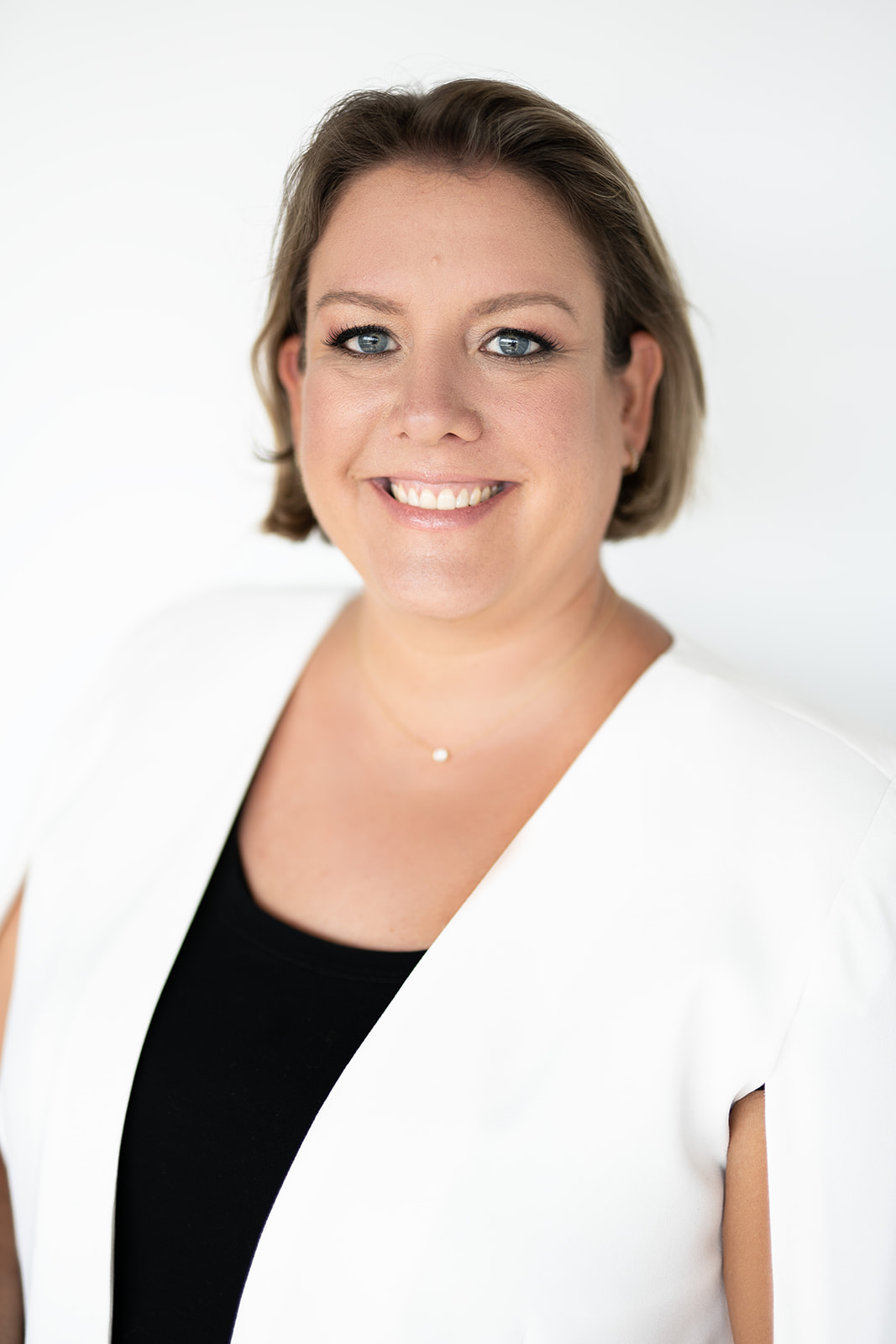
The Woman Who Watched Democracy Flicker on a Screen
Here's what Katie Harbath is doing right now: she's writing a book, running a newsletter read by people who shape policy and platforms, hosting a podcast, and consulting for organizations that actually want honest answers about what technology does to elections. She is, by any reasonable measure, busier post-Facebook than she was inside it.
That's the thing about people who watch a slow-motion crisis for a decade and then decide to do something about it. They don't slow down when they leave the building. They speed up.
Harbath grew up in Green Bay, Wisconsin - paper mill executive father, conservative household, a TV set that was often tuned to The West Wing. That last detail matters more than it sounds. The West Wing is essentially a training manual for people who believe governance is both important and interesting, that the right person in the right room can actually move things. Harbath watched it and thought: yes, that.
She studied journalism and political science at the University of Wisconsin-Madison, graduating in 2003. One of her professors - Katy Culver, whose Mass Media Practices class was ahead of its time - remembered Harbath as one of the first students in the class to seriously explore digital media. In 2003, "digital media" meant something very different than it does now. Harbath saw what it would become. That matters.
I initially thought social media would lead to greater transparency from governments, but began to doubt that premise in 2016 when I saw the amount of misinformation on social media surrounding Brexit, the 2016 United States presidential election, and the 2016 Philippine presidential election.
- Katie HarbathHer early career was in Republican politics - real, ground-level, digital-campaign work when most campaigns still thought the internet was a place to put your press releases. She directed digital efforts at the Republican National Committee and built the GOP.com website. She ran digital strategy for the Rudy Giuliani 2008 presidential campaign. She worked the phones and the pixels during the 2010 midterms at the National Republican Senatorial Committee.
This background is not incidental to who she became. It shaped her understanding that technology and politics are not separate things. That the people writing code are making political choices, whether they want to admit it or not. That pretending otherwise is either naive or convenient.
In 2011, Facebook hired her. At the time, the company's entire political team consisted of two people: Harbath advising Republicans, a colleague advising Democrats. Symmetrical, bipartisan, and almost absurdly small given what was coming. Within a decade, she'd built that team to 60 people managing election integrity across more than 40 countries.
The job description, if you could have written it honestly, would have read something like: navigate the most politically sensitive decisions in the most powerful information platform on earth, in real time, during actual elections, while being screamed at by governments, journalists, campaigns, foreign officials, and your own colleagues simultaneously. The pay was presumably good.
For several years, Harbath was genuinely optimistic. Social media, she believed, would increase governmental transparency. Give ordinary people more access to information. Level the playing field between candidates with money and candidates with ideas. This was not a naive belief - it was a reasonable reading of the early evidence.
Then came 2016.
Three elections in one year reshaped her thinking. The Philippine presidential election on May 9 was her personal turning point - she watched misinformation spread on Facebook in ways that were technically within the rules and practically devastating. Brexit, three weeks later. Then November in the United States. By the end of that year, Harbath's optimism about social media as a democratizing force had become something more complicated: a deep, operational understanding of exactly how it could go wrong.
She didn't resign in protest. She didn't write a furious op-ed. She stayed, and she worked, and she tried to make things better from the inside - developing political ads transparency policies, building election integrity products, managing the company's public communications on the most fraught political topics of our time. That kind of work extracts a cost. She left in March 2021.
What she built next is, in many ways, more interesting.
Anchor Change is her newsletter, consulting firm, and increasingly her brand. The name suggests both steadiness (an anchor) and the willingness to move (change). The tagline is "panic responsibly" - a phrase that sounds like a joke until you realize she means it seriously. Panic is appropriate, she argues, when things are genuinely bad. Irresponsible panic - catastrophizing, sharing unverified claims, treating every development as apocalyptic - makes things worse. The responsible version involves fact-checking yourself, focusing on what's real, and staying functional even when the situation is genuinely alarming.
This is, in some ways, the product of watching Facebook from the inside. The people most equipped to handle bad information at scale are not the ones who refuse to engage with it, or the ones who panic uselessly, but the ones who can sit with complexity without being paralyzed by it.
The newsletter goes out weekly. The podcast - originally titled "Impossible Tradeoffs," now rebranded as "Anchor Change with Katie Harbath" - features the kind of guests who don't usually agree to record conversations: platform CEOs, researchers, policy architects, people with actual authority over the systems shaping public life. Recent conversations have included the CEO of The Atlantic and the founder of Substack, which suggests something about Harbath's operating range and address book.
She is also, currently, writing a book. The timing is pointed: she plans the launch to coincide with Aaron Sorkin's next Facebook movie. Sorkin's previous work on the subject - The Social Network - gave us one version of what happened. Harbath has a different version, from a different seat, over a longer period. The world should probably read both.