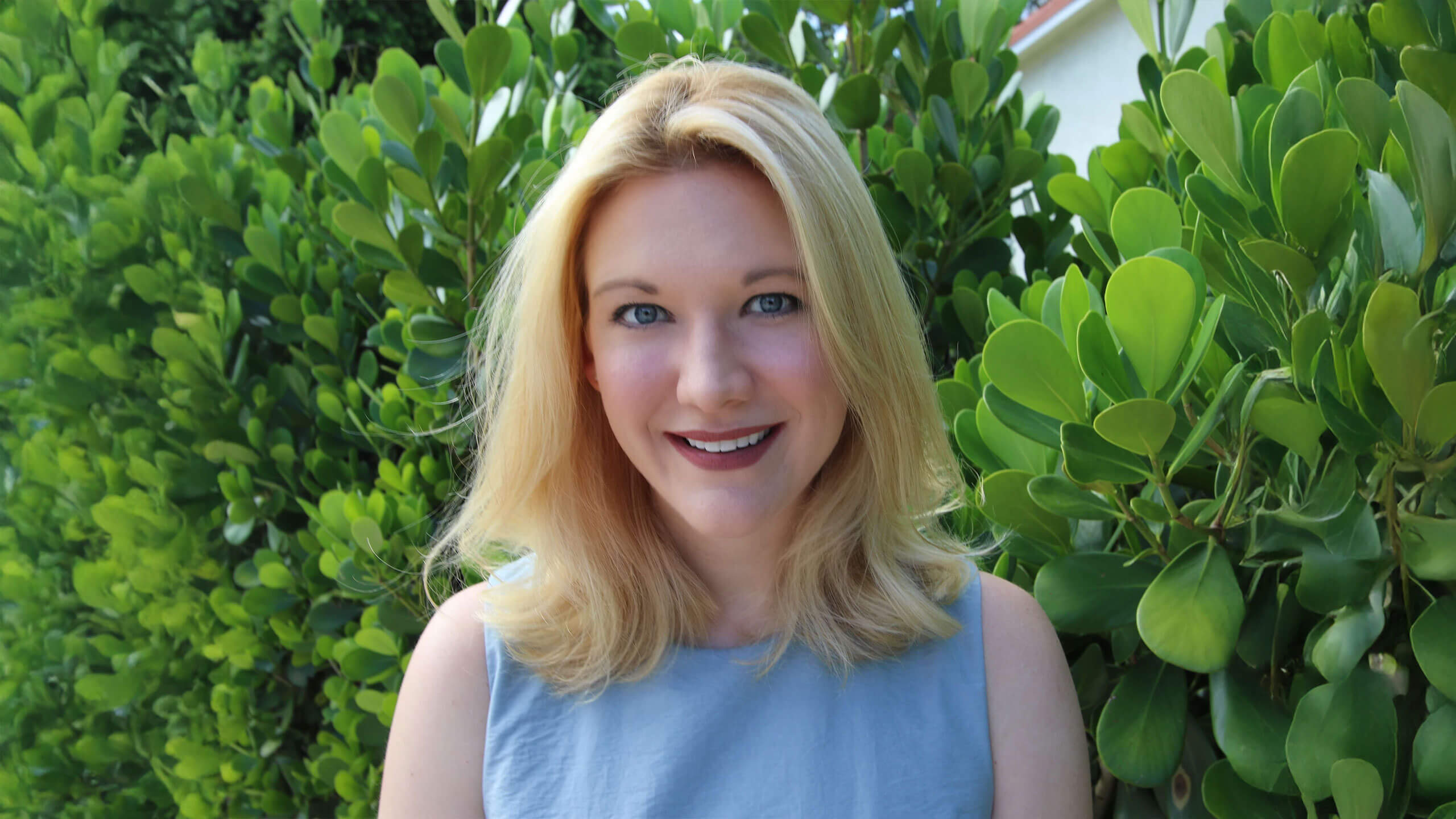
The Journalist Who Reinvented Defense Tech Investing
Most venture capitalists become investors because they love spreadsheets or startups. Katherine Boyle became one because she was watching America fall apart in print - and decided she could do more about it with a checkbook. That pivot, from Washington Post culture reporter to General Partner at the world's most influential VC firm, is either deeply logical or completely insane. Probably both. That's what makes it interesting.
At Andreessen Horowitz, Boyle leads the American Dynamism practice - a $1.1 billion and growing fund focused exclusively on companies that serve what she calls "the national interest." Defense tech. Aerospace. Manufacturing. Energy. Public safety. Critical infrastructure. The unglamorous work of keeping a country functional - and, in her view, the most important investment thesis in Silicon Valley right now. She is not subtle about this. When she says America needs to get serious, she means it with the full force of a woman who once wrote a sixteen-page memo grounded in just war theory to justify a $2 million bet on Anduril Industries. At a Cambridge VC firm. In 2017. When nobody in venture capital was thinking about defense.
That memo - not a pitch deck, not a market-size analysis, but an actual philosophical treatise on the ethics of armed conflict - is the most Katherine Boyle story imaginable. It is the story of someone who thinks differently about what investing is for, who reads Thomas Aquinas when other partners read TechCrunch, and who believed Anduril would matter years before the defense establishment caught up. Today, Anduril is valued at over $14 billion and Boyle sits on its board.
We cannot build American Dynamism without American Seriousness.- Katherine Boyle, Common Sense, April 2022
The phrase "American Dynamism" sounds like a political slogan and in some ways it is - Boyle is operating at the precise intersection where technology policy, national security, and culture war all collide. But her investment thesis is concrete: she bets on founders who are solving real, hard problems that the federal government cannot or will not solve fast enough. Companies building autonomous surface vessels for maritime security. Precision machining systems for aerospace. Satellite ground infrastructure. The parts of America that are failing in slow motion.
Her path here was unconventional in the specific way that only looks obvious in retrospect. She grew up in Gainesville, Florida - youngest of six siblings, daughter of a father who left the seminary for medical school and a mother named Donna. She graduated as valedictorian from Oak Hall School in 2004, the same year she won the Florida state title at America's Junior Miss pageant, performing an original piano composition she wrote herself. That combination - academic rigor, creative ambition, competitive drive, and the ability to perform under pressure - would follow her everywhere.
Georgetown for government. A George J. Mitchell Scholarship to study public advocacy in Ireland. Then the Washington Post, where she spent four years covering culture and watching technology eat every institution she wrote about. "I was not a technology reporter," she has said, "but every story I was writing had something to do with technology touching old institutions." That observation eventually became unbearable. She left for Stanford's business school, interned at Founders Fund working on defense tech, and graduated into a job at General Catalyst.
The only way to reverse the course of stagnation and kickstart nationwide renewal post-Covid is through technologists building companies that support the national interest.- Katherine Boyle, a16z Blog
At General Catalyst, Boyle was an anomaly. She was the partner who read Thomas Aquinas before pitches. The one who framed defense investments in terms of moral philosophy rather than market opportunity. And when Palmer Luckey came in with Anduril, Boyle was the person who said yes - and wrote the memo to prove why. It was a $2 million seed check. It was also a declaration of a worldview. Defense technology was not dirty. It was necessary. Venture capital had a role to play in keeping America capable of defending itself.
She was also the person David Ulevitch of Andreessen Horowitz was competing against when they both tried to co-lead Anduril's Series B in 2019. They ended up on the same side instead. In 2022, Boyle joined a16z as General Partner, co-founding the American Dynamism practice with Ulevitch. The fund raised $500 million in 2023. Another $600 million in 2024. Total: over $1.1 billion committed to the idea that America's most important companies might be the ones rebuilding its industrial and defense spine rather than optimizing ad clicks.
The timing was not accidental. Russia's invasion of Ukraine in 2022 changed the conversation in ways Boyle had anticipated. "Ukraine changed everything," she told Fortune in October 2024 - and she means it literally. The war demonstrated, in real time, that the defense industrial base the United States had allowed to atrophy over three decades was no longer adequate. Seventeen thousand defense companies had merged or disappeared between 2001 and 2015. The result was a procurement oligopoly too slow, too bureaucratic, and too cautious to innovate at startup speed. Boyle's fund is a bet that startups can fix what primes cannot.
Small tech is actually the thing that gets me excited. I invest in companies from the napkin stage. And those are small businesses.- Katherine Boyle
She is also, notably, a writer - and not in the blogging sense. Boyle publishes essays in Tablet Magazine, The Free Press (whose board she sits on), and was a regular contributor to Common Sense when Bari Weiss ran it. Her 2022 essay "The Case for American Seriousness" argued that irony - the dominant mode of prestige media culture - is the enemy of ambitious building. She means this about technology, but also about everything else. She serves on The Free Press board alongside Weiss. She spoke at the American Enterprise Institute in 2025 on "Technology and the Family." She writes about piano competitions and just war theory with the same voice.
There is a version of Boyle's worldview that maps easily onto current political alignments - she is close to the Trump administration, described as "one of tech's most reliable conduits to the Trump White House," and praised J.D. Vance's 2025 Paris AI speech as "one of the most important technology speeches ever given." She lives in Miami, not San Francisco, which is also a statement. But her investment thesis predates any of this political configuration. She was writing about American manufacturing decline before it was a campaign issue, and backing defense tech before the Pentagon started hosting startup pitches.
What makes her unusual is not the politics but the philosophy. Boyle approaches venture capital as a civilizational project. She talks about families, faith, and the obligation to build things that outlast individual careers. She has two children and writes about motherhood as a civic act. She compares modern business culture to professional wrestling's "kayfabe" - the maintained fiction of a scripted reality - with the detached precision of someone who has spent a long time thinking about why institutions fail. When she says "building a family is the ultimate good," she means it as political economy as much as personal conviction.
The American Dynamism 50 - her fund's annual list of the fifty most important national-interest startups - is now in its third edition. The 2025 list features companies across logistics AI, defense, aerospace, manufacturing, and energy, all harnessing artificial intelligence to address problems the federal government has historically mismanaged or ignored. It is a portfolio. It is also an argument. America can be rebuilt. Not by government programs or political speeches. By founders with napkins and investors willing to read sixteen pages of just war theory before writing the check.