Profile
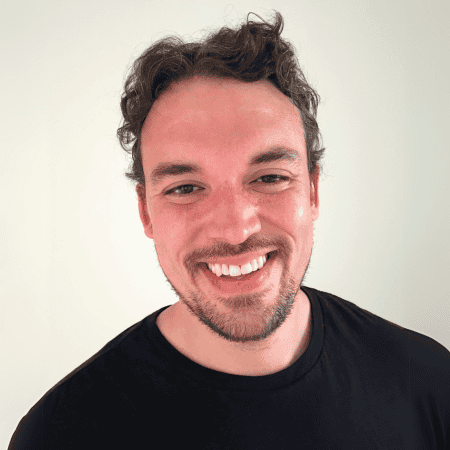
Mid-stride with a billion texts behind him
There's a specific kind of authority that comes from not skipping steps. Jesse Hassinger didn't parachute into Hustle's CEO seat trailing buzzwords and a consulting background. He joined in 2016, ran support during the chaos of a presidential election year, moved into product leadership, and watched the platform serve everyone from labor unions mobilizing members to universities chasing alumni donations to campaigns trying to flip districts no one thought were flippable. By the time he was handed the title in February 2025, he'd touched almost every layer of the thing he was now being asked to lead.
That trajectory is not incidental. It's the whole story. Hustle's peer-to-peer texting platform is built on the premise that conversations at scale can still feel one-to-one - that a text sent by a real person, even on behalf of an organization, lands differently than a blast email or an automated robocall. Hassinger understood that premise from the inside out before he ever had a leadership title. He understood it because he'd spent years before Hustle doing the ground-level version of that work: organizing political campaigns in New York, Maryland, and Colorado, where the difference between a voter who shows up and one who stays home often comes down to whether someone reached out in a way that felt human.
He graduated from Yale in 2011 with a degree in Economics and Political Science - the kind of combination that sounds like someone who couldn't decide between Wall Street and the Senate, but in practice produces people who can read both a spreadsheet and a room. At Yale he chaired the Silliman Activities and Administrative Committee, a position that, if nothing else, suggests someone already comfortable running things. Then he went into campaigns, where the hours are brutal and the victories are rarely guaranteed.
"His deep understanding of grassroots organizing and digital communication makes him the perfect fit to steer Hustle forward."
Hustle leadership announcement, February 2025
The move from campaign organizing to a texting platform startup was a short logical leap for anyone who'd spent time on the ground. Campaigns live and die by their ability to contact voters at scale without losing the warmth of a real conversation. Hustle was built to solve that problem. When Hassinger joined in 2016, the platform was relatively young - Hustle was founded in December 2014 by Perry Rosenstein, Roddy Lindsay, and Tyler Brock. Getting in early meant getting in when the infrastructure was still being figured out, when the use cases were still expanding, and when the team was small enough that someone in a support role was also, whether formally or not, helping shape how the product worked.
The 2020 election cycle was Hustle's most intense year to that point. Hassinger was leading support - a role that, during a national election with enormous demand across campaigns and advocacy organizations, requires holding together a product under conditions it wasn't fully designed for. The team navigated it. By that point he'd moved into product, where his job was to decide what Hustle should become next: what features to build, what integrations to prioritize, how to serve constituencies as different as labor unions and university alumni offices and get-out-the-vote operations. The range of organizations using Hustle is unusually wide for a focused platform, and keeping the product coherent across that range is harder than it sounds.
In early 2025, Hustle announced a new leadership structure. Hassinger became CEO. Daniel Whan came in as CFO and President. The framing from the company was explicitly about a new chapter of growth - a platform that had already facilitated more than one billion text conversations, backed by Google Ventures, Salesforce Ventures, Index Ventures, and Insight Partners with roughly $42.5 million raised, was now asking what comes next. The answer, at least in terms of who would be steering it, was someone who'd been thinking about that question from multiple seats inside the organization for nearly a decade.
What Hustle does is surprisingly simple to explain and surprisingly hard to scale well. Organizations - campaigns, unions, universities, nonprofits - need to reach people in ways that feel direct without being intrusive. Email open rates have been declining for years. Phone calls get screened. Social media reach is governed by algorithms. A personal text from a real person, sent through a platform that makes it possible to do that at volume, lands. It converts. The use cases include alumni engagement, volunteer recruitment, event promotion, get-out-the-vote work, legislative advocacy, and peer-to-peer organizing within labor movements. Hustle is in the infrastructure business for a particular kind of human connection, which is a strange thing to be doing from an office at 717 Market Street in San Francisco, but the work is real.
Hassinger wrote about this kind of impact early in his tenure, documenting how Christine Pellegrino's 2017 campaign on Long Island used Hustle to achieve a 39-point swing in a district that was supposed to be safely Republican. That article - published on Hustle's blog in May 2017 - is a useful artifact for understanding what drew him to this work. It's not written by someone who found a texting platform accidentally. It's written by someone who already knew what campaigns needed and watched Hustle deliver it in a way that felt important.
He's based in Oakland. His company is headquartered in San Francisco, a few miles across the bay. His platform is used by organizations that are, in one way or another, trying to move people to act - to vote, to donate, to show up, to join, to push for something. The CEO now in charge of all of that is someone who, before any of this, was doing exactly that kind of work himself, one call sheet and one canvassing shift at a time.