cell-therapy
(43)
Caribou Cut a Third of Its Team to Bet the Company on Two Cancer Drugs - Here’s What Focus Costs in Biotech
The CRISPR pioneer traded a sprawling platform story for two off-the-shelf cancer therapies, a smaller herd, and a very specific test: can ready-made CAR-T match custom-built medicine before the cash clock runs out?
The Startup Rebuilding the Organ That Quietly Ages You
Most of biotech chases the diseases you can see. Thymmune went after the organ almost no one thinks about - the thymus - and built a way to grow it from stem cells.

GC Therapeutics Wants to Turn a Four-Day Cell Recipe Into Medicine at Scale
The Harvard spinout says its TFome platform can compress months of stem-cell differentiation into four days. Now it has to prove that programmable cells can survive the far harder journey from an elegant recipe to an approved medicine.
Novartis Cut Away an Empire to Bet on Five Ways of Making Medicine
The Swiss giant spent years shedding businesses until only innovative medicines remained. Now its growth depends on turning five scientific platforms into treatments that health systems will pay for - and patients can actually reach.
Legend Biotech
Legend Biotech turned an experiment from a room the size of a freight elevator into a medicine used to treat more than 10,000 people. Now it must prove that one demanding, personalized therapy can become a platform for the next generation of cancer care.
Arcellx
Arcellx rebuilt a crucial part of CAR-T therapy with a compact synthetic binder. Its lead treatment is now under FDA review - and the company behind it has become part of Gilead's Kite.
Be Biopharma
Be Biopharma (Be Bio) is a Cambridge, Massachusetts biotechnology company pioneering a new class of therapies called Engineered B Cell Medicines (BCMs). By precisely gene-editing a patient's own B cells - nature's protein factories that can secrete high volumes of protein for decades - Be Bio aims to deliver durable, potentially re-dosable treatments for hemophilia, rare genetic diseases, and other serious conditions. Founded in 2020 out of Seattle Children's Research Institute and Longwood Fund, the company has raised roughly $356 million and, as of early 2025, advanced to a multi-program clinical-stage company led by CEO Joanne Smith-Farrell, Ph.D.
CREATE Medicines
CREATE Medicines is a Cambridge, Massachusetts clinical-stage biotech building in vivo immune programming - therapies that use an mRNA-lipid nanoparticle platform to turn a patient's own T cells, NK cells, and myeloid cells into chimeric antigen receptor (CAR) cells directly inside the body, rather than extracting and re-engineering them in a lab. Formerly Myeloid Therapeutics, the company rebranded in October 2025 as its pipeline expanded beyond myeloid cells and cancer into autoimmune disease and fibrosis. Its repeat-dosable, off-the-shelf approach aims to make CAR therapy cheaper and more scalable than conventional cell therapy, and the company says it has dosed more than 50 patients - among the largest clinical datasets for in vivo CAR to date.
Leucid Bio
Leucid Bio is a clinical-stage London biotech developing next-generation CAR-T cell therapies for refractory solid tumors. Spun out of King's College London in 2014 to commercialize two decades of research by Dr John Maher, the company's proprietary Lateral CAR platform redesigns the CAR receptor so its signalling domains sit laterally alongside the cell membrane - mimicking natural immune receptors to boost potency while reducing toxicity. Its lead candidate, LEU011, is an autologous NKG2D-targeting CAR-T therapy now in the Phase I/IIa AERIAL trial for refractory solid tumors.
Made Scientific
Made Scientific is a Princeton, New Jersey-based contract development and manufacturing organization (CDMO) focused exclusively on cell therapies. Formerly BioCentriq, it was rebranded in March 2025 and is backed by South Korea's GC Corporation. The company runs a 60,000 sq. ft. GMP facility with five ISO 7 / Grade B cleanrooms, offering process and analytical development, GMP manufacturing of autologous and allogeneic products, aseptic fill and finish, QC release testing, regulatory consulting, and workforce training, taking cell therapy programs from preclinical development through commercial supply.
Mirror Biologics, Inc.
Mirror Biologics is a clinical-stage, international biopharmaceutical company developing an 'off-the-shelf' class of immunotherapy built on living, non-genetically-manipulated immune cells. Its patented Mirror Effect platform - protected by more than 200 issued patents - powers a pipeline led by AlloStim for cancer, AlloPrime as a universal anti-viral vaccine for the elderly, and StimVax as a neoantigen vaccine. Headquartered in Tampa, Florida with GMP manufacturing in Jerusalem and clinical operations across Thailand and Malaysia, the company is advancing AlloStim into late-stage trials, including a Phase II metastatic colorectal cancer study run in collaboration with Merck KGaA.
Neurotech Pharmaceuticals, Inc.
Neurotech Pharmaceuticals is a Cumberland, Rhode Island biotechnology company that develops long-acting therapies for chronic retinal diseases using its Encapsulated Cell Technology (ECT) platform - a tiny implant of genetically engineered cells that continuously secretes a therapeutic protein inside the eye. In March 2025 its lead product ENCELTO (revakinagene taroretcel-lwey, formerly NT-501/Renexus) became the first and only FDA-approved treatment for macular telangiectasia type 2 (MacTel), delivering ciliary neurotrophic factor (CNTF) to slow the loss of photoreceptors.
Triumvira Immunologics, Inc.
Triumvira Immunologics is a clinical-stage immuno-oncology company developing engineered T cell therapies built on its proprietary T cell Antigen Coupler (TAC) platform. Unlike CAR-T, the TAC molecule co-opts the natural T cell receptor to recognize and attack cancer cells, aiming for a more physiological immune response with a potentially safer profile. The company advances autologous and allogeneic TAC T cell candidates against solid-tumor antigens such as HER2, Claudin 18.2, GPC3 and GUCY2C.

Eureka Therapeutics, Inc.
Eureka Therapeutics is a clinical-stage biopharmaceutical company in Emeryville, California, developing next-generation T-cell therapies for cancer, with a focus on hard-to-treat solid tumors. Founded in 2006 by Dr. Cheng Liu, the company pairs its E-ALPHA phage-display antibody engine with its ARTEMIS T-cell receptor platform - an alternative to conventional CAR-T designed to keep engineered T cells potent inside immunosuppressive tumors while sharply reducing the inflammatory cytokine release linked to CAR-T toxicity. Its lead program, ECT204, targets GPC3-positive advanced liver cancer and has received FDA RMAT designation.
Syntax Bio
Syntax Bio is a Chicago synthetic biology company building Cellgorithm, a CRISPR-based platform that programs stem cells to differentiate on command. Instead of coaxing stem cells into specialized cell types through months of manual, growth-factor-heavy protocols, Cellgorithm encodes the sequence of gene activations that mimic human development into a single DNA program, collapsing timelines from months to weeks. Spun out of the University of Illinois Chicago and formerly known as Cellgorithmics, the company has raised more than $25 million and is advancing a pancreatic beta cell therapy for type 1 diabetes while partnering with biopharma to program cells at scale.
T-knife Therapeutics
T-knife Therapeutics is a clinical-stage biotech engineering T-cell receptor (TCR-T) therapies to treat solid tumors. Spun out of Berlin's Max Delbrück Center in 2015, it built a proprietary humanized-TCR mouse platform (HuTCR) that grows a full human immune repertoire in mice, letting the company harvest fully human TCRs naturally selected for affinity and specificity. Now dual-based in San Francisco and Berlin, T-knife is advancing 'supercharged' TCR-T candidates - including a PRAME-targeted, CRISPR-armored therapy (TK-6302) entering the clinic - against cancers that have long resisted cell therapy.
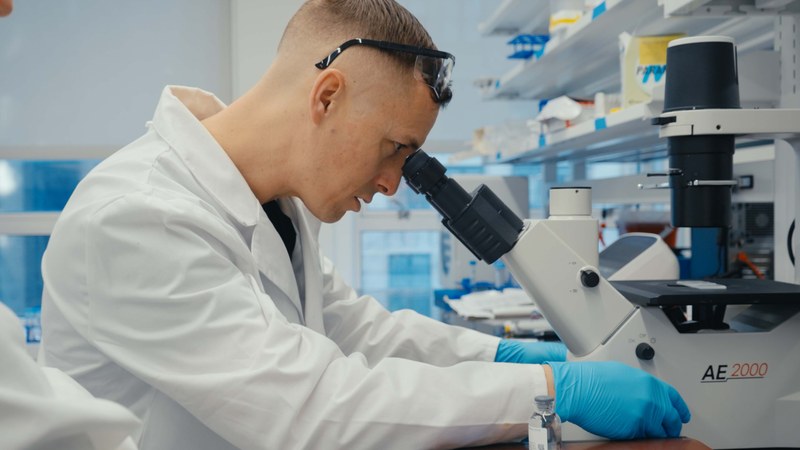
HexemBio
HexemBio is a New York- and Berkeley-based biotech building what it calls the first blood stem cell rejuvenation therapy. Its Synthetic Human Yolk Sac platform recreates the embryonic environment where blood stem cells first arise, temporarily placing a patient's own aged hematopoietic stem cells into that synthetic young niche before returning them by IV infusion - rather than gene-editing or chemically reprogramming the cells. The company launched publicly in April 2026 with a $10.4M seed round led by Draper Associates, holds an FDA Orphan Drug Designation for a bone-marrow-transplant program in blood cancers, and is targeting first-in-human trials in 2027.
K2bio
K2bio is a Houston-based preclinical contract research organization (CRO) built on assets acquired from Bellicum Pharmaceuticals, including a certified mouse vivarium. It pairs full-service GLP and non-GLP in vivo and in vitro research with flexible private and shared lab space near the Texas Medical Center, giving early-stage biotech and pharma teams big-company infrastructure on small-company budgets.

Portal Biotechnologies
Portal Biotechnologies is a Watertown, Massachusetts cell-engineering platform company building tools that push complex cargo - mRNA, siRNA, CRISPR complexes, proteins - into living cells by squeezing them through microscopic holes in a silicon surface, rather than relying on viruses or chemistry. Founded in 2023 by Armon Sharei, the MIT-trained scientist behind SQZ Biotechnologies, Portal sells hardware and consumables to drug discovery and cell therapy labs instead of developing its own drugs. Its instruments are used across more than 100 customer sites, including many of the world's largest pharmaceutical companies, and the company has raised seed and follow-on funding plus a DARPA contract for portable, point-of-care cell manufacturing.

Shennon Biotechnologies
Shennon Biotechnologies is a San Francisco biotech turning immune-cell target discovery from a months-long slog into a same-day job. Its proprietary TCELERATOR platform fuses ultra-high-throughput microfluidics with AI to functionally profile millions of single immune cells in hours, pinpointing the rare T and B cells that recognize cancer antigens. Founded in 2021 by physicist-turned-founder Li Sun, the company is building a pipeline of validated targets for solid tumors and autoimmune disease, backed by a $13M seed round led by DCVC.

Sangamo Therapeutics, Inc.
Sangamo Therapeutics is a clinical-stage genomic medicine company in Brisbane, California that engineers zinc finger proteins to switch genes on, off, or rewrite them. After three decades pioneering zinc finger technology, it is racing to bring its lead gene therapy ST-920 for Fabry disease to market while building a neurology pipeline aimed at crossing the blood-brain barrier - all under the pressure of a 2026 search for strategic alternatives.

Arsenal Biosciences, Inc.
Arsenal Biosciences (ArsenalBio) is a clinical-stage, programmable cell therapy company in South San Francisco engineering CAR-T cell therapies for solid tumors. By combining CRISPR genome engineering, synthetic biology, high-throughput target discovery and machine learning, it builds 'integrated circuit T cells' that carry logic gates and multiple drug functions to attack tumors while sparing healthy tissue. Founded in 2019 by surgeon-executive Ken Drazan with leading academic immunologists, the company has raised roughly $850M total, including an oversubscribed $325M Series C in 2024 backed by ARCH, NVIDIA's NVentures, Regeneron Ventures and Bristol Myers Squibb.

AvenCell Therapeutics
AvenCell Therapeutics is a clinical-stage cell therapy company building switchable, universal CAR-T treatments that can be turned 'off' and 'on' even after they are inside a patient. By pairing this controllable switch with a CRISPR-engineered, off-the-shelf allogeneic platform, AvenCell aims to widen the narrow safety window of conventional CAR-T while cutting the cost and wait time of manufacturing, targeting hard-to-treat blood cancers like AML, B-cell malignancies and, increasingly, autoimmune disease.

克睿基因 Cure Genetics
克睿基因 Cure Genetics is a clinical-stage biotech founded in Suzhou in 2016 that develops cell and gene therapies for solid tumors and genetic diseases. It runs two proprietary platforms: AIMS, an allogeneic CAR-NKT cell therapy approach aimed at hard-to-treat solid tumors, and VELP, a directed-evolution AAV vector platform that builds high-quality viral libraries for tissue-targeted gene delivery to the nervous system, heart, and kidney. Its lead programs include CGC729 (anti-CD70 CAR-NKT for renal cell carcinoma) and CGC-602 (a PD-1-IL-2v bispecific antibody).
GentiBio
GentiBio is a clinical-stage biotechnology company in Cambridge, Massachusetts building engineered regulatory T cell (EngTreg) therapies designed to restore immune tolerance and durably treat autoimmune, autoinflammatory, alloimmune, and allergic diseases. Spun out of research from Seattle Children's, Benaroya Research Institute, and MIGAL Galilee Research Institute, the company combines gene editing of FOXP3 with a modular Treg engineering and manufacturing platform. Its lead program, GNTI-122, is an autologous antigen-specific Treg therapy for recently diagnosed type 1 diabetes now in a Phase 1 trial (POLARIS). GentiBio has raised roughly $177M and signed a partnership with Bristol Myers Squibb worth up to $1.9B in potential milestones.
HebeCell Corp
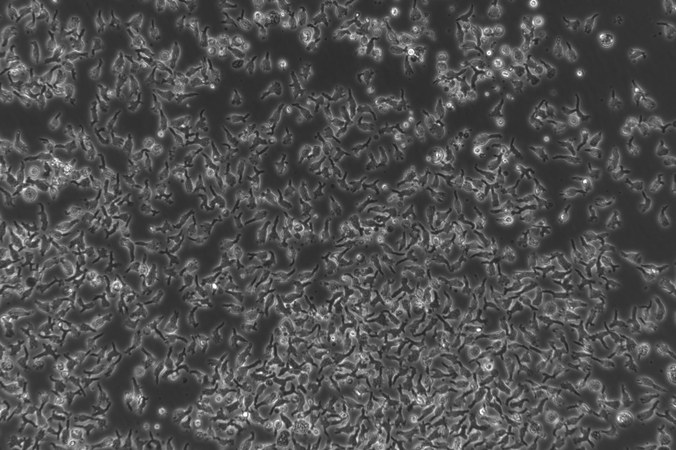
HebeCell Corp is a Natick, Massachusetts biotech developing allogeneic, off-the-shelf cell therapies grown from induced pluripotent stem cells (iPSCs). Its core invention is a suspension-bioreactor platform, ProtoNK, that produces natural killer (NK) cells indefinitely and at scale - a manufacturing approach the company says no other lab can match. Founded in 2016, HebeCell aims to make cancer and degenerative-disease therapies cheaper, safer, and available without a matched donor, under the tagline 'Incurable no more.'

I Peace, Inc.
I Peace, Inc. is a Palo Alto- and Kyoto-based biotech that mass-manufactures clinical-grade induced pluripotent stem cells (iPSCs) using a proprietary automated, closed-cassette platform. Founded in 2015 by Koji Tanabe - a co-author of the world's first human iPSC paper from Shinya Yamanaka's Nobel Prize-winning lab - the company operates as a CDMO supplying GMP-grade iPSCs to pharmaceutical companies, biotechs, and research institutions, and offers personal iPSC banking and longevity services that aim to make cell therapy affordable and accessible.

Imagine Pharma
Imagine Pharma is a Pittsburgh biotechnology company built around IMG-1, a novel polypeptide its founder discovered in a tea plant from his native Vietnam. From that single molecule the company runs three platforms - Oral Delivery (making injectable biologics swallowable), Therapeutics, and Regenerative Medicine - with first-in-class programs aimed at curing type 1 diabetes, accelerating diabetic wound healing, and making injections obsolete. Alongside its pipeline, Imagine operates an NIH-approved islet isolation center that has completed dozens of clinical islet cell procedures for major U.S. hospital systems.

Morphocell Technologies
Morphocell Technologies is a Montreal-area regenerative medicine company building allogeneic, stem cell-derived engineered tissues to treat severe organ deficiencies, starting with the liver. Its lead program, ReLiver, is a transiently implanted engineered liver tissue made from induced pluripotent stem cells (iPSCs) intended to treat acute and acute-on-chronic liver failure without immunosuppression. Spun out of CHU Sainte-Justine in 2018, the company has raised US$50 million in Series A funding and runs vertically integrated operations spanning discovery, cell manufacturing and preclinical development.
Oryon Cell Therapies
Oryon Cell Therapies is a Belmont, Massachusetts clinical-stage biotechnology company developing autologous neuron replacement medicines for Parkinson's disease and other neurodegenerative disorders. Spun out of research at the Neuroregeneration Research Institute at McLean Hospital and Harvard Medical School, Oryon converts a patient's own blood cells into induced pluripotent stem cells, then differentiates them into dopamine-producing A9 neurons that are implanted into the brain to restore lost dopaminergic function - without immune suppression. The company emerged from stealth in March 2026 with a $21M Series A tranche ($42M total in equity and grants) and early Phase 1b/2a data showing motor improvements and neuroimaging evidence of restored dopamine signaling.