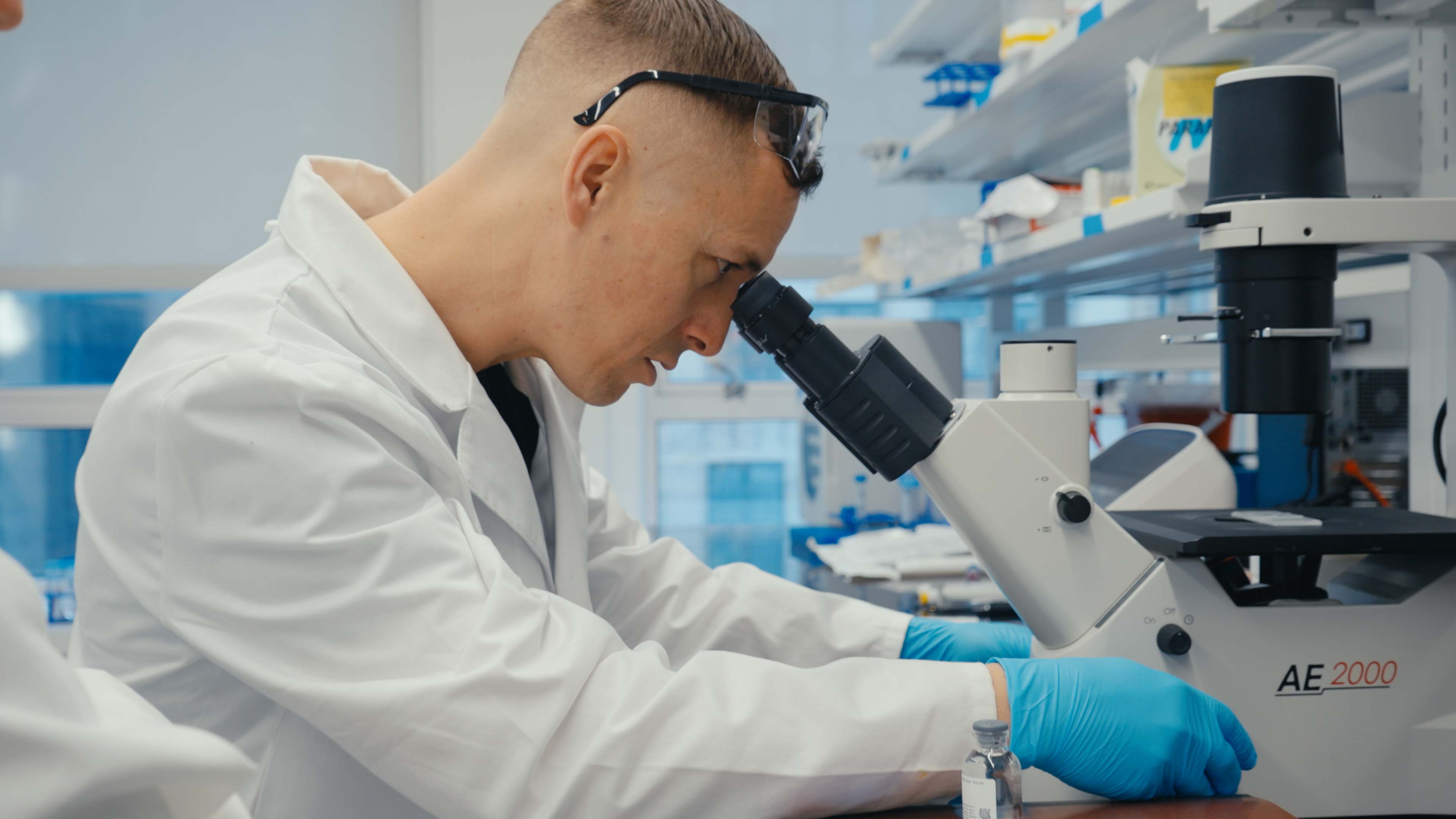
Here is the thing about aging that HexemBio would like you to sit with for a moment: your blood stem cells were, at one point, perfect. They built your entire circulatory and immune system from scratch, on schedule, without complaint. Then they got old. And when hematopoietic stem cells - the cells that make blood - get old, the downstream effects are not subtle. Immunity weakens. Inflammation creeps up. The risk of blood cancers and other age-related trouble climbs.
The obvious biotech move, circa now, is to reach for the toolbox: edit the genes, or flood the cell with reprogramming factors and coax it backward. HexemBio's founders looked at that toolbox and, in effect, put it down. Their bet is that you don't need to rewrite the cell. You need to change the room it's standing in.
The room, in this case, is the yolk sac - the transient embryonic structure where the very first blood cells appear, roughly three weeks into development. HexemBio has built a synthetic version of it. The company calls the platform the Synthetic Human Yolk Sac, and the pitch is almost defiantly simple: take a patient's own aged stem cells, place them temporarily into this recreated young environment - a “synthetic young niche” - let the environment do its work, and then return the rejuvenated cells to the patient through a standard IV infusion.
No gene editing. No chemical reprogramming. Just, roughly, sending the cells back to biological kindergarten and asking them to remember how they used to work.
Whether that works is the entire question, and it is not yet fully answered - the company is pre-clinical, and the honest version of this story includes the words “IND-enabling studies” and “GMP manufacturing.” But it is an unusual enough idea, backed by enough credible people, that it is worth understanding on its own terms.
“Fundamentally different from transcription-factor reprogramming or gene editing.”
Robert S. Langer, MIT & Moderna co-founder, HexemBio advisor
That quote matters more than the average advisor blurb, because Robert Langer is not the average advisor. He is an MIT Institute Professor and a co-founder of Moderna, and he has seen roughly every version of “we can fix cells” that biotech has produced in the last few decades. He described HexemBio's early data as “extremely compelling.” You can discount advisory-board enthusiasm as much as you like; it is still a data point that a person with that resume said yes.
The company itself is a slightly unusual object. It keeps a lab presence in Berkeley and a corporate office at 7 Penn Plaza in New York - which, for the geographically curious, sits directly above Madison Square Garden. It launched publicly in April 2026 alongside a $10.4 million seed round led by Draper Associates, with SOSV and Seraphim participating. The research underneath it was published in Nature in February 2024, which is the biotech equivalent of showing your homework to the strictest teacher available and getting it back with a passing grade.
And it has five co-founders, which in most startups is a warning sign and here reads more like a deliberate division of a genuinely hard problem into five ownable pieces.