He spent years watching mitochondria resolve under the world's brightest X-ray laser. Then he decided to grow new ones and put them back inside us.
Tom Benson runs Mitrix Bio, an eleven-person biotech in Pleasanton, California, built around an idea most people file under science fiction. Take a person's own stem cells. Grow them in a bioreactor until there are roughly ten thousand times as many. Harvest the mitochondria - the tiny power plants that keep every cell running - and transfuse the young ones back in. The target on the wall is not modest. It is 130 years of healthy human life.
What makes the pitch land is the specificity. Benson does not talk in vague promises of vitality. He talks in cell-energy currency, describing a potential boost worth something like twenty thousand days of cellular energy generation. He talks about exosomes - membrane-bound vesicles that let cells swallow mitochondria whole. He talks about banks: "We have blood banks today. We'd like to have mitochondria banks in the future."
He is, by his own account, not from biotech. That is the strange part, and also the interesting one.
Before Mitrix, Benson managed the Linac Coherent Light Source at Stanford's SLAC - a femtosecond free-electron laser, among the most powerful X-ray instruments on Earth. The job was hardware, optics, and very fast light. Somewhere in the imaging work, using X-ray crystallography and Cryo-EM, the mitochondria caught his eye.
Most people meet mitochondria in a high-school diagram and forget them. Benson met them at sub-nanometer resolution, and could not let go. The structures degrade with age. Their own DNA frays. And that fraying, he came to believe, tracks with the diseases of getting old.
It was not his first company. He had already founded software, hardware, and science startups - names like Timepoint, Readybot, and Scott Systems. So when the mitochondria idea would not leave him alone, he did the thing serial founders do. He started another one.
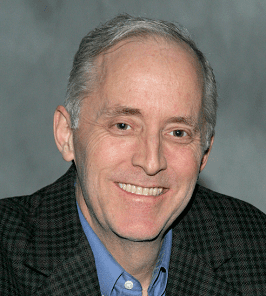
A founder's path is rarely a straight line. His ran through a laser.
Mitrix's proposed therapy reads like a loop: your cells, out and back, refreshed.
Pull stem cells from a patient's own blood or fat tissue.
Grow them in a bioreactor - roughly 10,000-fold - to mass-produce young mitochondria.
Wrap mitochondria in exosomes so cells can absorb them easily.
Inject them back via blood or intraperitoneal delivery. Energy restored.
Founds a string of software, hardware, and science startups - Timepoint, Readybot, Scott Systems.
Manages the Linac Coherent Light Source femtosecond X-ray laser; gets hooked on imaging mitochondria.
Launches Mitrix Bio to chase mitochondrial transplantation as an anti-aging therapy.
Presents "Mitochondrial Transplantation Solves Mitochondrial Aging" at the EARD 2022 conference.
Raises $250,000, split between the R42 AI & Longevity Fund and the Longevity Tech Fund - the first check from R42.
Goes on Live Longer World and Dave Asprey's Human Upgrade; Mitrix moves toward clinical access pathways.
The 93-year-old actor reportedly sits on the trial wish-list. The pitch travels well in space-faring circles.
Chosen because space radiation damages mitochondrial DNA - making them an ideal early test of the idea.
Ronjon Nag's R42 and Petr Sramek's fund split the first $250K. R42's debut investment.
Collaborators at the University of Manitoba and the University of Kentucky lend the lab muscle.
Mitrix has reported making a mouse immune system functionally younger by the equivalent of roughly 30 years.
Not a biotech lifer. A builder of machines and companies who wandered into cell biology and stayed.
"We're actually supplementing your mitochondria with younger mitochondria."
"We have blood banks today. We'd like to have mitochondria banks in the future."
"Cells can easily absorb mitochondria, especially when they are covered within a membrane-bound vesicle called an exosome."
"The slow decline of mitochondria, over time, is one of the primary factors in aging."
The far end of Benson's vision is almost domestic. Not a miracle clinic for the few, but a supply chain for the many - young mitochondria grown, banked, and dispensed like any other transfusion. The plan to get there runs through safety first, with regulatory pathways that allow access to experimental treatments, then broad use for people over 50 within a horizon he places around fifteen years, funding permitting.
It is a long bet, and Benson is comfortable with long bets. He thinks in decades and measures progress in days of cellular energy. Whether the science delivers 130 years or something more modest, the framing is hard to forget: aging as a slow brownout of the cell's power grid, and a founder selling generators.
He is not from a biotech background. His roots are software and hardware.
He pictures "mitochondria banks" sitting next to blood banks.
He left the world's brightest X-ray laser to chase the faint glow inside cells.
His logic for astronaut trials: space radiation wrecks mitochondrial DNA.
His handle on X is @PathfinderEq.
The pitch comes with one round number: 130 years.