orphan-drug
(7)
Sparrow Pharmaceuticals, Inc.
Sparrow Pharmaceuticals is a clinical-stage biopharmaceutical company developing clofutriben, an oral, once-daily HSD-1 inhibitor that lowers active cortisol inside specific tissues rather than shutting down the body's steroid system entirely. Founded in 2013 by scientist David Katz, the company has raised roughly $145 million across Series A and Series B rounds and is running the Phase 2b CAPTAIN-T2D trial in patients with type 2 diabetes and elevated cortisol, alongside programs in Cushing's syndrome and autonomous cortisol secretion.
Corcept Therapeutics
Corcept Therapeutics is a commercial-stage pharmaceutical company that discovers and develops medicines that treat severe endocrinologic, oncologic, metabolic and neurologic disorders by modulating the effects of cortisol, the body's primary stress hormone. Founded in 1998 and based in Redwood City, California, Corcept built its business on Korlym, the first FDA-approved treatment for hypercortisolism (Cushing's syndrome), and has since discovered more than 1,000 proprietary selective cortisol modulators. In 2026 it won FDA approval for Lifyorli (relacorilant) in platinum-resistant ovarian cancer, extending a single scientific idea - blocking cortisol at the glucocorticoid receptor - from a rare endocrine disease into oncology.
Vivace Therapeutics, Inc.
Vivace Therapeutics is a San Mateo, California oncology company turning novel Hippo-YAP pathway biology into first-in-class cancer drugs. Its lead small molecule, VT3989, is a first-in-class YAP/TEAD inhibitor that blocks TEAD auto-palmitoylation and has shown durable responses in treatment-resistant mesothelioma and NF2-mutant tumors. Built on a capital-efficient US-China 'virtual biotech' model, the company has raised roughly $105 million across four rounds and is preparing a registrational Phase 3 trial.
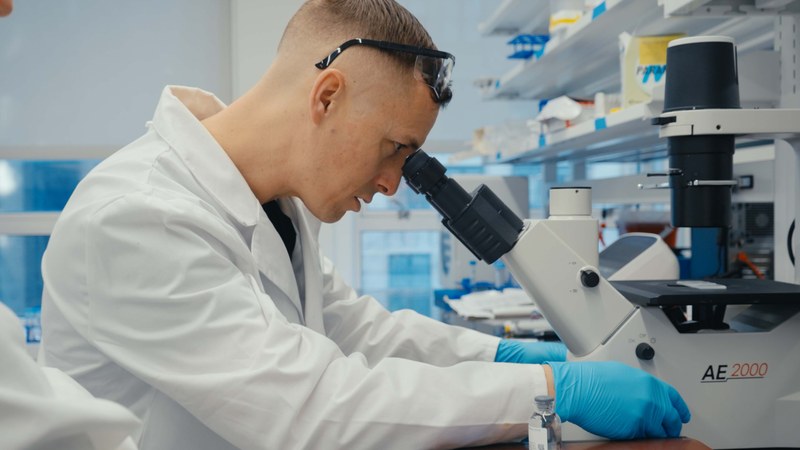
HexemBio
HexemBio is a New York- and Berkeley-based biotech building what it calls the first blood stem cell rejuvenation therapy. Its Synthetic Human Yolk Sac platform recreates the embryonic environment where blood stem cells first arise, temporarily placing a patient's own aged hematopoietic stem cells into that synthetic young niche before returning them by IV infusion - rather than gene-editing or chemically reprogramming the cells. The company launched publicly in April 2026 with a $10.4M seed round led by Draper Associates, holds an FDA Orphan Drug Designation for a bone-marrow-transplant program in blood cancers, and is targeting first-in-human trials in 2027.

Unravel Biosciences
Unravel Biosciences is a clinical-stage therapeutics company spun out of Harvard's Wyss Institute that starts with a patient's RNA rather than a drug target. Its BioNAV probabilistic network model of human health screens 40,000-plus compounds in silico - reporting roughly 200x the hit rate of conventional screens - to find existing molecules that can push a disease back toward health. The company validates predictions in engineered whole-organism models (including CRISPR-edited tadpoles) and then in patients, aiming to bring effective, lower-cost therapies to rare and overlooked diseases. Its lead asset, RVL-001 (a proprietary formulation of vorinostat), holds FDA Orphan Drug Designation for Rett syndrome and has entered clinical studies.

Abcuro, Inc.
Abcuro is a clinical-stage biotechnology company in Newton, Massachusetts developing first-in-class immunotherapies that selectively deplete highly cytotoxic T cells implicated in autoimmune tissue damage and certain cancers. Its lead program, ulviprubart (ABC008), is a monoclonal antibody targeting the KLRG1 receptor, advanced primarily for inclusion body myositis (IBM) - a progressive muscle-wasting disease with no approved treatments - alongside pipeline work in T-cell large granular lymphocytic leukemia and T/NK-cell lymphomas.

Vima Therapeutics
Vima Therapeutics is a Cambridge, Massachusetts clinical-stage biotechnology company developing VIM0423, a potential first-in-class once-daily oral therapy for isolated dystonia and Parkinson's disease. The drug selectively targets muscarinic cholinergic receptors in the brain to correct the dopamine-acetylcholine imbalance underlying these movement disorders. Incubated at Atlas Venture and led by neurologist Bernard Ravina, the company emerged from stealth in 2025 and has raised a $100 million Series A.