Company Profile / Regenerative Medicine
The Startup Rebuilding the Organ That Quietly Ages You
Most of biotech chases the diseases you can see. Thymmune went after the organ almost no one thinks about - the thymus - and built a way to grow it from stem cells.
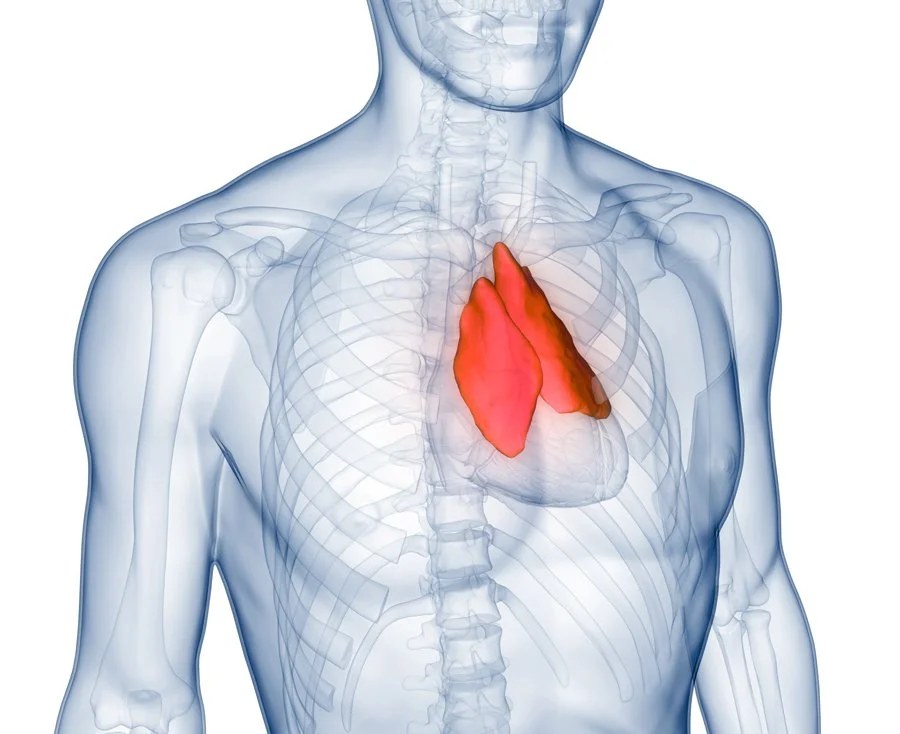
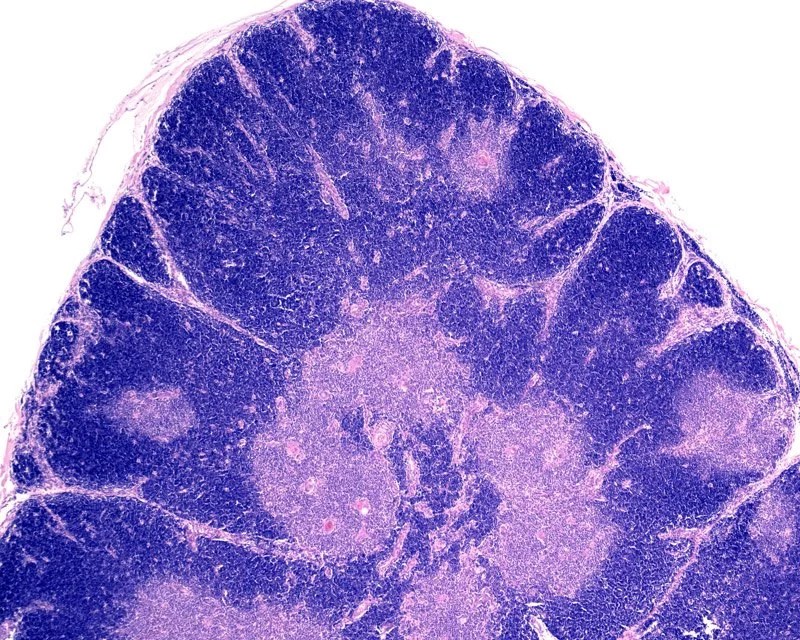
There is a small organ tucked behind your breastbone that most people will live their entire lives without thinking about. It is called the thymus, it is roughly the size of a walnut, and its job is to train the T cells that keep you alive. It also has a design flaw: it starts shrinking not in old age, but in your twenties. By the time you are middle-aged, much of it has quietly turned to fat. Thymmune Therapeutics built a company on a simple, stubborn idea - that this is a problem you can manufacture your way out of.
Founded in 2019 in Cambridge, Massachusetts, Thymmune set out to do something the rest of biotech had largely left alone: rebuild the thymus from stem cells. Not repair it, not slow its decline - grow new thymic cells in a lab, at scale, and put them back into the body where they can pick up the job the original organ stopped doing. In July 2026, United Therapeutics agreed the idea was worth up to $300 million and bought the company.
The organ nobody was working on
Immune aging is one of biology's slow-motion problems. As the thymus involutes, your body produces fewer fresh, naive T cells - the ones that recognize threats it has never seen before. That shift sits underneath a long list of downstream trouble: weaker responses to new infections, poorer reactions to vaccines, and a rising vulnerability to disease. Plenty of longevity companies talk about the symptoms. Thymmune's founder, Stan Wang, decided to go after the source.
Wang is a physician-scientist who trained in George Church's lab at Harvard Medical School - one of the most prolific launchpads for ambitious biotech in the world. The thesis he carried out of the lab was contrarian in a useful way. The thymus was scientifically neglected precisely because it was hard, and hard-and-neglected is exactly where a startup can build a moat before anyone else shows up.
This treatment is less invasive than surgery and can be replicated at high quality at scale.Thomas de Vlaam, Pillar VC
What Thymmune actually built
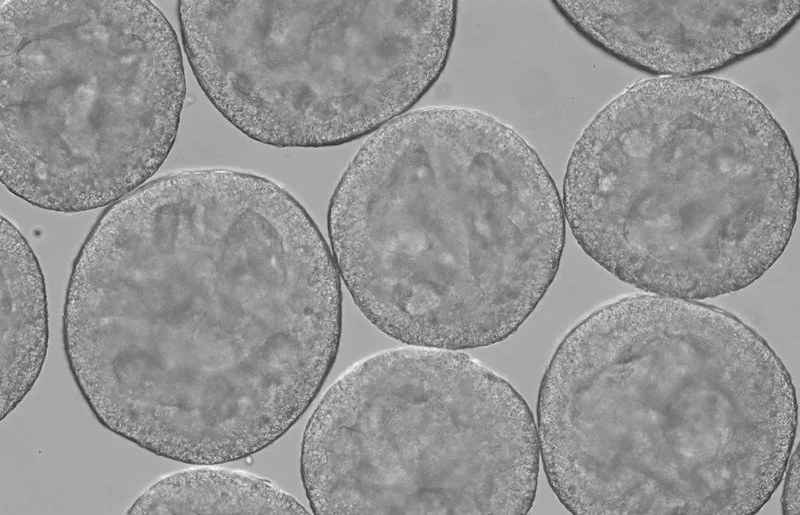
The core of the company is a manufacturing platform, not a single drug. Thymmune developed a proprietary, machine-learning-guided process for converting human induced pluripotent stem cells (iPSCs) into thymic cells - including the thymic epithelial cells that do the training work. Once delivered into the body, these cells are designed to mature and form functional, thymus-like tissue that can restart healthy T-cell development.
The word that matters most here is off-the-shelf. Many advanced cell therapies are personalized: made from a specific patient's own cells, one batch at a time, at high cost and slow speed. Thymmune's bet was the opposite - a scalable source of thymic cells that could be manufactured in advance and delivered when needed. Machine learning helped guide the finicky, multi-step differentiation process that turns a generic stem cell into a specialized thymic one.
THY-100 and the case for starting small
A platform is a promise. To prove it, Thymmune needed a first target with a clear biological readout, and it chose one most doctors will never encounter: congenital athymia, an ultra-rare condition in which infants are born without a functional thymus. Without treatment, their bodies cannot properly develop T cells, leaving them dangerously exposed to infection.
Thymmune's lead program, THY-100, is aimed squarely at this. In animal studies, the company reported that its iPSC-derived thymic cells could form neo-thymus tissue - genuinely new, functioning thymus-like tissue - capable of supporting T-cell development. The strategic logic is worth noticing: an ultra-rare, life-threatening disease with a stark, measurable outcome is a hard place to hide a weak result. If the cells work here, the platform's broader ambitions - transplant tolerance, immunodeficiencies, autoimmune disease, and immune aging itself - become far more credible.
Follow the money
Thymmune's funding history reads like a deep-tech company that used both venture capital and non-dilutive government money to buy itself runway. It raised a $7 million seed round in March 2023, led by Pillar VC with participation from NYBC Ventures and a roster of biotech operators - among them Mark Bamforth, John Maraganore, and Judy Pagliuca. A Series A followed. Then came the headline grant.
In September 2023, Thymmune received an award of up to $37 million from ARPA-H, the federal health research agency - reported to be ARPA-H's first industry grant. For a young company, a government agency's first bet on the private sector is a strong external signal that the science is taken seriously.
The exit
On July 2, 2026, United Therapeutics announced it had acquired Thymmune. The terms: $140 million in upfront cash, plus potential earn-out payments of up to $160 million tied to clinical and regulatory milestones through the end of 2031 - up to $300 million in total. For United Therapeutics, the fit is strategic. The company has spent years working on the supply of transplantable organs, including genetically engineered pig organs and its UThymoKidney program. A platform that can rebuild thymic tissue slots directly into an organ-and-tolerance story.
United Therapeutics shares our conviction that regenerative medicine can transform the lives of patients.Stan Wang, CEO & Founder, Thymmune
How it's different
Most immune-focused biotechs work downstream - engineering T cells, tuning antibodies, dampening or provoking immune responses. Thymmune worked upstream, on the factory that produces the immune system's workforce in the first place. And where the standing option for thymic deficiency has involved transplanting cultured donor thymus tissue - constrained by supply and complexity - Thymmune's approach was built for manufacturing: a renewable, iPSC-derived source that does not depend on a matched donor.
That framing - fix the source, make it at scale - is what separated the company from both the longevity crowd chasing symptoms and the cell-therapy field building bespoke, one-patient-at-a-time products.
Who it is actually for
Follow the thymus and you find a surprisingly wide set of patients. The first and most acute are infants with congenital athymia, where the need is absolute and the alternatives are few. From there the map widens: people with immunodeficiencies whose bodies struggle to mount defenses; transplant recipients, where a rebuilt or retrained immune compartment could help the body accept a new organ instead of rejecting it; and patients with autoimmune disease, where the immune system has turned on its host. Further out sits the largest and most speculative group of all - anyone whose immune system is simply getting older.
That range is also why the acquisition makes sense. United Therapeutics is not an immunology pure-play; it is a company obsessed with the supply of transplantable organs and with keeping those organs viable in a recipient. Transplant tolerance - getting a body to accept foreign tissue without a lifetime of heavy immunosuppression - is one of the field's oldest, hardest problems. A platform that can grow thymic tissue is a plausible new tool for exactly that, which is why Thymmune's science reads less like a bolt-on and more like a missing piece.
The business underneath
Strip away the biology and Thymmune ran a familiar deep-tech model: a small, science-heavy team spending years and other people's money to de-risk a platform, with no product revenue in the conventional sense. The company's reported annual revenue was modest and largely a reflection of grant funding rather than sales. The real asset was the platform and the data behind it - and the exit is how that asset converts to value. Upfront cash rewards what was proven; the milestone earn-outs, stretching to 2031, keep the founding team's incentives pointed at the same clinical goals that will decide whether any of this reaches patients.
The honest caveats
It is worth being clear-eyed. At acquisition, Thymmune was a preclinical-stage company. The most striking results - neo-thymus tissue, restored T-cell development - come from animal studies, and the long road of human clinical trials still lies ahead under United Therapeutics. Regenerative cell therapies are notoriously difficult to translate from a dish and a mouse to a person. The up-to-$300M headline is exactly that: an upfront payment plus milestones that only pay out if the science keeps delivering through 2031. The idea is proven enough to buy. It is not yet proven enough to prescribe.
The timeline
What a reader can take from this
Thymmune's arc is a compact lesson in building deep tech. It picked a neglected, hard target and turned obscurity into an advantage. It sequenced from an ultra-rare disease with a clean readout toward a broad platform, rather than starting with the biggest market. And it stacked non-dilutive grant money on top of venture funding to stretch a small team's runway. Seven years, roughly 25 people, one forgotten organ - and an exit worth up to $300 million. The thymus, it turns out, was worth thinking about after all.