carbon-capture
(14)
Sustaera Scrapped Years of Work to Build a Cheaper Carbon-Capture Machine
Direct air capture has a brutal math problem: too much machinery chasing too little CO2. The North Carolina startup’s answer was to kill its first product, shrink the team and redesign the machine around electricity, ceramics and a cost target the market might actually buy.
The Climate Fund Betting the Future Still Runs Through a Pipe
Energy Capital Ventures built a narrow venture thesis around an unfashionable premise: decarbonization will have to work with existing gas infrastructure, not merely wish it away. Now data centers, industrial demand and a portfolio of strange machines are putting that bet to work.

The Company That Pumps One of Every Nine Barrels on Earth
It struck oil at a well called Dammam No. 7 in 1938. Nearly a century later, Aramco still moves roughly one of every nine barrels the world burns - and is quietly betting billions that its next act runs on gas, chemicals and code.

Holcim
Holcim is trying to turn the oldest ingredients in construction into a newer kind of business - one that sells lower-carbon materials, recycles yesterday’s buildings and captures the emissions its kilns cannot yet avoid.
280 Earth
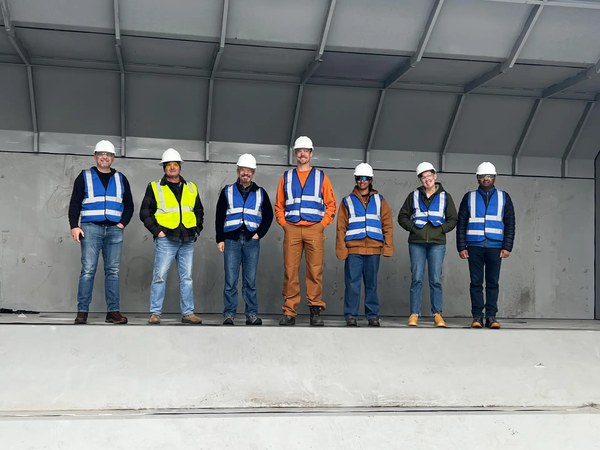
280 Earth is a climate-tech company that removes carbon dioxide permanently from the ambient air using a modular Direct Air Capture (DAC) system spun out of Alphabet's X, The Moonshot Factory. Its continuous-flow process uses a proprietary sorbent, off-the-shelf industrial equipment and low-grade waste heat or clean electricity to pull CO2 - and fresh water - out of the atmosphere at low energy cost. Its first plant in The Dalles, Oregon began operating in May 2024 and is designed to scale from hundreds to more than 20,000 tons of CO2 removed per year. The company's name references 280 parts per million, the pre-industrial atmospheric CO2 concentration it aims to help restore.
AirMyne
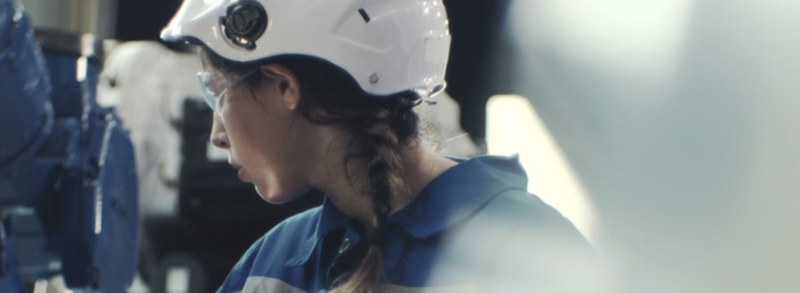
AirMyne is a Berkeley, California climate-tech company building liquid-based direct air capture (DAC) systems that pull carbon dioxide out of the atmosphere at industrial scale. Founded in 2022 by chemical-industry veterans Sudip Mukhopadhyay and Mark Cyffka, the company designs a low-temperature, energy-flexible capture process - regenerating its solvent at roughly 100-130 C so it can run on waste heat, geothermal energy, or electricity rather than the high-temperature furnaces most DAC rivals require. Backed by Y Combinator and, more recently, a strategic investment from Japanese energy giant ENEOS, AirMyne is moving from kilogram-per-day prototypes toward a commercial pilot and demonstration plant.

Calcarea
Calcarea is a Caltech- and USC-born climate-tech company decarbonizing the shipping industry with onboard reactors that capture CO2 from ship exhaust and convert it into stable ocean bicarbonate. By speeding up the natural reaction between seawater and limestone - a process that normally takes over 10,000 years - down to about a minute, Calcarea aims to permanently and safely store roughly half of a cargo ship's emissions as slightly saltier seawater, at costs competitive with today's best carbon capture options.

Proteum Energy
Proteum Energy is a Phoenix-based cleantech company that turns wasted flare gas and residual hydrocarbons into clean hydrogen, renewable natural gas, and designer fuels. Using its patented modular Flare-to-Fuel platform and steam non-methane reforming (SnMR) technology, Proteum helps oil, gas, and ethanol producers cut emissions and profit from assets that would otherwise be burned off into the sky.
Solidec
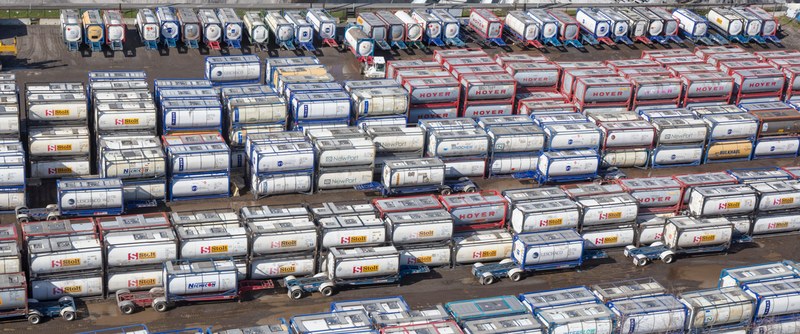
Solidec is a Houston-based climate-tech company spun out of Rice University that builds modular electrolyzers to make essential chemicals - starting with ultra-pure hydrogen peroxide - on-site from just air, water, and electricity. Its porous solid-electrolyte reactor skips the centralized plants, hazardous trucking, and fossil-fuel feedstocks of conventional chemical production, cutting emissions by as much as 90%. Founded in 2023 by Ryan DuChanois, Yang Xia, and Rice professor Haotian Wang, the company raised an oversubscribed $2M pre-seed round and has been backed by Chevron Technology Ventures' Catalyst Program, the Activate Fellowship, and a NASA SBIR award.
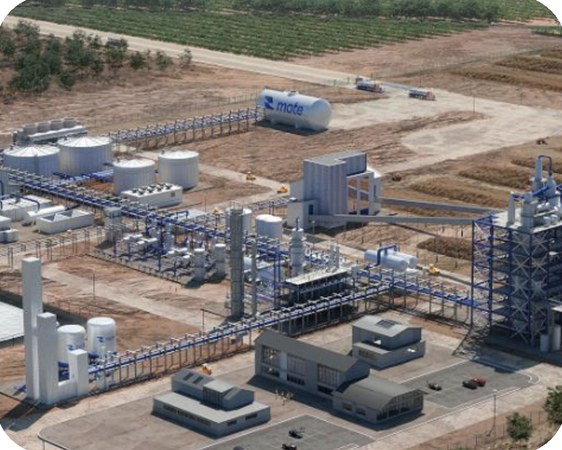
Mote
Mote is a Los Angeles-based climate-tech company that turns woody waste biomass into clean biohydrogen while permanently sequestering the carbon. Using a biomass carbon removal and storage (BiCRS) process spun out of Lawrence Livermore National Laboratory, Mote pairs energy production with carbon removal: each utility-scale plant is designed to produce roughly 60 tons of carbon-negative hydrogen per day while removing on the order of 450,000 tons of CO2 a year. The company is developing its first commercial facility near Bakersfield in California's Kern County and a second project in Northern California with the Sacramento Municipal Utility District.

Remora
Remora is a Detroit-area climate-tech company that bolts carbon capture onto the things already burning fuel - semi-trucks and freight locomotives - instead of building giant plants to pull CO2 back out of the sky. Its zero-backpressure device threads exhaust through proprietary adsorbents, captures up to 90% of the CO2, reduces soot and NOx to Tier 4 levels, then liquefies the gas to be sold into a supply-constrained industrial CO2 market. Operators share the revenue, so cutting emissions becomes a line item that pays rather than one that costs.
CREW Carbon
CREW Carbon is a Yale-spinout water and climate technology company based in Hamden, Connecticut. It retrofits municipal and industrial wastewater treatment plants with a closed-system enhanced-weathering process: dosing alkaline minerals into wastewater to convert dissolved CO2 into stable bicarbonate. The approach lowers operating costs and improves treatment performance for utilities while permanently and measurably removing atmospheric carbon, which it sells to corporate buyers as durable carbon removal credits.
Mantel
Mantel is a Cambridge, Massachusetts cleantech company building a molten-salt approach to industrial carbon capture. Spun out of MIT in 2022, its molten borate materials operate inside the high-temperature guts of boilers, kilns and furnaces, absorbing more than 95% of CO2 while recovering high-grade heat that offsets the energy cost of capture. The pitch is blunt: cut the cost of capturing a ton of carbon by more than half and make it work in the dirtiest, hottest corners of heavy industry - cement, steel, pulp and paper, power and refining.

Heirloom Carbon
Heirloom Carbon Technologies is a San Francisco-based direct air capture company that uses limestone's natural CO2-absorbing properties to pull carbon dioxide permanently out of the atmosphere. Their process accelerates a geological phenomenon that normally takes thousands of years into a 3-day cycle: calcium oxide powder absorbs CO2 from ambient air, becomes limestone, gets heated in a renewable-energy-powered electric kiln to release the captured CO2, and repeats. The captured CO2 is then stored permanently underground or embedded in concrete. Founded in 2020, Heirloom opened America's first commercial DAC facility in Tracy, California in November 2023 and has raised over $354 million to expand capacity toward their goal of removing 1 billion tons of CO2 by 2035.