aviation
(13)
Jeremy Schneiderman Built the Drone Store. Now He Has the Aerospace Company to Run.
Jeremy Schneiderman spent twelve years turning a Florida drone shop into an enterprise operating system. Nine months after XTI Aerospace bought the company, its board handed him the cockpit.
Kellee Ober-Watts and the work behind the work of flight
A Dayton operator's brief public record opens a window onto the disciplined, mostly unseen work that keeps a global aerospace system moving.
Ronald Henry
A marketing chief inside a 130-year-old industrial name, working out of the Ohio city where powered flight was invented.
Todd Graetz
Todd Graetz is the co-founder and CEO of Aerolane, a Texas aviation startup building autonomous towed cargo gliders called Aerocarts, which let ordinary planes tow extra payload for only a marginal increase in fuel burn. Before Aerolane he spent his career at BNSF Railway, where he co-founded the railroad's uncrewed aircraft systems program and helped launch some of the first long-range beyond-visual-line-of-sight commercial drone flights in the U.S. under the FAA Pathfinder program. He is an active private pilot, an AUVSI board member, and a veteran of multiple FAA advisory and rulemaking committees.
David Zagaynov
David Zagaynov is the CEO and co-founder of Poseidon Aerospace, a San Francisco aerospace startup building unmanned, runway-independent cargo aircraft. A UC Berkeley computer science graduate and former Amazon software engineer, he co-founded the company in 2023 with Parker Tenney and Isaac Baumstark around a shared obsession with the ekranoplan, a Soviet Cold War boat-plane that skimmed just above the water. Poseidon is developing the Heron seaplane and the Egret short-takeoff aircraft, each designed to haul up to two tons of cargo over 1,500 miles. The company raised an $11 million seed round in November 2025 led by Tamarack Global, after a $1.4 million pre-seed led by Starship Ventures.
Marc Allen
Marc Allen is the CEO of Electra.aero, a Manassas, Virginia startup building the EL9, a nine-seat hybrid-electric ultra-short takeoff and landing (eSTOL) aircraft that can lift off in roughly 150 feet of runway. A Yale Law graduate and former U.S. Supreme Court clerk who spent 17 years at Boeing - including stints as Chief Strategy Officer, President of Boeing International, and Chairman of Wisk Aero - Allen left the world's largest aerospace company in August 2024 to run a startup chasing what he calls 'Direct Aviation': air travel without airports, emissions, or noise. Under his watch Electra has stacked up roughly 2,200 pre-orders worth nearly $9 billion and closed a $115 million Series B.

Alan Zhang
Alan Zhang (Rongyu Zhang) is a San Francisco-based founder, aerospace engineer, and YouTube creator who built the first human-carrying eVTOL drone assembled by a high schooler — a 280kg-thrust electric aircraft completed in 327 days with 17 classmates in a Diamond Bar garage. Now at UC Berkeley's MET program (Management, Entrepreneurship & Technology), he is building Prototype 3 of his passenger drone and running a stealth startup, while his YouTube channel @alanzeekk documents his journey building interesting machines.
Wendover Productions
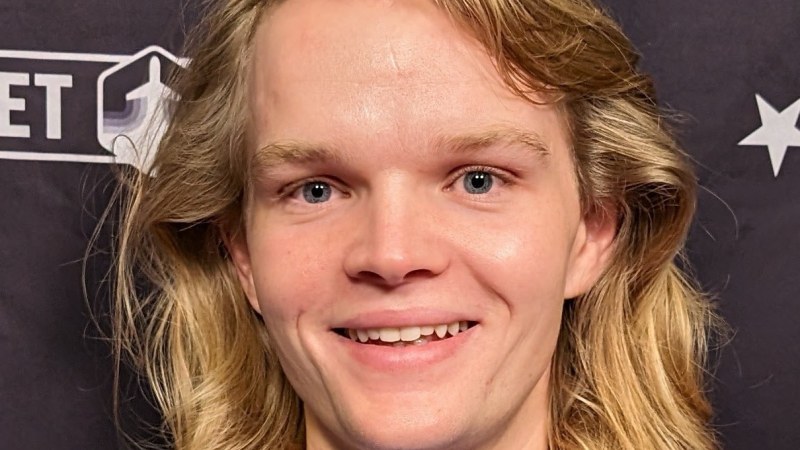
Wendover Productions is the edutainment empire built by Sam Denby out of Aspen, Colorado. What started in 2015 as a one-person YouTube channel about how airlines route planes has metastasized into a multi-channel studio, a hit travel-competition show (Jet Lag: The Game), and a creator-owned streaming service (Nebula) where Denby now serves as Chief Content Officer. The throughline: take logistics, geography, and economics and make them feel like a thriller.

Arthur Dubois
Arthur Dubois is the co-founder and CEO of Grid Aero, a Palo Alto-based autonomous cargo aircraft startup building what he calls 'the pickup truck of the skies' - rugged, unmanned aircraft capable of hauling thousands of pounds over thousands of miles to places conventional logistics can't reach. A Stanford-trained aerospace engineer who helped scale Joby Aviation and led engineering at Xwing before its acquisition by Joby, Dubois founded Grid Aero in 2024 after growing frustrated with the complexity and cost of retrofitting legacy aircraft for autonomy. In January 2026, Grid Aero raised a $20M Series A to bring its Lifter Lite autonomous cargo aircraft from prototype testing into real-world military and commercial operations.
John Dean
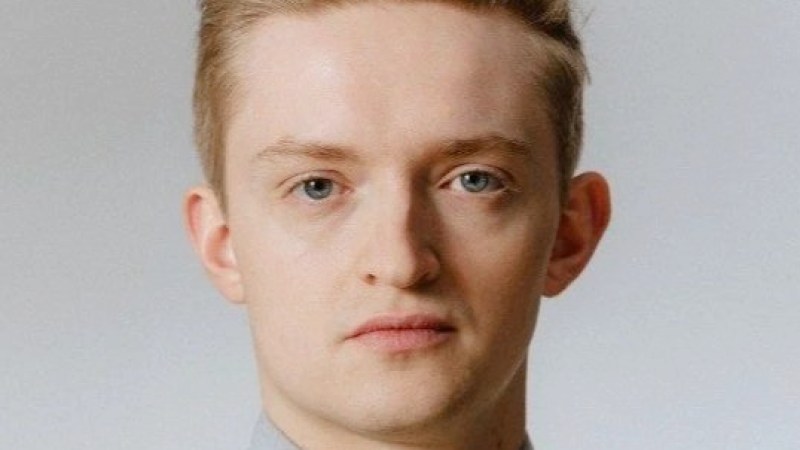
John Dean is the Cofounder and CEO of WindBorne Systems, a Redwood City, California-based company operating the world's largest constellation of autonomous long-duration weather balloons. A Stanford electrical engineering graduate and former intern at SpaceX, NASA, and Lyft, Dean co-founded WindBorne in 2019 out of Stanford's Student Space Initiative after breaking four world records as undergraduates. The company raised a $15 million Series A led by Khosla Ventures in 2024, and its WeatherMesh AI model surpassed Google DeepMind's GraphCast as the most accurate global weather forecasting model, running on a fraction of the compute power. WindBorne's balloons have flown into Hurricane Milton and have set a new benchmark for how atmospheric data is collected at scale.
Josh McFarland
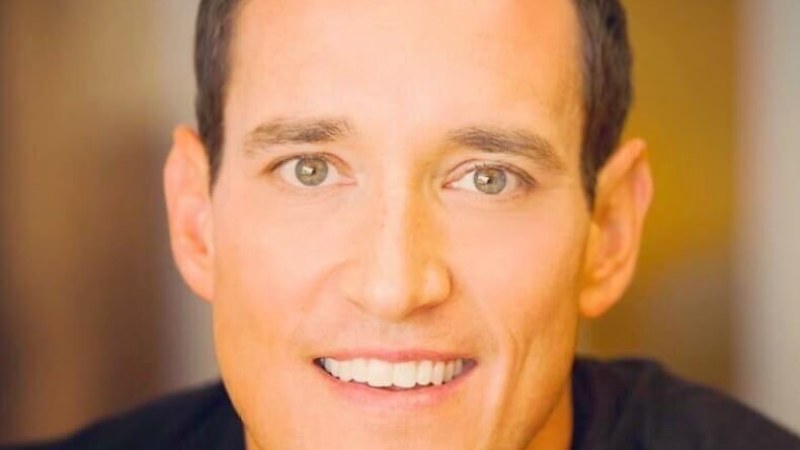
Josh McFarland is the Executive Chairman of Boom Supersonic, the Colorado-based company racing to bring commercial supersonic flight back to the skies. The son of a Wyoming coal miner who grew up building rockets and flying Piper Cubs with his dad, McFarland parlayed a Stanford economics degree into a career arc that touched Google's earliest advertising infrastructure, the $500M-plus sale of his AI marketing startup TellApart to Twitter, a VP role running Twitter's revenue products, and a partnership seat at Greylock Partners - before landing back in the world he loved as a boy: aviation. As Executive Chairman, he leads fundraising and go-to-market strategy for Boom, whose XB-1 demonstrator broke the sound barrier in 2025 and whose Overture airliner promises Mach 1.7 travel on sustainable aviation fuel.
Humza Rahat Siddiqui
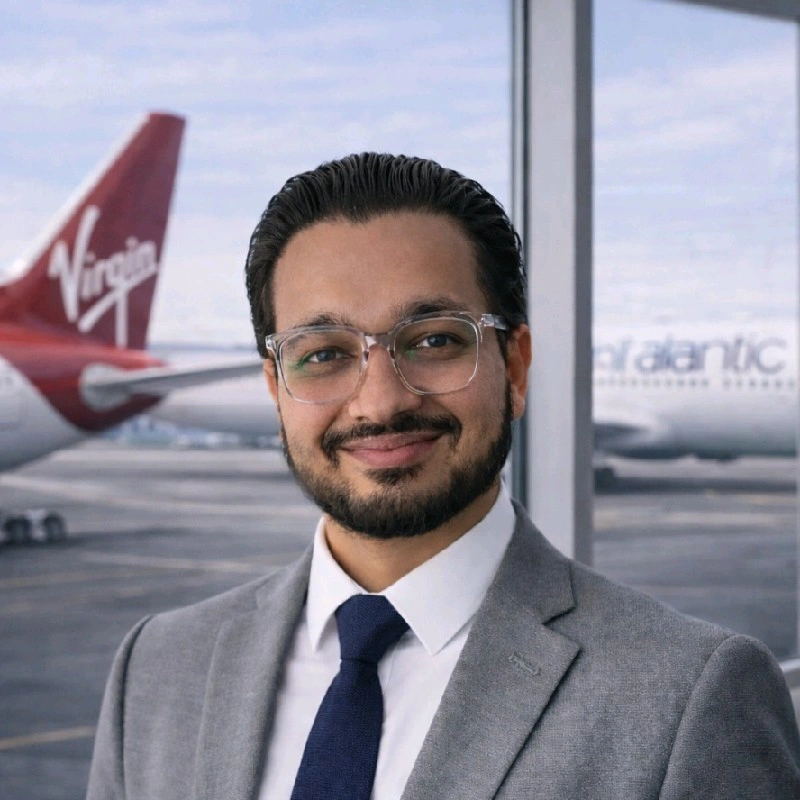
Humza Rahat Siddiqui is a UK-based content development and marketing specialist currently working as Ticketing & Support at Virgin Atlantic's Heathrow Airport operations. With a cross-industry career spanning digital marketing, aviation, supply chain, and corporate communications, he has driven social media growth to over 200,000 Facebook followers, collaborated with aviation executives to build a new airline training academy in Pakistan, and contributed content for high-profile events including Pakistan Fashion Week and Unilever product launches. His academic background combines a BSc in International Business from Coventry University with an MSc in Supply Chain from the University of South Wales.
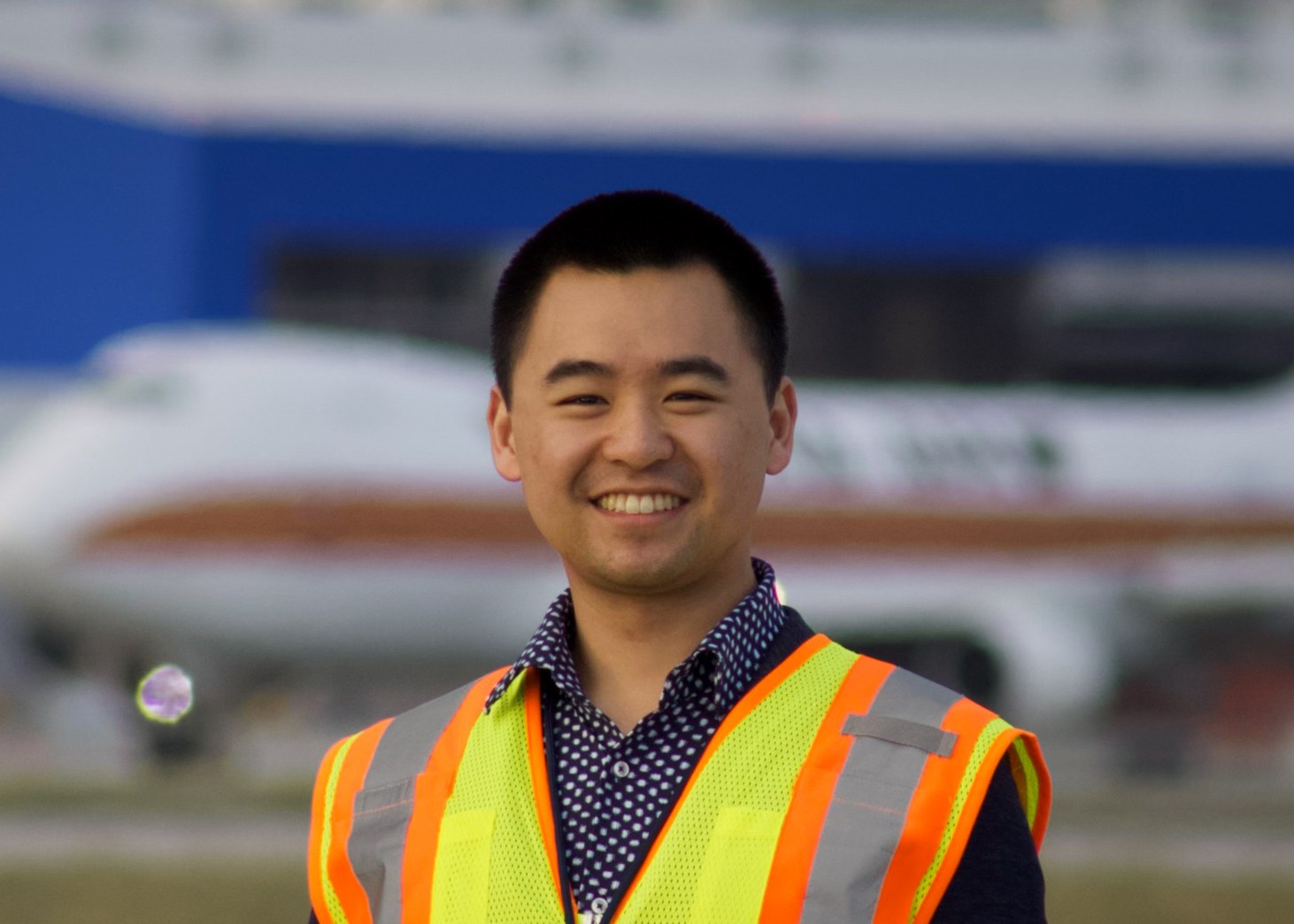
Raymond Wang
Raymond Wang is the Co-Founder and CEO of AeroVect, a Silicon Valley startup building AI-powered autonomous driving systems for airport ground support equipment. A Harvard computer science graduate (Class of 2020) who grew up in Vancouver, Canada, Wang came to aviation obsession early - as a high school student he won the $75,000 Gordon E. Moore Award at the 2015 Intel ISEF for an invention that reduced pathogen transmission on aircraft by 55x, and later gave a TED Talk on the subject. At Harvard he co-founded Civology (YC W20) before pivoting to AeroVect, where he and co-founder Eugenio Donati built the world's largest airside driving dataset and deployed autonomous tractor systems at major hubs including Atlanta Hartsfield-Jackson and Dubai International. Named to Forbes 30 Under 30 (Manufacturing & Industry, 2022), Wang is reshaping the last 500 feet of global logistics - the chaotic tarmac - with self-driving software built from scratch for the airport environment.