On a Monday in August, Jeremy Schneiderman began the week as the chief executive of a drone company. By dinner, he was also the interim chief executive of the public aerospace company that had bought it nine months earlier. The title arrived quickly. The apprenticeship did not. It had taken twelve years of retail counters, repair tickets, vendor calls, training sessions, anxious enterprise buyers and aircraft that absolutely had to be ready for the next mission.
The board of XTI Aerospace appointed Schneiderman, then 52, to the interim job on August 17, 2026. He kept his role at Drone Nerds, the Florida business he co-founded with Alex Nafissy in 2014. That makes his new assignment unusually literal: run the parent while still running the operating company that changed what the parent is.
It is a tidy corporate plot twist, but the more useful story lives underneath it. Drone Nerds did not reach this point by making the aircraft. It learned how to make aircraft useful to people with budgets, rules, deadlines and no appetite for a hobbyist's learning curve. Schneiderman's product was never only a drone. It was the confidence to deploy one again tomorrow.
The shop learns to stay after the sale
Drone Nerds started in the exuberant consumer years, when a flying camera still felt like contraband from the future. A retailer could win by knowing the gear, carrying the parts and helping a new pilot avoid donating an expensive quadcopter to the nearest tree. That business created volume. It also created a rather more valuable asset: a close view of everything that broke after the box was opened.
Repairs led to technical knowledge. Technical knowledge led to better recommendations. Better recommendations made room for custom configurations, training and support. When companies and agencies began asking what drones could do for inspections, emergency response, construction, agriculture and insurance, the team had already spent years handling the fiddly details that glossy brochures omit.
Schneiderman dates the public-safety “aha moment” to 2016. Search, overwatch and emergency use made the distinction plain. A consumer buys an aircraft. A public-safety department adopts a capability. The second customer needs procurement guidance, pilots, compliance, payloads, software, maintenance and a plan for the morning when the aircraft refuses to cooperate.
“They outsource the whole program management to us.”Jeremy Schneiderman
One insurance customer, he has said, began with a single drone and grew to more than 2,000. The scale is striking, but the small first number matters more. Enterprise adoption rarely arrives as a fleet. It arrives as a test, watched by people who can see every reason it might fail. The vendor that shepherds drone number one earns the conversation about drone number 2,000.
The Drone Nerds service layer
The easy button is made of difficult parts
Schneiderman likes the phrase “easy button” for the company's role. The phrase is cheerful. The machinery behind it is not simple. Drone Nerds combines hardware and sensor selection, consulting, software, integration, training, repair, maintenance and an uptime program called Always Flying. The customer sees one accountable partner. Behind the curtain sits a complicated braid of manufacturers, regulations and operational constraints.
This is the underappreciated move in the Drone Nerds story. Retailers usually live at the end of a supply chain. Schneiderman pulled the company toward the middle, where manufacturers need a knowledgeable route to customers and customers need a knowledgeable route through manufacturers. Each side makes the other more useful. Repairs feed product knowledge. Product knowledge improves consulting. Consulting reveals which partnerships matter. The flywheel does not look glamorous on a keynote slide, which is another way of saying it may be a real business.
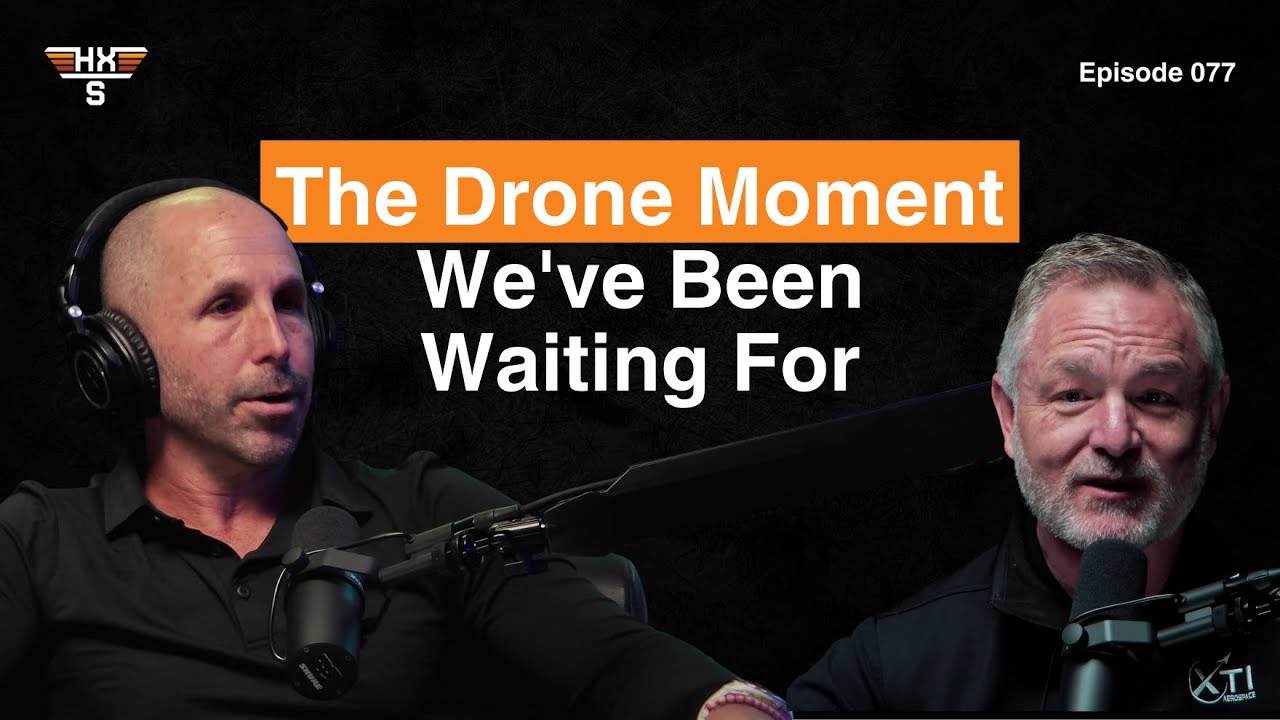
Asked to name the company's three strengths, Schneiderman begins with people, moves to culture and finishes with vendor relationships. His description of culture is unusually specific: the team likes learning and transferring what it learns to customers. There is the personality of the operation in a sentence. Curiosity comes in; reduced customer anxiety goes out.
His public persona is practical and collaborative. He measures drone technology by the field work it replaces: safer collection, faster collection, lower cost and better accuracy. In the same interview, a lightning round wandered briefly from autonomous aircraft to baseball. Schneiderman's fandom, he explained, is tied to family tradition. It is a small detail, but a revealing counterweight to the executive vocabulary. Long loyalties matter to him, whether the subject is a team on a diamond or a vendor relationship.
Put the aircraft in the air
The education instinct became a conference. ElevateUAV gathers manufacturers, enterprise buyers, public-safety teams and operators around live demonstrations. Schneiderman's explanation for the format begins with a familiar trade-show frustration: too many products sitting on tables beside spec sheets, too few chances to see them do the job.
A live demonstration changes the buyer's questions. Range becomes wind and terrain. Payload becomes data. Ease of use becomes the time between opening a case and completing a mission. A manufacturer can answer immediately, and a prospective customer can compare several systems in a day. The event is part education, part sales and part reality check. It also makes a physical version of Drone Nerds' broader strategy: reduce the number of leaps a customer must take on faith.
Conceptual, not financial: each layer removes another reason for an organization to postpone adoption.
A roof, a dock and fewer pilots in fields
Schneiderman's next chapter for the industry is less cinematic than a pilot silhouetted against a sunset. He imagines drones in weatherproof docks, charging between missions and dispatched remotely from command centers. Beyond-visual-line-of-sight rules and greater automation could allow one operator to supervise several aircraft. Utilities could inspect long corridors. Public-safety teams could launch from a roof. A school might keep an aircraft ready above the building instead of in a closet below it.
He treats that future as an operating shift, not simply a hardware upgrade. Autonomous launch is useless without dependable charging, fleet software, connectivity, inspection routines and clear regulatory permission. In 2025, Drone Nerds added drone-agnostic docking systems to its enterprise offering. It was a natural extension of the old repair-counter lesson: the customer buys the flight, not the machine.
Regulation and sourcing now sit closer to the center of the job. Procurement rules for public agencies increasingly distinguish between platforms and supply chains. Schneiderman has responded by widening the company's mix of manufacturers and holding webinars intended to translate changing requirements into purchasing decisions. His aspiration at XTI includes expanding U.S.-sourced systems while keeping Drone Nerds useful to customers navigating the transition.
The acquisition, then the cockpit
XTI Aerospace completed its acquisition of Drone Nerds on November 10, 2025. The deal was described at roughly $40 million, with cash, promissory notes and equity interests in the acquiring subsidiary. Drone Nerds brought more than $100 million in 2024 revenue, a decade of profitability and something harder to summarize in a transaction table: working relationships across the American drone ecosystem.
For Schneiderman, joining XTI offered capital to expand, pursue acquisitions and increase Drone Nerds' reach in autonomous flight, service models and enterprise programs. For XTI, the retailer-turned-platform offered current revenue and a practical bridge between aircraft makers and actual missions. Nine months later, that bridge became the interim chief executive.
The appointment also placed an operator from the drone distribution layer over a company with ambitions in commercial, industrial and defense markets. Schneiderman knows the market from the buyer backward. He has heard why an agency cannot purchase a particular airframe, why a sensor is ill-suited to a job, why a pilot needs another afternoon of instruction and why a broken unit can halt an otherwise persuasive deployment. That knowledge is less theatrical than designing a new aircraft, but it offers a useful map of demand. It shows where spending is real and where enthusiasm still outruns the workflow.
His immediate challenge is to preserve the customer habits that made Drone Nerds valuable while operating inside a public company with shareholders, reporting obligations and a wider strategic brief. The founder's old question was whether a machine could solve a customer's problem. The interim CEO's question is larger: which parts of the market deserve capital, and how quickly can they produce dependable returns? The vocabulary changes. The insistence on practical use does not have to.
Interim titles are, by definition, unsettled. Schneiderman's stated priorities are not. He has promised disciplined execution, sustained growth and continued support for customers in a changing market. Those are conventional executive phrases, but his history gives them a particular meaning. Discipline is the aircraft that comes back repaired. Growth is the one-drone trial that becomes a fleet. Support is what happens after the exciting object has been sold.
“If you're evaluating drones for your business, start tomorrow.”Jeremy Schneiderman
The advice has the impatience of a salesman and the confidence of an operator who knows how many decisions still come after “yes.” Schneiderman's career is a study in those decisions. The drone flies. The company is built underneath it.