A drone is a dramatic object to sell. It rises, hums and makes parking lots look like chessboards. The less cinematic business begins after landing: a cracked arm, a battery warning, a pilot who needs training, a thermal sensor that will not speak to the software, or a police department discovering that its preferred aircraft does not fit a new procurement rule. Drone Nerds built a company in that gap between a spectacular demo and a dependable Tuesday.
Founded in South Florida in 2014 by Jeremy Schneiderman and Alex Nafissy, Drone Nerds began with the obvious opportunity. Consumer camera drones were becoming real products, DJI was becoming the category's gravitational center, and buyers needed inventory plus advice. The company became a large U.S. drone dealer and an authorized repair operation. Then it kept moving downstream, from selling aircraft to helping customers choose, configure, finance, train, repair and sustain entire fleets.
The store became an operating system
The catalog still matters. Drone Nerds sells camera drones, industrial multirotors, agricultural sprayers, fixed-wing platforms, underwater drones, cameras, thermal sensors, positioning gear, docks, batteries and the small accessories that acquire enormous importance when one is missing in a field two hours from the office. Consumers can buy a Mavic or an action camera online. Resellers can source inventory and kitted orders. Enterprise customers get a different conversation.
That conversation starts with the work. Is a utility inspecting power lines? Is a construction team mapping progress? Does a fire department need an eye in the sky before officers or firefighters arrive? The company's enterprise staff maps the mission to an airframe, payload, software stack and support plan. Training and compliance follow. So do repair, scheduled maintenance and fleet management. The result is less a single product than a chain of promises.
From curiosity to a working fleet
Its most revealing brand is Always Flying™, a reliability program designed to reduce downtime through lifecycle support and hot swaps. The name is cheerful; the premise is blunt. Hardware fails. Pilots crash. A grounded drone stops gathering data and sends a trained employee back to an older, slower workflow. Drone Nerds decided that the first failure should not end the customer's program.
The drone is the visible product. Readiness is the business hiding underneath it.
Who pays, and what do they buy?
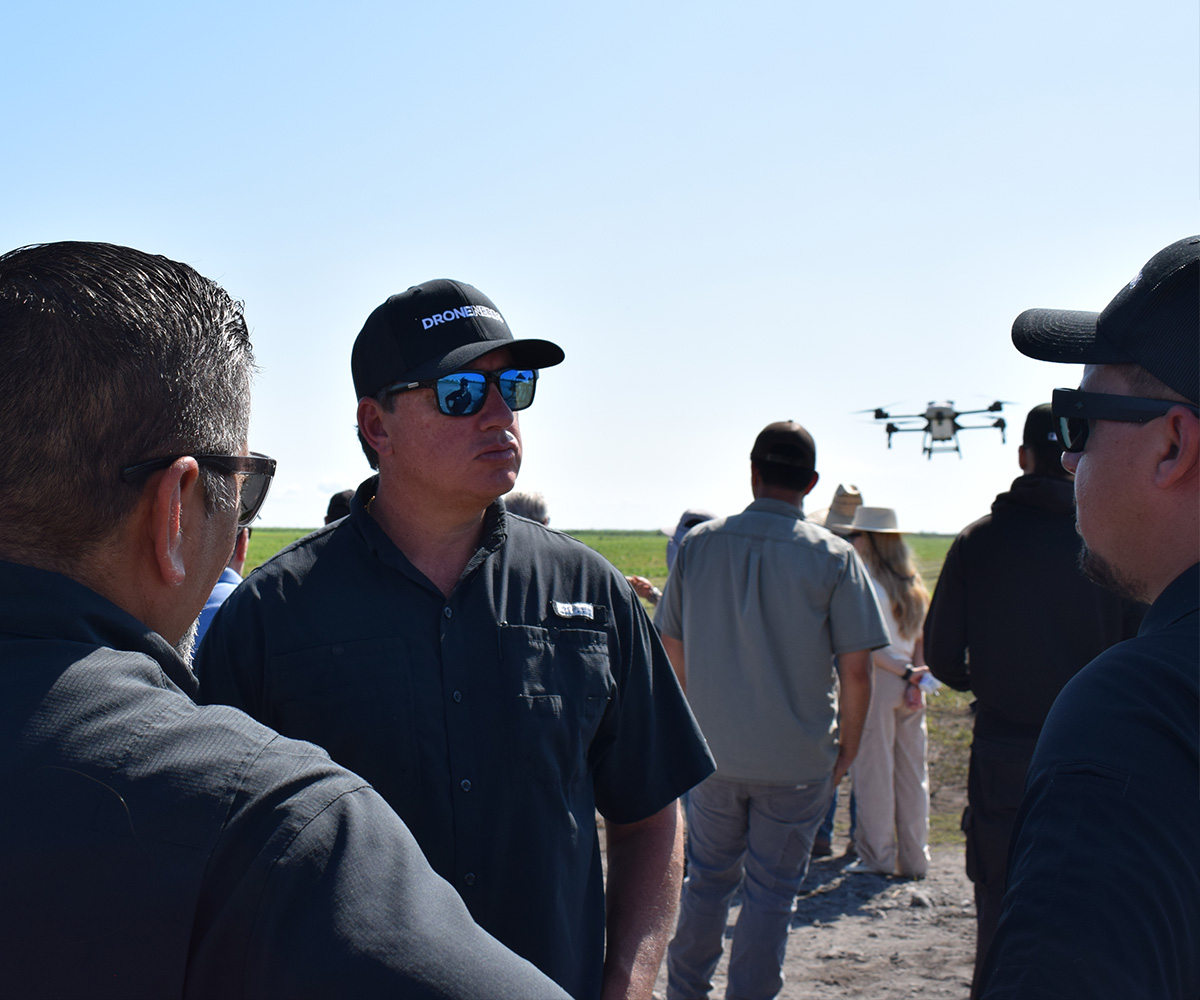
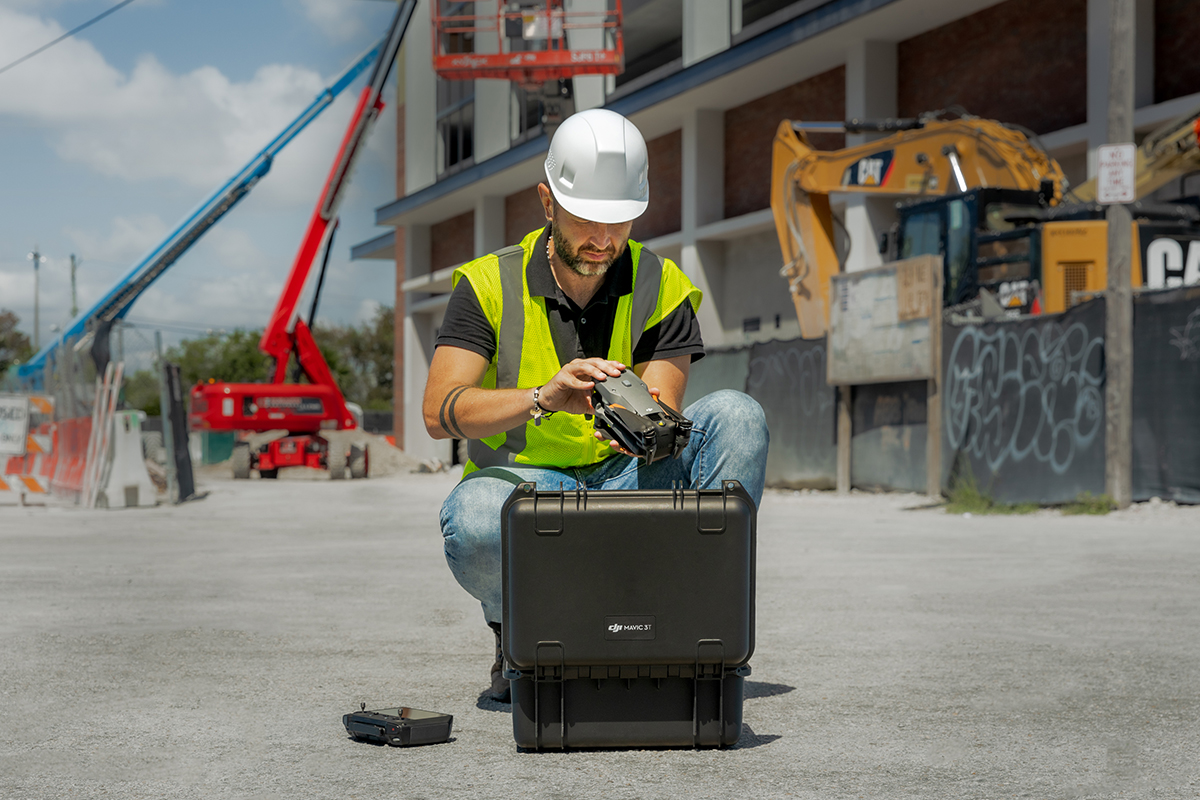
The customer list stretches from hobbyists to state agencies, but the strategic center is enterprise and government. Public-safety teams use drones for incident response, search, perimeter monitoring and situational awareness. Construction crews map sites and document progress. Utilities inspect lines, solar arrays and pipelines while keeping people away from hazards. Farmers monitor crops and apply material. Surveyors collect images and positioning data. Insurers, mines, schools, broadcasters and security teams add their own missions.
Drone Nerds earns money across that journey: retail and ecommerce margin, wholesale distribution, enterprise equipment, accessories and payloads, training, custom integration, software, repair, maintenance contracts, rentals and program support. A financing service matches applicants with competing lenders. Events and webinars educate prospects while giving manufacturers a stage. Its ElevateUAV summit brings live flights, workshops and vendor conversations into the same room, which is part conference and part very elaborate test drive.
That mix explains both the achievement and the unfinished work. XTI Aerospace said Drone Nerds produced more than $100 million in 2024 revenue and had a ten-year record of profitability. Yet XTI paid approximately $40 million for it in November 2025 - less than 0.4 times 2025 annualized revenue. Distribution businesses can be large without being richly valued because much of the sales price flows back to manufacturers. The acquisition thesis is to grow the stickier, higher-margin work around the box.
The $40 million change of mind
The buyer's pivot was more dramatic than the seller's. Before the deal, XTI centered its story on the TriFan 600, a development-stage vertical-takeoff business aircraft. That required time, capital and certification. Buying Drone Nerds gave XTI immediate revenue, positive operating history and thousands of commercial relationships. The consideration combined $20 million in cash, $11.9 million in promissory notes and $9.7 million in subsidiary equity units.
In other words, XTI changed its mind about where near-term reality lived. It shifted resources toward an already operating drone platform and away from relying chiefly on a future aircraft. Schneiderman and Nafissy stayed to run Drone Nerds. XTI's first-quarter 2026 commentary made the hierarchy plain: Drone Nerds had become the operating foundation, while defense and manufacturing bets would be pursued selectively.
What failed first?
Public evidence does not point to a founding catastrophe. The recurring failure was operational: aircraft get damaged, fleets sit idle, pilots lack training, and configurations miss the mission. Drone Nerds designed repair, hot swaps and program guidance around those predictable breaks.
Its old strength is now the tension
Drone Nerds grew in close orbit around DJI, the Chinese manufacturer that defined modern commercial drones. That relationship created product knowledge, repair authority and abundant demand. It also created exposure to a fast-changing U.S. security and procurement environment. Federal rules have constrained Chinese aircraft in government use, and the FCC's December 2025 action placed foreign-made drones and critical components on its Covered List, limiting authorization for future models.
The company's answer is to be loyal to the mission rather than one logo. It has widened its mix with platforms from Parrot, Freefly, ACSL, Draganfly, Inspired Flight and others. The ACSL sales agreement brought Japanese SOTEN and TENSO aircraft into its U.S. channel. Draganfly added an NDAA-compliant portfolio. Counterdrone's OmniDock introduced drone-agnostic charging. In August 2026, Drone Nerds became the exclusive U.S. distributor of DBOX autonomous docking systems for public safety and government users.
This is the clearest difference from a manufacturer. Drone Nerds can recommend a mixed fleet, retain existing platforms where permitted, and add compliant equipment for federally connected work. The independence is not perfect - distributors depend on their vendors, inventory and incentives - but breadth gives the company room to adjust when rules or product cycles move.
The playbook worth stealing
The copyable lesson is not “sell drones.” It is to list every reason the customer's expensive purchase might fail to produce its promised result. Drone Nerds found those gaps after checkout: configuration, training, software, data, repairs, replacement units, compliance and financing. Each gap became a service, partnership or recurring relationship. A retailer sees a crash as a warranty ticket. An operating partner sees it as a test of whether the customer keeps flying.
The second lesson is to use distribution as market intelligence. Because Drone Nerds sees multiple manufacturers and customer types, it can compare mission fit and spot demand moving toward docks, secure supply chains, thermal payloads or agricultural automation. The annual summit makes that feedback loop physical. Customers handle equipment, vendors hear objections, and the distributor learns which combinations deserve shelf space.
When this model works
- The hardware is costly, technical and prone to downtime.
- Buyers need several vendors assembled into one workflow.
- Training, regulation and maintenance affect the outcome.
- The distributor has enough scale to stock spares and staff repairs.
When it falls apart
- Customers buy purely on price and need no ongoing support.
- Manufacturers remove channel margin by selling direct.
- Inventory turns slowly while product generations change fast.
- A fleet is so small that internal expertise and self-insurance cost less.
The risks are not decorative. Hardware distribution ties up working capital. Regulation can make yesterday's bestseller awkward tomorrow. Manufacturers can alter dealer terms. Enterprise sales move with government budgets, agricultural seasons and infrastructure schedules. Autonomous flight adds its own permissions, connectivity and safety requirements. A docking station does not create a viable drone-as-first-responder program by itself; an agency still needs airspace authority, trained people, policies, network reliability and a mission worth automating.
Still, Drone Nerds occupies a useful middle. It is broad enough to move boxes, technical enough to repair them, and close enough to customers to design around their work. The goofy name helps. It signals enthusiasm without requiring a public-safety chief to pretend that procurement is glamorous.
The next test is whether XTI can increase enterprise revenue and recurring support without dulling the retailer's responsiveness. If it can, Drone Nerds will look less like an ecommerce company with a service desk and more like infrastructure for organizations that happen to operate in the sky. That is a subtler business than inventing the next aircraft. It may also be the more durable one.