A fence alarm tells you that something happened. It is considerably less helpful about what. At Travis Air Force Base, California, Easy Aerial helped turn that gap into a flight plan: a drone could leave its enclosure, travel to the alarm’s location, and give security personnel a view. Afterward, it would return and recharge. The useful invention was the connection between an ordinary warning and an extraordinary vantage point.
- The job: aerial monitoring for defense, public safety, and industrial sites.
- The trick: a powered tether for persistent observation; free flight for going elsewhere.
- The business: aircraft, ground stations, software, and the work of putting them together.
Easy Aerial, based in Brooklyn, makes autonomous drone systems for people with things to protect. Its customers include military and government organizations and commercial operators. The company’s proposition is pleasantly concrete: let a machine handle launch, recovery, and repeated observation, while people decide what the pictures mean and what to do next.
01 The cable earns its keep
A flying camera has a clock attached to it. Batteries run down. Carry a heavier sensor and the clock moves faster. Easy Aerial’s Easy Site specifications make the bargain visible: 45 minutes of free flight without payload, falling to 30 minutes with the maximum five-pound payload. These are advertised figures for that configuration, rather than a promise about every aircraft or every day’s weather.
A tether feeds power from the ground and can carry data along the same physical connection. That changes the mission. Instead of returning repeatedly to exchange or recharge batteries, the aircraft can keep observing near its station while ground power remains available. The cable is a constraint, certainly. For someone watching a gate, a perimeter, or an incident, it can also be the point.
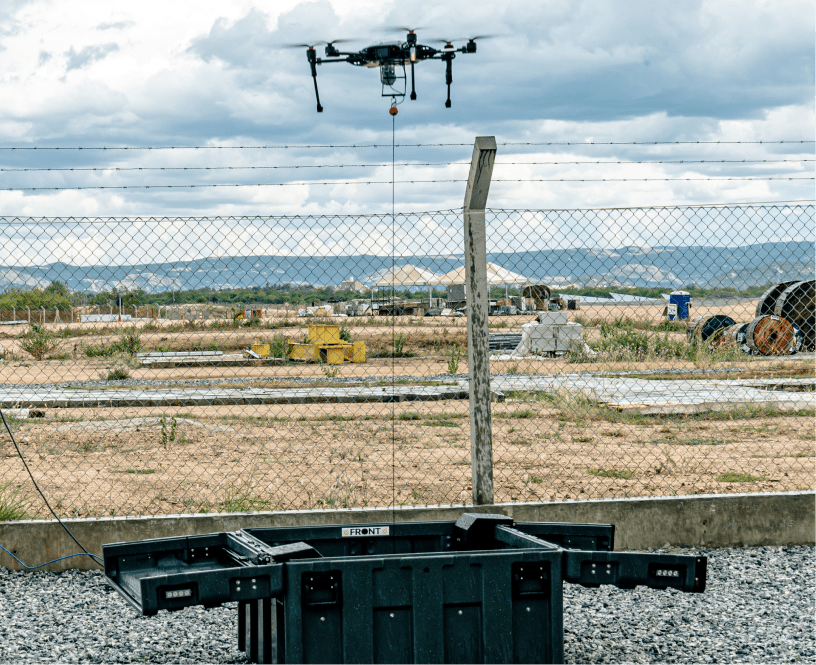
02 The box has a job, too
The company sells a system: aircraft, protective enclosure, controller, and software. The box handles the unphotogenic part of aerial robotics, including sheltering the equipment between missions. Easy Site’s free-flight version can launch on a scheduled patrol or respond to a security trigger. It can also take off from one station and land at another, opening up inspection routes with charging stops.
Its Easy Mobile configuration is intended for vehicles and vessels, including command units and first-responder vehicles. Published requirements make clear that mobility needs preparation: 145.2 pounds of system weight before payload, 1,500 watts of DC power input, and a 4.4-pound payload capacity. The company lists operation at 25 mph on land or up to 25 knots at sea.
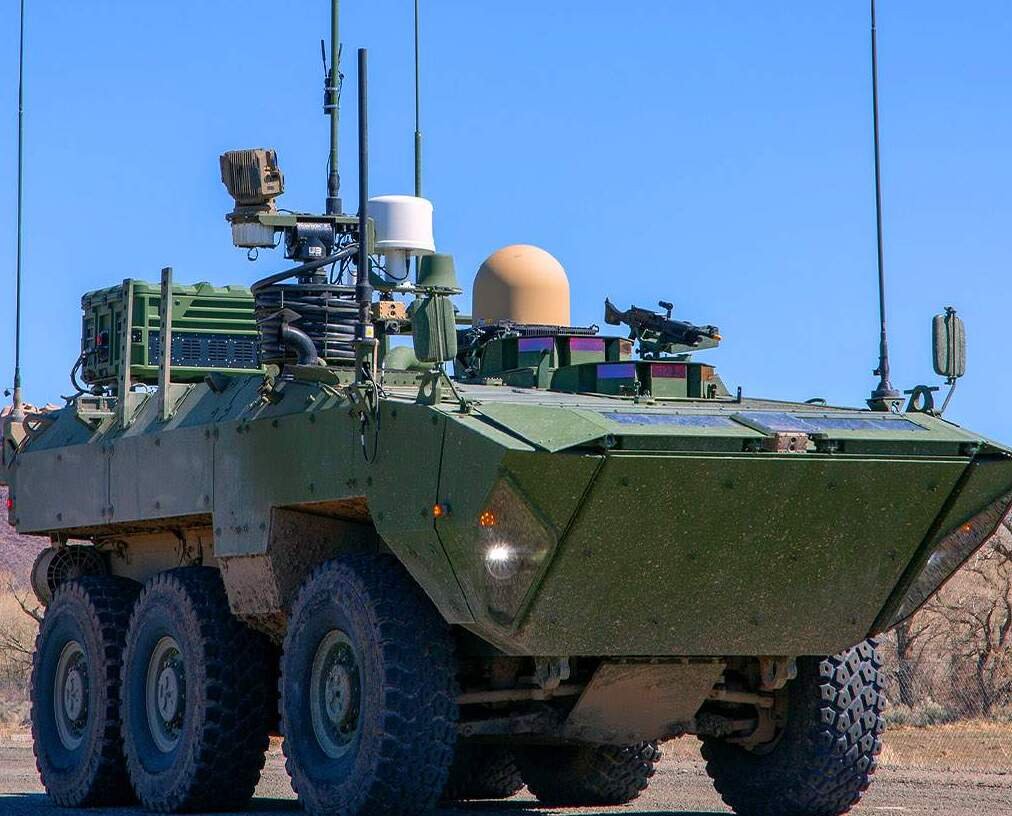
Those numbers describe a buyer’s homework. A mounting surface, electrical supply, payload, and operating environment have to agree. The advertised 25 mph wind tolerance is another boundary. Persistent flight still depends on suitable conditions and a working power source; a cable cannot abolish weather.
03 Two years between alarm and answer
The Travis project provides a useful measure of the effort involved. Easy Aerial and the Air Force developed the free-flight Smart Air Force Monitoring System and its tethered counterpart over two years under an SBIR Phase II program. Deployment began on December 11, 2020. The base described it as the first automated drone-based perimeter security system at an Air Force installation.
- 01Alarm
Fence, fire, distress - 02Deploy
Fly to the trigger - 03Observe
Inform the team - 04Return
Recharge and wait
The operational detail matters more than the novelty. Personnel identified how a security response should work; engineers built around those requirements. CTO and co-founder Ivan Stamatovski called it “a joint effort” in the base’s account. The resulting workflow gave a security team a way to investigate before committing people to the scene.
04 Customers wanted a smaller suitcase
Founded operationally in 2015, Easy Aerial’s early leadership included co-founders Ido Gur and Ivan Stamatovski. Its subsequent products show the value of listening to inconvenient requests. In November 2020, the company introduced SAMS-T-MINI, a smaller tethered system intended for portable operations. Gur explained the change plainly:
“Our customers made clear that they needed a compact, portable, affordable, and versatile autonomous security solution.”Ido Gur / SAMS-T-MINI launch, 2020
Then came Raptor, demonstrated in its 2021 launch video. It could release its tether in flight and switch to an untethered mission before returning to the station. A system built to remain overhead gained a way to leave. For a reader building hardware, the transferable lesson is straightforward: portability and mission changes deserve design attention alongside the aircraft’s headline performance.
05 A factory business with software inside
Easy Aerial competes in two overlapping markets. Hoverfly and Elistair offer tethered observation; Skydio Dock and Percepto serve autonomous deployment and inspection needs. Easy Aerial’s combination of tethered flight, free-flight systems, mobile deployment, and integrated stations gives buyers several ways to match the equipment to the job. The alternatives deserve comparison by mission.
Its expertise reaches beyond airframes. The company reports ISO9001 and AS9100 certification, and its Osprey appeared in DIU’s Blue UAS materials. Current recruiting describes flight testing, integration, operator training, and troubleshooting. The business model is equipment and software delivered with deployment support. Even autonomy needs somebody who understands a troublesome connector.
06 The longer look gets a bigger budget
On August 31, 2026, Easy Aerial announced a $20 million Series B involving Insight Partners, Entrée Capital, and private U.S. investors. CEO Shahar Abuhazira described expanding production and international operations. The release also reported that production had expanded into Europe. This follows its $6.15 million Series A announced in 2020.
Growth arrived amid a disputed departure from the Brooklyn Navy Yard. Easy Aerial attributed the lease decision to protests over its Israeli military work; yard officials cited compliance violations. Its current recruiting places Brooklyn engineering at Industry City. The episode adds a political and civic dimension to the practical question of where these systems operate and whom they serve.
For buyers, start with the view you need. A persistent watch above a vehicle or site favors one configuration; a route requiring travel favors another. Easy Aerial’s useful idea is to make that choice explicit. Sometimes the most valuable thing a flying machine can do is stay nearby long enough to be useful.