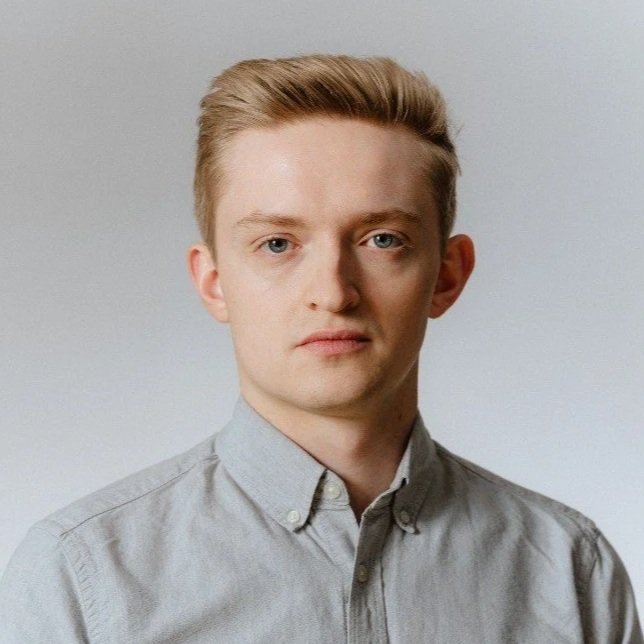
Profile
The Man Mid-Stride
Somewhere over the Gulf of Mexico in October 2024, six autonomous balloons launched from Mobile, Alabama were threading themselves into the outer bands of Hurricane Milton. Inside each one: sensors measuring temperature, pressure, humidity, wind. The data was streaming back to a company with 86 employees in Redwood City, California. John Dean, 27 years old, was watching from the ground.
WindBorne's AI forecast that week was more accurate than the U.S. National Hurricane Center. Not because they had more meteorologists. Because they had better data in places no one else was collecting it.
That gap - the 70% of Earth's surface with essentially no weather observation infrastructure - is what WindBorne was built to close. And Dean has been moving toward it since he was building balloon prototypes in a Stanford student lab.
Dean graduated from Stanford with a B.S. in Electrical Engineering in 2019. But the résumé doesn't capture the sequence. He interned at SpaceX (hardware), NASA (engineering), and Lyft (autonomous driving) before settling on a problem that none of them were solving: the atmosphere over open ocean, where virtually no real-time data exists. Every weather model on Earth gets worse the further it gets from land-based observation stations. Dean's solution was not a satellite or a sensor network or an app. It was a balloon that weighs a few pounds, stays airborne for up to 16 days, and navigates itself by surfing wind patterns.
Dean co-presided over the Stanford Student Space Initiative, a student-run aerospace lab. The autonomous balloon project started there - not as a startup pitch, but as an experiment with no guardrails.
Build first, raise money second. Before pitching a single investor, the team had completed 26 test flights and broken 4 world records in atmospheric data accuracy. Khosla Ventures took a board seat at pre-seed.
Traditional radiosondes (weather balloons) last a few hours. WindBorne's balloons fly for 7 days on average, 16 days maximum. Dynamic altitude control lets them profile the vertical atmosphere on demand.
By 2028, the plan is 10,000 concurrent balloons in the sky. At that density, WindBorne would cover the entire globe using just 1/25th of all weather balloons currently launched worldwide.
Technology
WeatherMesh: The Model That Shocked the Lab
In February 2024, WindBorne launched WeatherMesh - a deep learning weather forecast model that immediately rewrote the leaderboard. It surpassed Google DeepMind's GraphCast and Huawei's Pangu-Weather, the two most celebrated AI forecast models in the field. The specific margin that turned heads: an 11% improvement over GraphCast on 500 millibar geopotential height prediction, a standard meteorological benchmark.
The efficiency gap is where it gets strange. GraphCast needs roughly the computing power of a data center to run. WeatherMesh runs on a gaming laptop - using approximately 1/15th the compute of GraphCast and 1/10th of Pangu-Weather. The tradeoff isn't quality. WeatherMesh predicts temperature, pressure, wind speed and direction, dew point, cloud cover, incoming radiation, and precipitation.
"WindBorne Systems Breaks World Record for Most Accurate Global Weather Forecasts with New AI Forecast Offering WeatherMesh" - Surpassing Google DeepMind's GraphCast by 11% on standard benchmark tests. Model runs on consumer hardware.
Source: BusinessWire, February 2024
Dean's frame on this is consistent: the model is only half the story. Better data going in means better forecasts coming out. WeatherMesh improves because WindBorne's balloons are collecting atmospheric profiles from places - over the ocean, in remote regions, inside hurricanes - that have never had observation coverage before. Most AI weather models are trained on the same underlying dataset of mostly land-based observations. WindBorne is changing what that dataset looks like.
Hurricane Milton: The Field Test No One Expected
On October 9, 2024, WindBorne launched 6 balloons from Mobile, Alabama and guided them into Hurricane Milton using the storm's own wind patterns. The operation took 24 hours from launch to penetration. Inside the hurricane, the balloons deployed dropsondes - small instrumented packages that descend through the storm collecting high-resolution measurements of temperature, pressure, humidity, and wind at every altitude.
It was the first time in recorded meteorological history that balloons had delivered dropsondes directly into a hurricane. The data improved WindBorne's track forecast of Milton's path past what the National Hurricane Center predicted. No aircraft were required. No crew was in danger. The total cost was a fraction of traditional hurricane reconnaissance.
Funding History
The Capital Stack
Total funding: $21M+ • Latest round: Series A, June 2024 • Lead investor: Khosla Ventures
Background
Before the Balloons
Dean's internship sequence reads like a checklist for the ambitious aerospace engineer: SpaceX for hardware, NASA for engineering fundamentals, Lyft for autonomous systems. The common thread is not the brand recognition - it's the hardware-software boundary. Each internship put him closer to systems that have to work in the physical world, where there are no "soft" failures.
At Stanford, he co-presided over the Student Space Initiative (SSI), a hands-on aerospace club that had been building rockets and satellites since 2013. The balloon project began as an SSI initiative - a group of students exploring long-duration autonomous flight as a research problem, not a business plan. Khosla Ventures noticed early. The firm led the pre-seed round and took a board seat - an unusually strong signal of conviction in a team that had not yet incorporated.
WindBorne was co-founded with Andrew Sushko (CTO), Kai Marshland (CPO), and Joan Creus-Costa. The team incorporated in February 2019, the same semester Dean graduated.
Track Record
What's Actually Been Accomplished
- Broke 4 world records in atmospheric data accuracy as Stanford undergraduates before WindBorne incorporated
- WeatherMesh AI model outperforms Google DeepMind's GraphCast by 11% on the 500 millibar geopotential height benchmark
- WeatherMesh beats Huawei Pangu-Weather using 1/15th the compute power of GraphCast
- First-ever deployment of balloon-launched dropsondes inside a hurricane (Milton, October 2024)
- WindBorne's Hurricane Milton track forecast outperformed the U.S. National Hurricane Center
- Completed 1,000+ autonomous balloon flight missions
- Raised $21M+ from Khosla Ventures, Footwork VC, Pear VC, and Convective Capital
- Contributor to IEEE Spectrum on the intersection of AI and atmospheric observation
- Appeared on Fox Weather to discuss the future of data-driven forecasting
Details Worth Knowing
The Specifics
WindBorne's balloons weigh only a few pounds. The majority of that weight is sand ballast used for altitude control. The sensor payload is tiny.
Standard radiosondes - the balloons launched by weather agencies worldwide - stay aloft for a few hours. WindBorne's average is 7 days. Their record is 16.
WeatherMesh can run on a consumer gaming laptop while producing forecasts more accurate than models that require data centers. The compute efficiency is roughly 15x better than GraphCast.
The plan for 2028: 10,000 concurrent balloons in the sky. That would represent just 1/25th of all weather balloons launched globally - but with far better global distribution.
Khosla Ventures backed WindBorne at pre-seed and took a board seat - before the company even launched commercially. The firm stayed in as lead investor through the Series A.
When a WindBorne balloon struck the cockpit window of a United Airlines 737 MAX in 2025, Dean immediately reported it to the NTSB and FAA and called the incident "extremely concerning and unacceptable."
What Comes Next
The Horizon
The stated goal is 10,000 autonomous balloons operating simultaneously by 2028. At that scale, WindBorne would achieve genuine global atmospheric coverage - including the oceans, polar regions, and remote continents that current observation networks skip entirely. The practical implication is weather forecasts that no longer degrade over open water, hurricane predictions that are calibrated with real in-situ data from inside the storm, and climate models with an order of magnitude more training data than they have today.
Dean's argument is not primarily a forecast accuracy argument. It's a climate resilience argument. Societies that lack early warning systems bear disproportionate damage from extreme weather. Better data, more places, in real-time is not an incremental improvement. It's a different category of infrastructure - one that has never existed before.
WindBorne's WeatherMesh model continues to break records. Each new data source - especially over the oceans where the models have historically been blind - narrows the gap between forecast and reality. The 10,000-balloon number is not a marketing target. It is the density required to close the data gaps that have existed in global meteorology for a century.