assistive-technology
(17)
Remarkable Built an Accelerator Around the People Tech Usually Meets Last
A rough solar-powered wheelchair revealed a polished idea: disability-led inventions need more than applause. Remarkable built the training, capital and human feedback loop to help them become businesses.

AudioEye’s Real Product Isn’t a Widget. It’s the Work the Widget Can’t Do.
The Tucson software company spent two decades learning that accessibility cannot be solved by code alone. Its hybrid of automation, disabled testers and expert fixes now serves roughly 129,000 customers - and reveals both the promise and the limit of accessibility software.
CNIB Quit Trying to Be Everything - and Built a Better Machine for Independence
The 108-year-old Canadian institution learned that serving people with sight loss did not mean owning every service. Its sharper model now combines donations, retail, training, guide dogs and advocacy - a playbook for any mission-driven organization that has grown too broad.
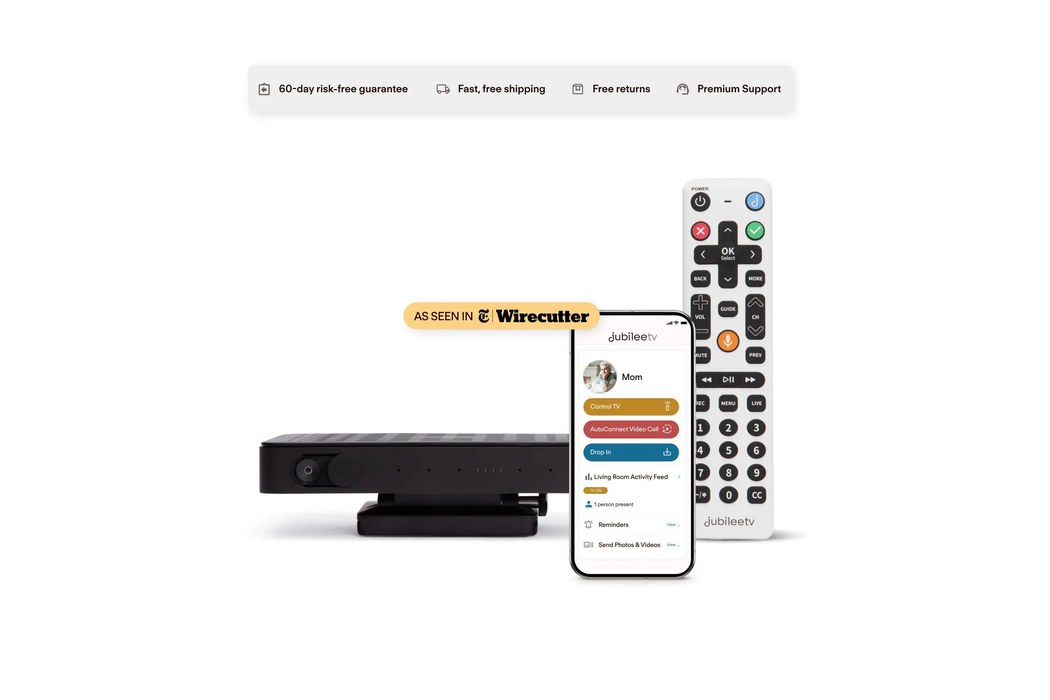
The Startup That Turned Grandma's TV Into a Caregiver
A failed universal-remote company rebuilt itself around one uncomfortable truth: the hardest part of caring for aging parents is the 300-mile drive to fix their TV. JubileeTV turns that TV into the caregiving hub instead.
Say It With Your Eyes
Tobii Dynavox turns eye movements into speech for people who have lost their voice. Here is how a Pittsburgh-and-Stockholm company built the tools that let hundreds of thousands of people be heard.
The Wheelchair Isn't the Product. The Fit Is.
Numotion builds roughly half of America's complex wheelchairs one measurement at a time - then spends the next decade keeping them rolling.
AirCaps
AirCaps builds lightweight AR smart glasses that display real-time captions, translate 60+ languages, and take AI meeting notes directly in your field of view. Founded by Yale and Cornell computer scientists who have been building on smart glasses since age 13, the company started with the Deaf and Hard of Hearing community and expanded to travelers, language learners, and professionals. The 49-gram glasses run a 4-microphone beamforming array, claim 97% caption accuracy at roughly 300ms latency, and sell for $599 with a free-forever tier.
Wandercraft
Wandercraft is a French robotics company that builds self-balancing walking exoskeletons and, more recently, industrial humanoid robots. Founded in Paris in 2012 by engineers - some with personal ties to degenerative mobility disease - it created Atalante X, a hands-free clinical exoskeleton now used in more than 100 rehabilitation centers, and Eve, the first self-balancing personal exoskeleton designed for home use without crutches. In 2025 the company extended its gait-control expertise into Calvin, a family of industrial humanoids developed with Renault Group and NVIDIA. Wandercraft's stated aim is to blend frontier AI with high-performance hardware to help people work and walk.
Andromeda Robotics
Andromeda Robotics is a Melbourne-founded, San Francisco-based robotics company building Abi, a colourful humanoid companion robot designed to reduce loneliness in aged care and assisted living. Abi holds conversations in more than 90 languages, remembers residents across visits, and runs group activities, working alongside care teams rather than replacing them. Founded in 2022 by Grace Brown, the company deploys Abi to care homes on a subscription basis and raised a $23M Series A in September 2025 led by Forerunner.

SafeinHome
SafeinHome is a remote supports company that helps people with intellectual and developmental disabilities (I/DD) and older adults live more independently. It pairs a system of discreet home sensors and a two-way tablet with trained staff available around the clock, so individuals get reminders, check-ins and real-time help through the day and night without a caregiver physically present at all times. The service is delivered as a Medicaid Home and Community-Based Service (HCBS) across 17 states, aiming to cut per-hour support costs while preserving each person's dignity and autonomy.

ATDev
ATDev (Assistive Technology Development, Inc.) is a UC Berkeley spinout building an ecosystem of robotic devices that help people stay independent. Its flagship product, Reflex, is a smart, under-5-pound robotic knee brace that delivers personalized, telehealth-enabled physical therapy at home and streams progress data back to clinicians. Founded by engineer Todd Roberts and disability-rights advocate Owen Kent, the company designs 'for users, by users' and is scaling after a $3M seed round while also serving as a subcontractor on a $41M ARPA-H robotic mobility program.
Haptic
Haptic (formerly WearWorks) is a New York-based company building navigation and communication that runs entirely on the sense of touch - no screen, no audio. Its patented HapticNav system creates a 'virtual corridor' of vibrations that keeps a person on course, first proven when a blind runner completed the NYC Marathon without sighted assistance. The company packages this into the Wayband wearable, a HapticNav app, and an SDK so developers can add tactile guidance to maps, rideshare, healthcare, and defense applications.

Speechify
Speechify is the world's largest text-to-speech platform, turning any text - PDFs, books, emails, Google Docs, web pages - into natural-sounding audio. Founded by dyslexic Brown University student Cliff Weitzman and his brother Tyler, the company grew from a personal reading aid into an AI voice empire spanning consumer apps, a voice cloning and dubbing studio for creators, and a text-to-speech API for developers. It serves 50+ million users across mobile, Chrome extension, and desktop, offers hundreds of voices in 50+ languages, and won the 2025 Apple Design Award for Inclusivity.
Xander
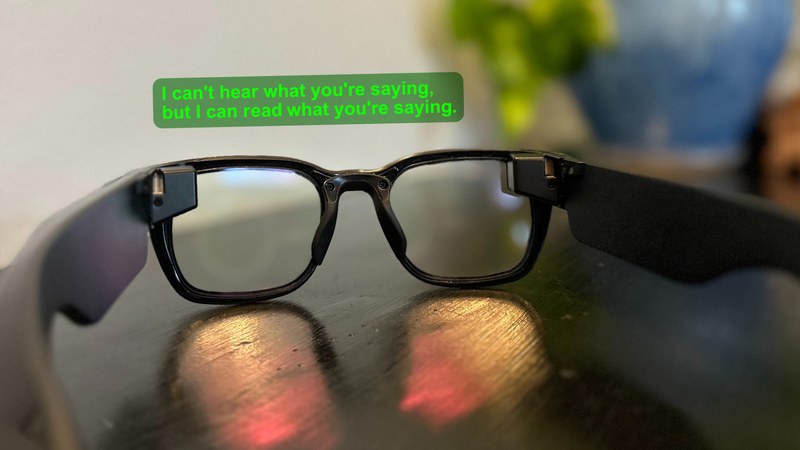
Xander builds XanderGlasses, standalone augmented-reality smart glasses that turn spoken conversation into real-time captions displayed in the wearer's field of view. Aimed at people with hearing loss who don't sign, the device runs speech-to-text offline - no phone, Wi-Fi, or cloud required - so private conversations stay private. An MIT Media Lab spinout founded by Alex and Marilyn Morgan Westner, Xander has been adopted by the U.S. Department of Veterans Affairs and is built on customized Vuzix Shield hardware.
REEV
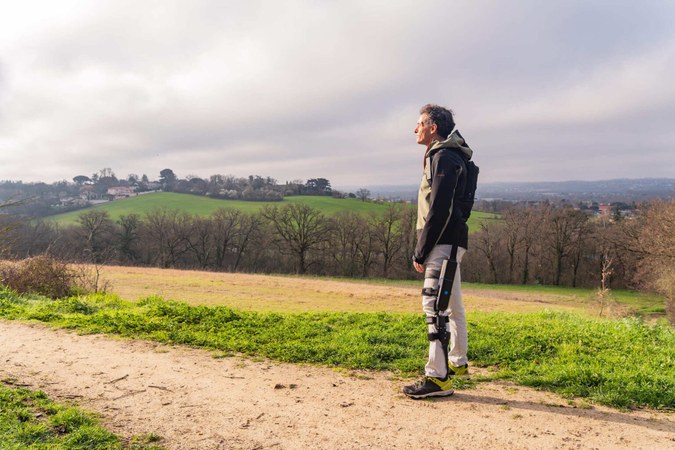
REEV is a medical robotics company building AI-powered wearable robotics to restore everyday mobility for people with neurological gait disorders after stroke, multiple sclerosis or paraplegia. Its flagship DREEVEN is a lightweight (about 3kg) motorized knee orthosis driven by electro-hydraulic actuation and real-time gait sensing, paired with REEV SENSE, an IMU wearable that turns a person's walking pattern into clinical-grade gait reports. Founded in 2021 and split between Boston and Toulouse, REEV raised $9.2M in February 2025 to finalize DREEVEN, run a clinical study at Boston University and prepare for FDA trials.
Roam Robotics
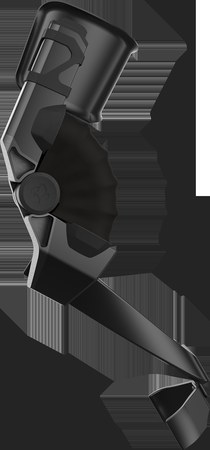
Roam Robotics builds lightweight, air-powered wearable exoskeletons that augment human strength, endurance and mobility. Founded by Ekso Bionics veteran Dr. Tim Swift, the San Francisco company replaced the heavy metal of traditional exoskeletons with plastic, fabric and pneumatic actuators - making robotic assistance cheap and light enough to wear all day. Its products span consumer skiing (Elevate), medical knee osteoarthritis relief (Ascend), and military performance (Forge), with clinical data showing 46% average knee-pain reduction and up to 2x strength and endurance gains.

Nagish
Nagish is a New York-based assistive-technology company that uses proprietary AI to caption phone calls in real time, converting speech to text and text to speech so people who are deaf or hard of hearing can make and receive calls independently and privately - without a human relay operator. Its name means 'accessible' in Hebrew. The company is one of the few firms certified by the FCC to provide telecommunication relay services and offers its consumer app for free.