The most useful thing CNIB ever built may be the thing it decided not to remain. For most of a century, the Canadian National Institute for the Blind was asked to be almost an entire country inside one institution: library, residence, workshop, rehabilitation provider, employer, educator, retailer, camp, fundraiser and public conscience. When people who were blind had few other doors to knock on, CNIB became the hallway.
Then, in its 2014 strategic plan, the organization wrote the sentence mature institutions usually avoid: its role across health services and charity was no longer sustainable or appropriate. The answer was not a rebrand with brighter verbs. CNIB established Vision Loss Rehabilitation Canada, or VLRC, as a separate organization for government-funded clinical rehabilitation. CNIB could then concentrate on charitable programs, products, community and advocacy. The two still collaborate, but the lanes are clearer.
That choice explains the modern CNIB better than a list of programs does. This is a 108-year-old nonprofit serving Canadians who are blind, Deafblind or have low vision. It also works with families, teachers, employers, developers and businesses. Its current toolbox includes guide dogs, assistive-technology retail and coaching, job support, youth programs, a camp, accessible-format production, product testing, peer groups and policy campaigns. Roughly 40,000 people are served across the broader organization, according to a 2026 executive-search announcement.
Origins / 1918The first product was a missing system
CNIB grew out of the Canadian Free Library for the Blind, founded in 1906. The Halifax Explosion and blinded veterans returning from the First World War made a national failure impossible to ignore. Seven men from the library's board incorporated CNIB in 1918. Several were blind; several were veterans. Co-founder Edwin Baker had lost his sight to a sniper's bullet while serving overseas.
The work was bluntly practical. CNIB provided shelter, braille instruction, rehabilitation and employment. Its early workshops made brooms and knitted socks and repaired boots. In 1919, Pearson Hall in Toronto held a residence, teaching centre, library and headquarters. At the first annual meeting, 27 employees were serving 1,521 people. Sixteen were “home teachers” taking skills into people's houses and communities - an early version of distribution by necessity.
What failed first was not commitment. It was the assumption that a charity could indefinitely substitute for a complete public continuum of care. As health systems matured, CNIB was simultaneously a clinical provider and a donor-funded advocate. Those jobs use different funding logic, accountability and expertise. Consultations with more than 1,000 people helped change the institution's mind. The eventual split with VLRC was less dramatic than a startup pivot, and more consequential.
The offer / todayOne customer journey, several doors
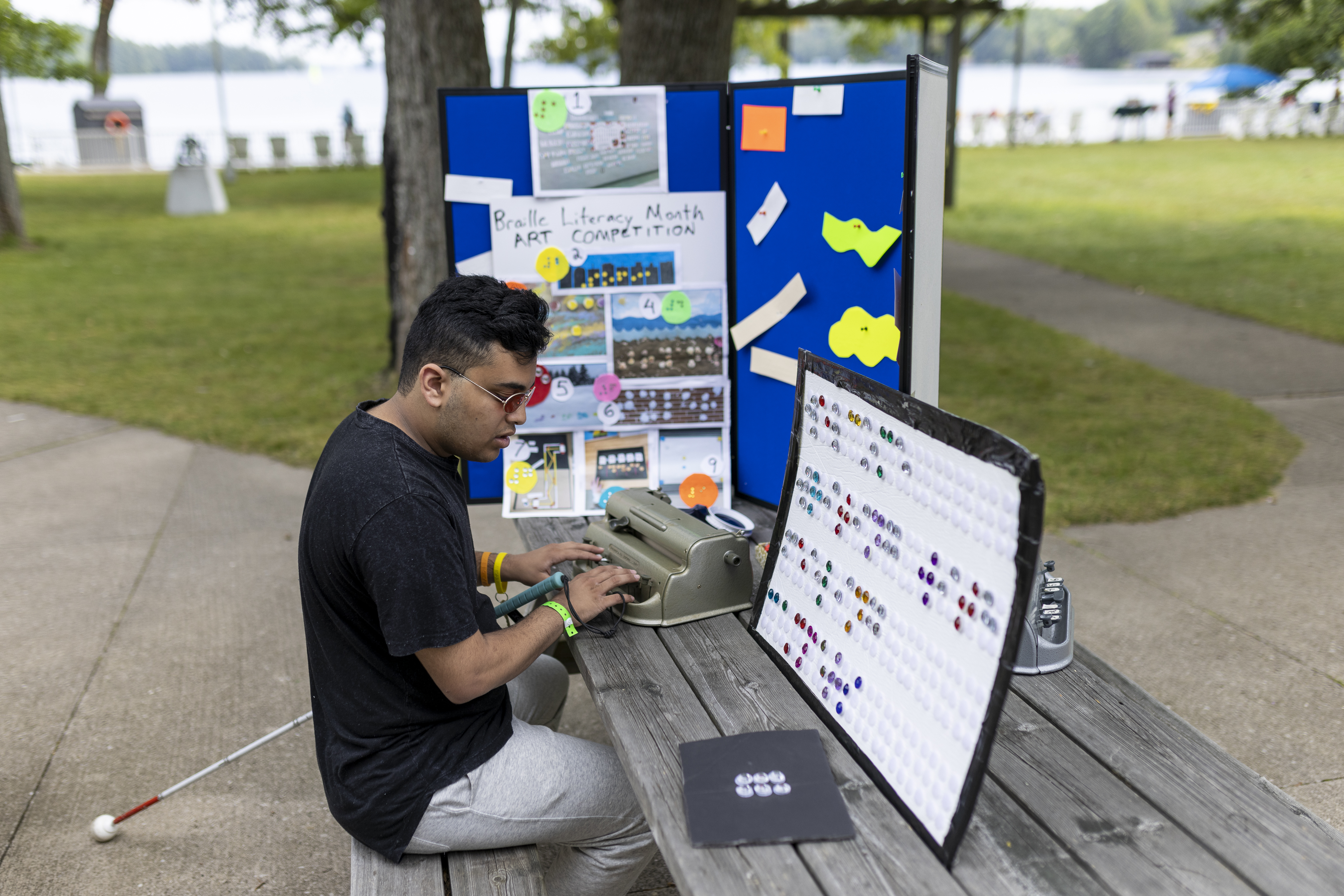
CNIB does not sell a single transformation. A teenager might arrive through a braille program or summer session at Lake Joe. An adult losing sight might begin with peer support or a technology workshop. A job seeker can use Come to Work. Someone seeking independent travel can apply to CNIB Guide Dogs. A business can commission accessible formats or test a digital product with people who use screen readers and magnification every day.
The connective tissue is choice. CNIB's mission is to enable people impacted by blindness to “live the lives they choose.” That wording matters. The user is not a passive recipient at the end of a charitable supply chain. CNIB says its 2023-2028 plan was built from the direction of people who are blind, partially sighted or Deafblind. The plan narrows an enormous ambition into three observable commitments: change attitudes, make journeys safer, and support parents and children in and out of classrooms.
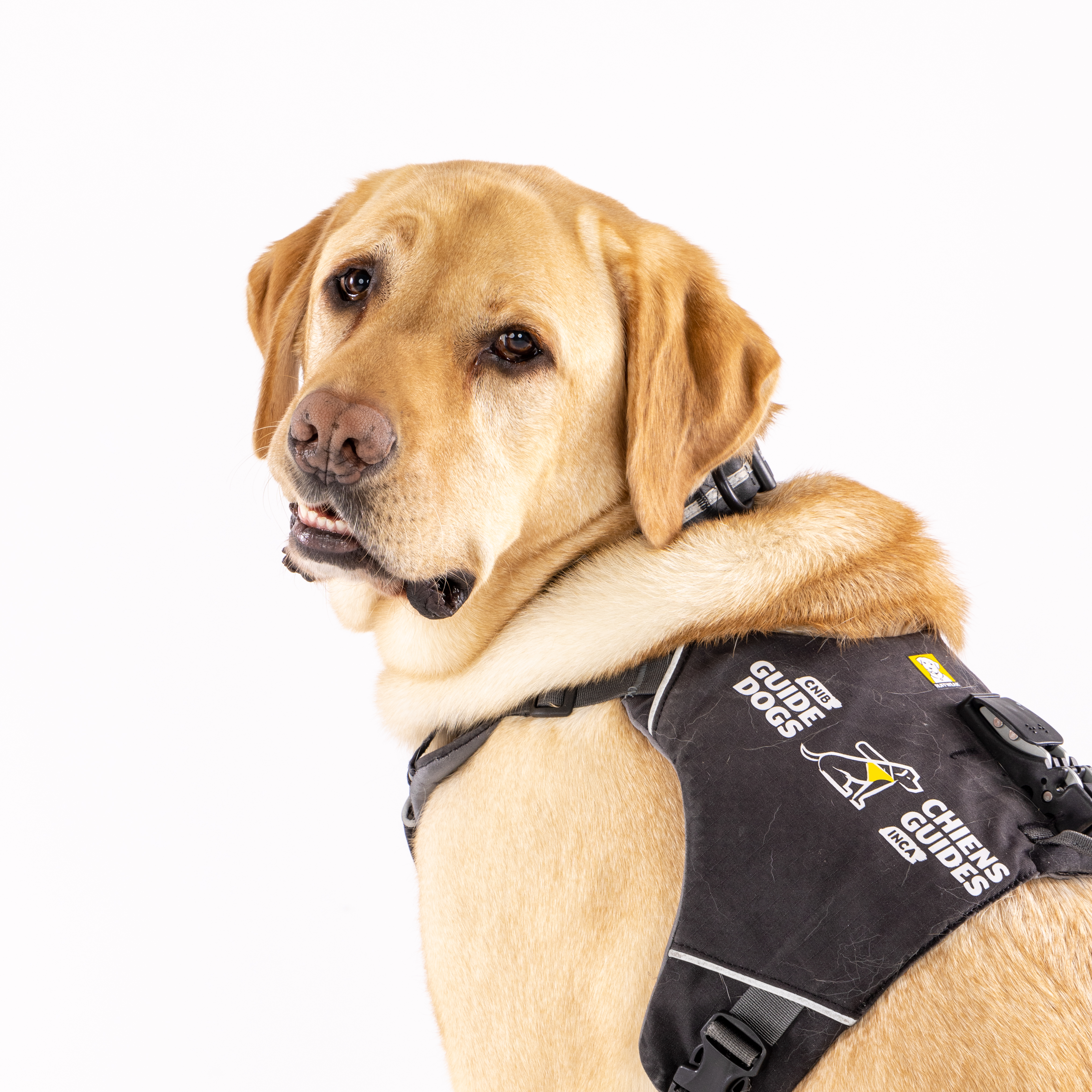
SmartLife is the cleanest expression of this approach. Launched in 2020, it sells magnifiers, braille displays, screen-access tools and accessible home technology online and through centres. But the store's stated priority is not simply selling more units. Customers can try devices, work with a coach, attend demonstrations, or test technology at home when transportation is a barrier. All proceeds support CNIB programs. The Guide Dogs program runs on the same access logic: CNIB puts its cost at roughly C$50,000 from puppyhood to retirement and covers it so the individual pays nothing.
This is a small but important difference from ordinary ecommerce. Assistive technology can be expensive, personal and fussy. A product that looks impressive in a catalogue may be a poor match for a person's dexterity, hearing, workflow, budget or changing sight. The coach is part of the product. So is permission to leave without buying.
The economics / fiscal 2025A charity with a portfolio, not a money tree
What did the machine cost? CNIB's audited, non-consolidated statements for the year ended March 31, 2025 reported C$86.761 million in operating revenue and C$93.959 million in expenses before investment income. Program delivery accounted for C$62.066 million. Investment income narrowed the final deficiency to C$759,000. That is not a crisis disguised as a rounding error, nor is it a comfortable surplus. It is the annual arithmetic of a national service network.
Where fiscal 2025 support came from
CNIB's published 2024-2025 mix. Social enterprise includes program revenue; “other” includes investments and other income.
The revenue portfolio spreads risk: donations and fundraising, government grants, product sales, fees, accessible-format production, lotteries and gaming, leasing, partnerships and investment income. Public support remains the engine. In a 2025 explanation based on a five-year average, CNIB said 72.1 percent of expenses went to cause-related programs, 22.4 percent to fundraising and 5.5 percent to administration.
The model differs from both government and a conventional retailer. Government funding can support defined services, but advocacy sometimes requires challenging government. Retail can produce earned revenue, but CNIB's product advice must retain trust even when the right recommendation is “not this device.” Donations create flexibility, but fundraising itself costs money. None of the lanes is sufficient alone. Together they let CNIB move between personal help and systemic pressure.
Differentiation / the moatTrust, distribution and lived expertise
There are strong alternatives for pieces of CNIB's work: VLRC for clinical rehabilitation, Fighting Blindness Canada for research, regional agencies for skills and community, and other guide-dog schools for mobility partnerships. CNIB's difference is the bundle. It can hear about a transit barrier in a peer group, document it through community research, teach self-advocacy, brief policymakers and test a navigation tool with actual users.
Distribution matters just as much. In 2024, the Mobile Hub made more than 180 on-site visits after expanding in Saskatchewan and New Brunswick. SmartLife offers Tech @ Home. Contact-centre staff are spread across the country and CNIB says many have lived experience of sight loss. Digital programs extend reach, while Lake Joe provides the opposite: a physical place to try recreation, literacy and independence alongside peers.
Partnerships fill gaps without rebuilding every capability. HumanWare supplies technology, demos and staff training. Hydro One has supported guide-dog infrastructure. The Slaight Family Foundation committed C$1 million to public awareness and accessibility training. In January 2026, THE TEN SPOT turned raised braille dots into “Braille Nails,” a fundraiser that made literacy visible in an unexpectedly playful place. The trick is not attaching a sponsor to the mission. It is attaching a partner's distribution or expertise to a specific barrier.
The steal / four movesWhat another organization can copy
Split unlike jobs
If two services need different funders, regulators and talent, collaboration may work better than one crowded org chart.
Put users in QA
CNIB Access Labs treats lived experience as product-testing expertise, not a testimonial gathered after launch.
Design distribution
Home trials, mobile delivery, community spaces and virtual programs make access part of the offer.
Measure the barrier
Count safer journeys, usable classrooms and working tools, not only sessions held or devices shipped.
The first move is the hardest because it can look like retreat. Define what only your organization can credibly do. Move adjacent work into an accountable partnership. Write down how data, referrals and risks cross the seam. CNIB and VLRC's Stronger Together principles explicitly put individuals and families at the centre while guarding against either organization weakening the other's work. Separation without that connective tissue would merely create another barrier.
When this playbook does not work
Do not split services when users will be forced to repeat assessments, lose funding eligibility or navigate incompatible systems. Try-before-you-buy retail fails without trusted coaches and enough inventory. Mobile delivery fails when it becomes an occasional roadshow rather than dependable follow-through. User testing fails when feedback arrives after budgets and specifications are locked. And a diversified nonprofit model is fragile if earned revenue begins overruling the people the mission exists to serve.
The next chapterLess institutional gravity, more usable independence
CNIB is still adjusting the map. Its Charlottetown office and SmartLife Centre closed in June 2026 while programming shifted to community locations, virtual delivery and the Mobile Hub. That change will be judged by continuity, not by the neatness of the operating model. A hybrid service is only more accessible if people can reliably reach it.
Elsewhere, the system keeps adding practical layers. Guide Dogs adopted an internationally recognized digital ID for handlers in May 2026. Lake Joe reported more than 730 people served in summer 2025 and broke ground on a multi-purpose building with a purpose-built goalball court. Advocacy work ranges from rural transit to accessible education and the right to receive literature for the blind by mail.
The through-line is not inspiration. It is infrastructure: the device that speaks, the dog that stops at the curb, the report card a blind parent can read, the recruiter who recognizes talent, the bus stop a traveller can safely find. CNIB began because those pieces barely existed. Its modern task is harder to photograph but easier to copy - build the connection, test it with the person who must use it, and be willing to stop owning the parts someone else can deliver better.