At Malcolm X College in Chicago, the problem was easy to picture: boxes of historical records, some reaching back to 1911, and employees spending hours trying to retrieve a document. The proposed answer was a physical records conversion. Then TAB entered the conversation, and the question changed. How could the college improve the paper archive while preparing for an electronic one?
- TAB connects filing supplies, storage equipment and records software.
- Its customers include banks, hospitals, colleges and public agencies.
- The useful lesson: inventory and organize before you digitize.
The project began with measurement and cleanup. The team counted the collection, repaired incomplete file information, standardized labels and introduced barcode tracking. FusionRMS connected the physical and electronic records. By the end, the file room accommodated the student records and had space for other departments. The original problem had looked like a room full of boxes. The intervention reached into the information inside them.
A folder is a little interface
TAB makes an unusually useful subject for anyone who buys business technology. Its catalog runs from file pockets to software delivered as a service. The connective tissue is retrieval: helping a person locate an item, establish what it is, and decide what should happen next. A folder label and a database field perform related jobs at different distances from the user.
Consider TABQUIK, the company’s browser-based labeling tool. Users select a design, enter or import data, and print on a standard office printer. The labels can include barcodes, color bands and information on both sides. These are small decisions with practical consequences. Consistent visual cues make a shelf easier to scan; consistent identifiers give software something dependable to track.
The aisle is part of the inventory
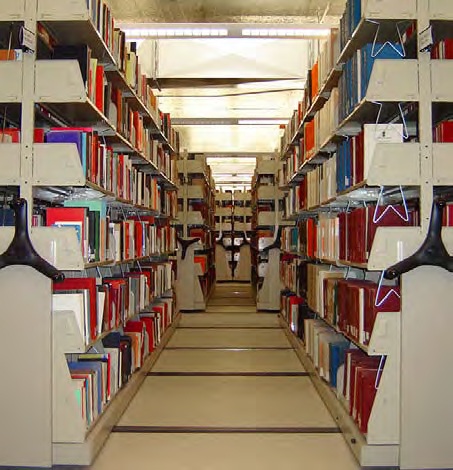
Now consider the space between shelves. A conventional storage layout reserves permanent aisles so people can reach the contents. Mobile shelving puts the shelves on moving carriages and opens an aisle where access is needed. TAB offers manual, mechanical-assist and powered versions for different collections and loads. Its storage applications extend to medical supplies, museum collections, retail inventory and evidence.
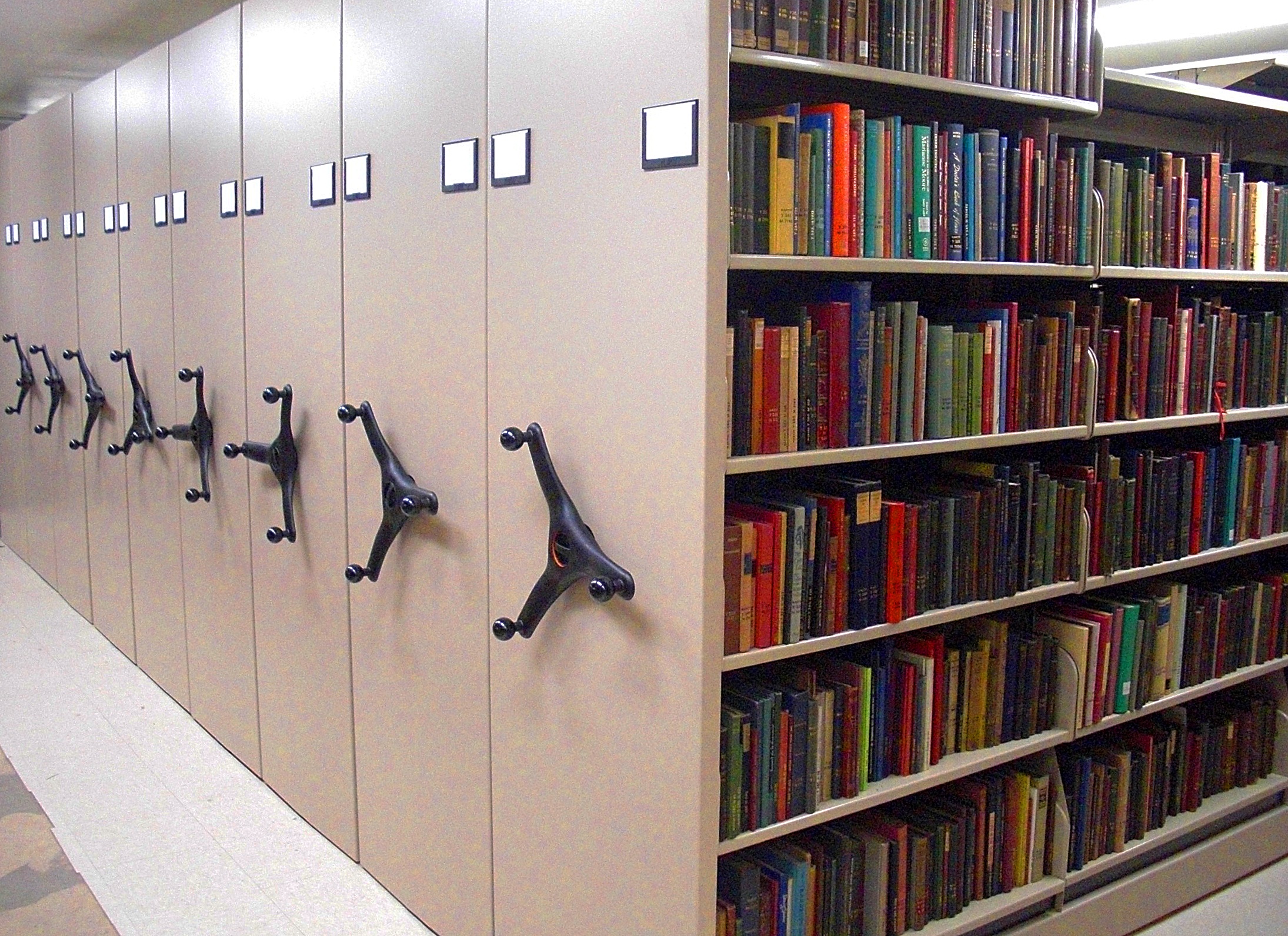
At the University of Washington, this approach required more than rearranging furniture. TAB’s account describes floor deflection problems, track placement decisions and collaboration with structural engineers. An anti-drift brake formed part of the solution. Books moved twice to accommodate construction and installation. Work finished in October 2008, producing a reported 91% increase in storage capacity.
+91% capacity · University of Washington project · TAB-reported result
The engineering is the point. A dense layout has to suit the building and the people using it. TAB publishes a floor-load handbook for architects and engineers. Where a floor cannot support the proposed system, or access requirements defeat the layout, the attractive capacity calculation needs revision.
“It seemed like we had a change every week and TAB responded affirmatively every time.”Charles Chamberlin, University of Washington
In TAB’s account of the installation
The software has to know about the shelf
FusionRMS occupies the other half of the business. It manages the lifecycle of physical and digital records, including retention and disposition. The current website presents it as SaaS and displays customers including Duke Health, Sony and U.S. Bank. For an organization maintaining both paper and digital files, the appeal is a common management layer across formats.
A regional bank case study makes that less abstract. TAB replaced a legacy tracking system, imported the existing database and implemented barcode tracking for loan records. Staff gained browser access, while administrative and user training supported the change. The work included the migration and the habits needed to operate the replacement.
FusionRMS Connect addresses another source of friction: information moving between applications. Its bidirectional API can add, edit and retrieve data, reducing manual imports and repeated entry. The value depends on which applications an organization connects and how well the underlying records are defined. An integration can move information quickly; someone still has to make that information reliable.
Count the cost of the search
TAB’s revenue model follows this range of work: consumable supplies sold online, equipment and installation projects, consulting and document services, and software. Its records-management-as-a-service offering also describes pay-as-you-go access, with scanning and indexing handled by TAB. A customer can buy a component or commission a broader change.
Document imaging introduces its own choices. TAB offers scanning and indexing services, but the useful output is a record people can retrieve in the course of work. Before committing, a buyer can define which documents need conversion, the fields required to identify them, and who should have access. That makes a proposal easier to evaluate: the unit of progress becomes a usable record, rather than simply a page fed through a scanner. The same discipline helps distinguish an urgent conversion from an archive that can wait.
For a buyer, the meaningful budget includes preparation, conversion, training and ongoing access. TAB’s offsite audits capture box and file information, reorganize contents and identify material eligible for destruction, with customer approval. The operational question is whether continuing to store and search those boxes costs more than bringing them under control.
In market terms, TAB crosses several purchasing categories. Spacesaver offers competing mobile storage systems. Iron Mountain supplies records storage, scanning and related services. TAB’s distinctive proposition is the combination of physical filing products, storage planning, information cleanup and its own records software. Buyers still need to judge each component against their requirements.
Start with the inventory
The company’s 2026 filing catalog includes TAB, JETER, AMES and GBS products. Alongside the SaaS platform, that catalog is a reminder that organizations change formats unevenly. A bank can modernize access while retaining loan files. A college can improve its archive before completing a digital transition. The intermediate state needs deliberate design.
There is a useful sequence to copy: count what exists, repair its identifiers, decide what needs keeping, then choose the storage and software. Measure retrieval time as well as occupied space. TAB’s customer projects suggest that a productive transformation can begin with an unexciting act: opening the box and finding out what is actually in it.