The interesting part of a broken traffic signal happens before anybody fixes it. Someone has to decide what failed, who should go, and which truck they need. A pickup is a poor substitute for an aerial bucket. Discovering that at the intersection means another journey. Synapse ITS has built its newest software around this small, consequential decision: what should happen before the engine starts?
- Six roadside-safety brands sit inside one company.
- SYO brings compatible signal-monitor diagnostics to a phone or computer.
- The practical prize is a better maintenance decision before dispatch.
The cabinet has something to say
Consider Seminole County, Florida. A Synapse-published case study describes a traffic team contending with storms, staff turnover and technicians still learning the job. The county already had hundreds of compatible EDI monitors on its internal network. That starting point mattered: the connections existed before the new diagnostic workflow arrived.
With 419 intersections integrated into SYO, the county reports saving 15-20 minutes of initial troubleshooting on callouts. It also estimates roughly 50 annual truck trips avoided by remotely confirming power-related faults and outages. These are customer-reported results from one deployment, rather than a forecast for every city.
“Nobody wants another dashboard to monitor.”Chad Dickson · Seminole County signal operations manager
That complaint is almost a product specification. Send an alert when attention is needed; let the technician inspect the evidence. The useful output is a decision, whether that means dispatching a crew or recognizing a power outage.
Information changes the dispatch decision.
A young name. Older equipment.
Synapse began as an assembly job of a different kind. Private equity firm Vance Street Capital invested in Polara in 2021, Carmanah and Eberle Design in 2022, then Diablo Controls in early 2023. It launched the combined Synapse ITS platform that April. The individual businesses brought established equipment and specialist knowledge into the new identity.
The pieces fit around different roadside problems. EDI makes intersection monitoring equipment. Polara supplies accessible pedestrian signals and crosswalk push buttons. Carmanah makes solar and AC-powered warning systems. Diablo handles electronic detection and controls for traffic, parking and access. Availed adds rapid-flashing beacons and LED signs. GovComm, acquired in June 2025, detects wrong-way vehicles and triggers warnings.

A buyer might encounter these products in separate specifications and maintenance routines. Common ownership creates an opportunity to connect them. It also creates a test: does the combined company make the equipment easier to operate together?
There is a physical business beneath the software story. The company’s roles span circuit-board testing, assembly, electrical engineering and firmware. Its hiring materials describe people working across product, manufacturing and quality functions. A remote diagnosis is only useful if someone understands the equipment well enough to interpret it and make a repair.
The company’s own account of working life includes a Texas pickleball court and Victoria’s Bike to Work Week. Those details give the organization a human scale. The work itself sits between two kinds of expertise: building devices that survive beside a road and understanding the daily routines of the people responsible for them.
From the signal cabinet to the curb
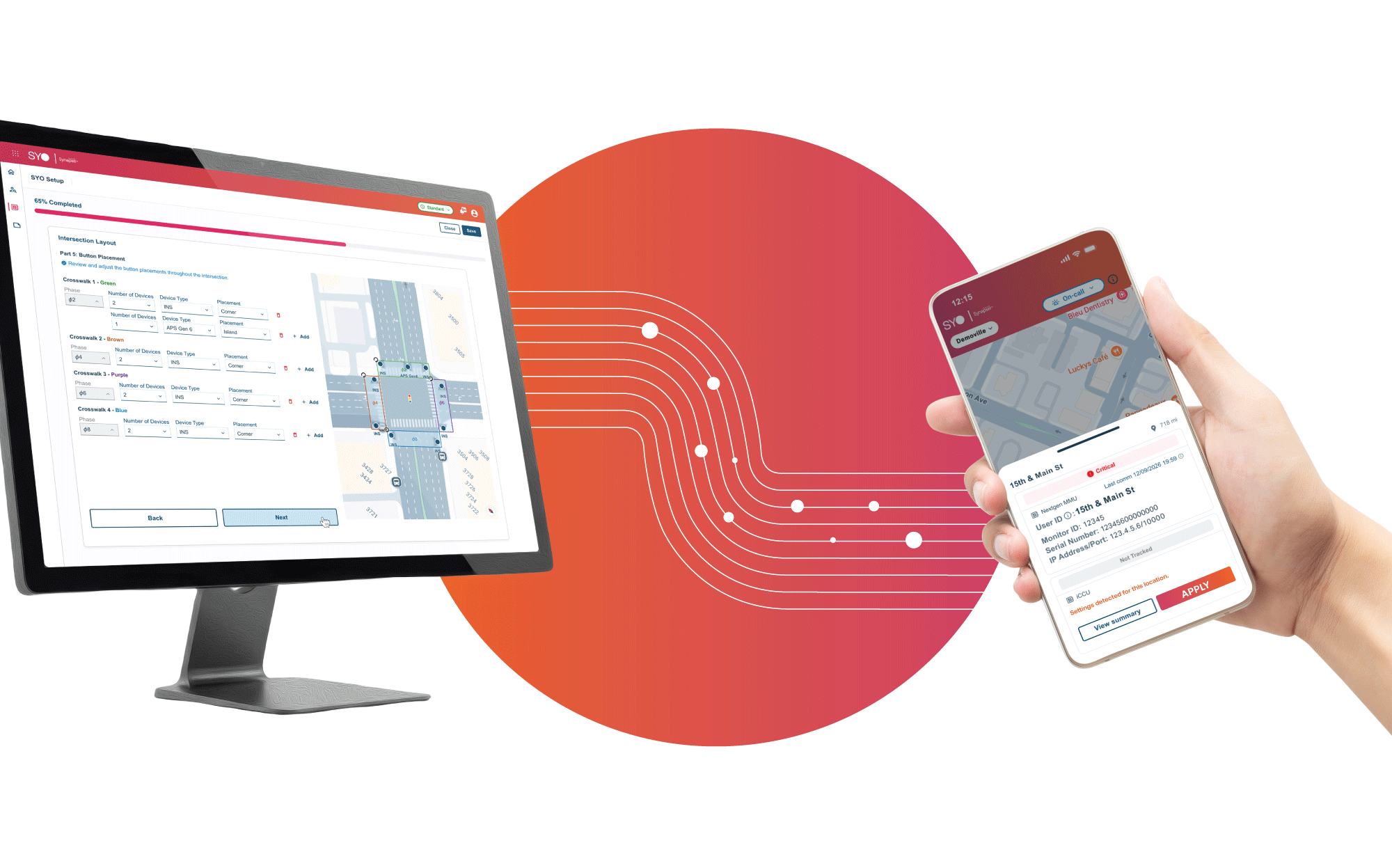
SYO launched in February 2026 for compatible EDI signal monitors. Its mobile and web interfaces expose device condition and diagnostic records. An agency can inspect channel voltages, review faults and organize access for different users. The system moves information that technicians need beyond the cabinet door.
In June, Synapse announced Polara accessible pedestrian signal integration. This extends the software’s scope toward the curb, where a pedestrian needs dependable information about crossing. Connecting accessibility assets to the operations platform is a meaningful next step for a portfolio whose products share an intersection.
Accessibility also reaches beyond fixed equipment. Synapse acquired the Oko navigation app in July 2025. Designed with blind and visually impaired users, Oko uses a phone camera and AI to interpret pedestrian signals. It complements Polara’s installed systems, including at crossings without accessible pedestrian signals.
A speed sign with a second job
The business sells equipment to public agencies, including municipalities reached through distributors. Software adds continuing service relationships. Carmanah’s MX family makes that model visible: connected signs and beacons pair with a local field app and a remote cloud service.
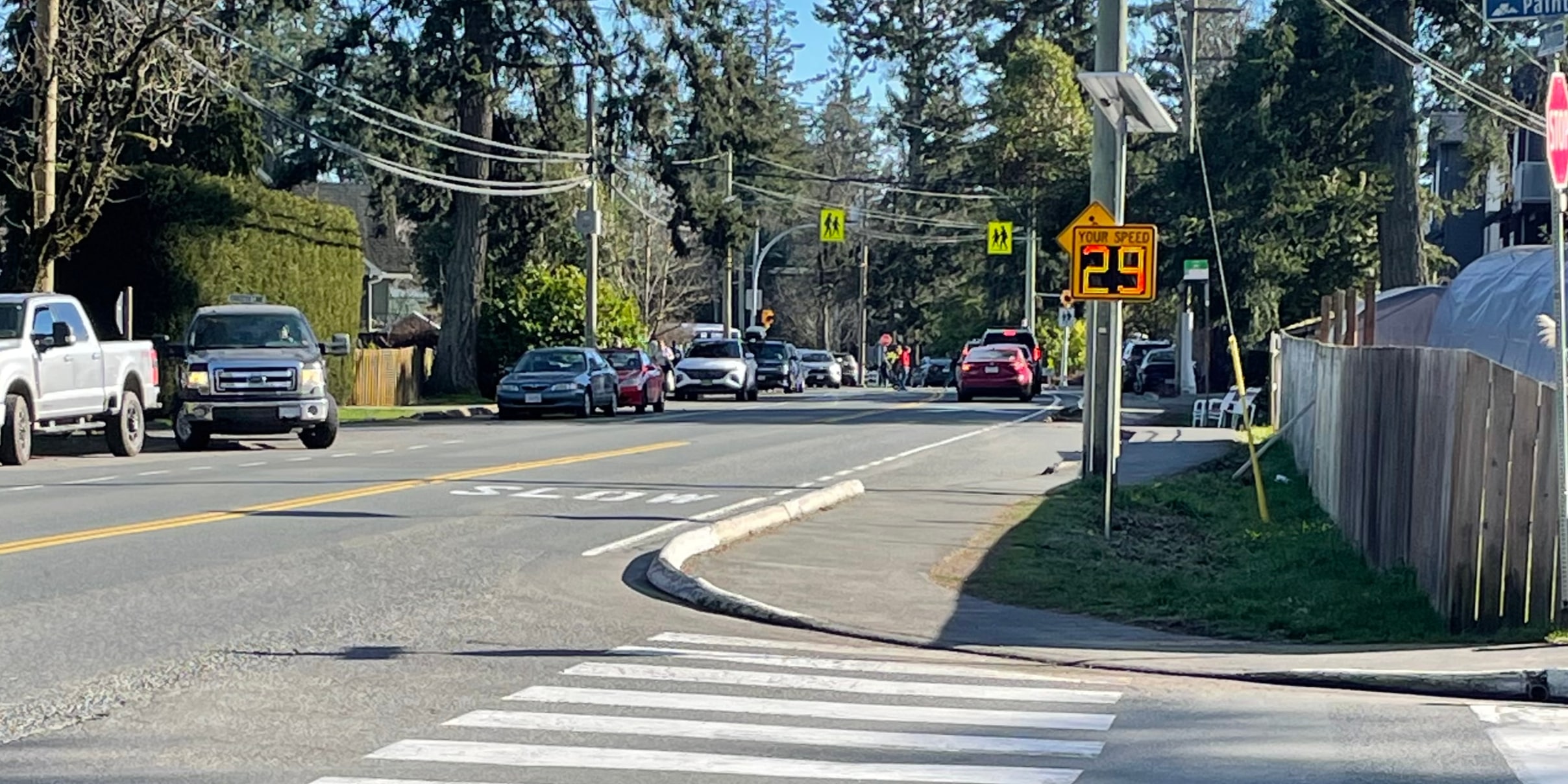
In Colwood, British Columbia, SPEEDCHECK-MX signs went into a school safety corridor. Before installation, equipment was assembled on poles and concrete bases were prepared. Cloud access then allowed speed metrics to inform enforcement planning. The sign could talk to drivers while giving the city information about their behavior.
What does the connection cost? Carmanah advertises three years of MX Lite connectivity included, then $79 annually from year four. MX Plus lists at $99 annually; MX Pro at $249. Higher tiers add remote changes, scheduling and data features. These are cloud-plan prices, separate from purchasing and installing the roadside equipment.
Lite includes the first three years. Hardware and installation are additional.
The software keeps adding practical detail. An August 2026 Android app update introduced Logbook entries and expanded prior-fault information. Recording what happened at a site gives the next technician something more useful than an unexplained alert: a history to consult.
Start with the equipment you have
Synapse occupies the meeting point between specialist traffic hardware and operations software. Alternatives depend on the task: Econolite, for example, offers malfunction management units for signal cabinets. Synapse’s particular proposition is the span of its roadside brands and the effort to connect their operation.
That makes compatibility a purchasing question worth asking early. A city should identify its monitor models, communications and maintenance needs before treating a demonstration as a deployment plan. Solar systems need another calculation: the panel and battery must sustain the actual load through local conditions year-round.
The lesson a reader can copy is modest. Choose a recurring field decision. Connect the assets that can supply useful evidence. Test whether that information changes the response. A maintenance dashboard earns its place when the person on call can use it.
A connected intersection will still need people, tools and sound judgment. Synapse is trying to give those people a clearer picture before they leave. For a technician holding the keys, that is a sensible place to begin.