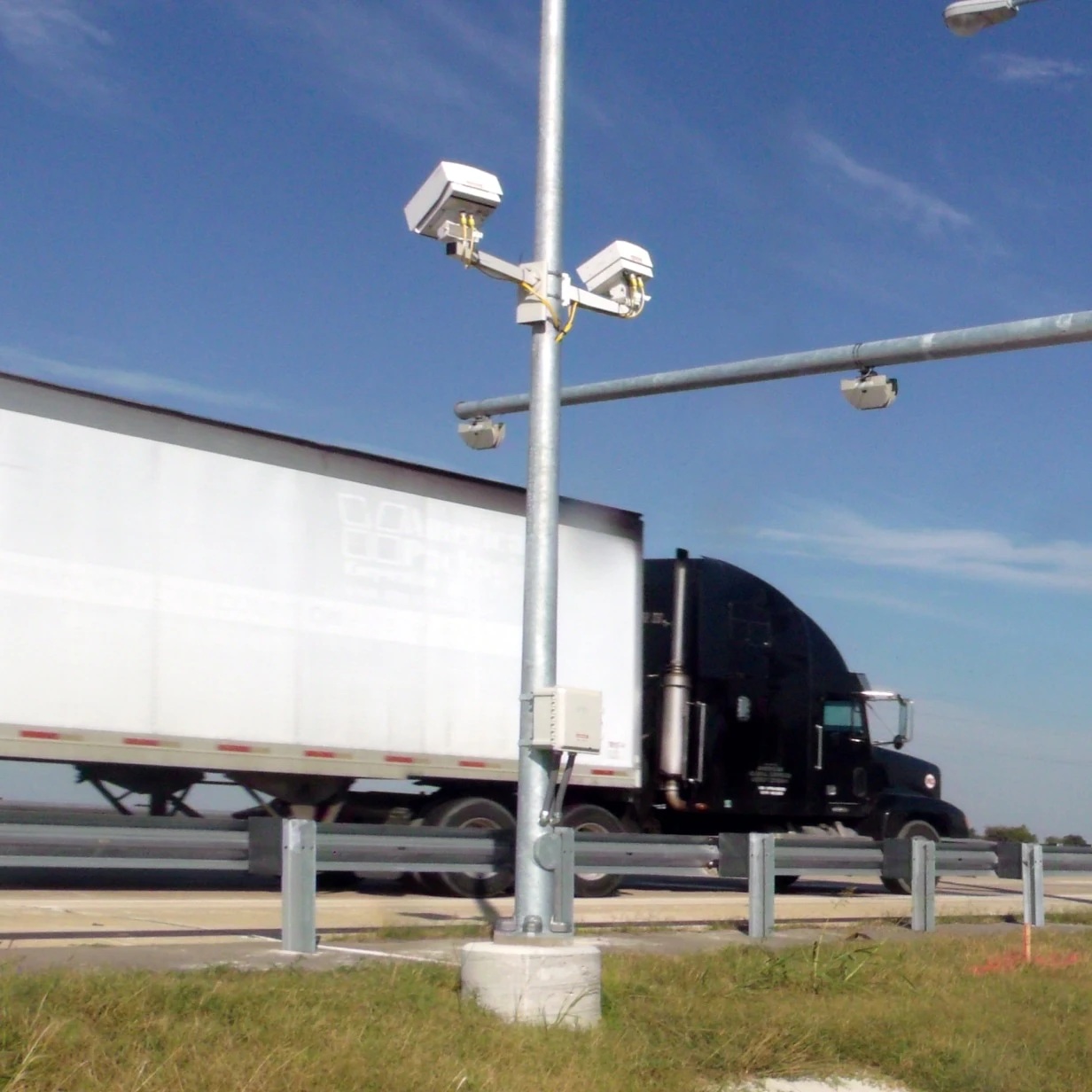
Consider a truck approaching a weigh station. The driver’s immediate problem is time. The inspector’s is uncertainty. Somewhere between them, a set of roadside sensors must answer a rather impolite question: should this particular truck be made to stop?
Quarterhill sells the equipment and software that help make that decision. Its weigh-in-motion systems measure vehicles while they move. Electronic screening helps identify trucks that need closer inspection and allows compliant vehicles to bypass. The ambition is wonderfully practical: spend an inspector’s attention where it is needed, without making every driver join the same queue.
- The work: tolling, truck screening, roadside sensing and traffic data.
- The buyers: transportation agencies and road operators, including Utah and Oklahoma.
- The advantage: physical measurement connected to transaction software and ongoing operations.
- The test: delivering complex systems profitably while preparing for a substantial acquisition.
This is a useful way into a company whose vocabulary can otherwise become a traffic jam of its own. Intelligent transportation systems. Interoperability. Automatic vehicle classification. Behind the terminology sit ordinary questions: what passed, what should it pay, is it safe, and who needs to act?
The road is only half the transaction
At a tolling location, seeing a vehicle is the beginning. Sensors identify and classify it; software must carry the event into an account, a charge and a record that can be reconciled. Quarterhill’s roadside products and commerce platforms cover different parts of that journey. Its interoperability services help agencies exchange transactions and settle the money between operators.
Imagine a system that recognizes a vehicle perfectly but loses its transaction in the back office. The camera has done its job. The agency still has a problem. Quarterhill’s case for combining hardware and software is that the handoff deserves as much care as the original observation.
- 01DetectRecord the passing vehicle
- 02ClassifyDetermine the vehicle type
- 03ChargeApply rules and match accounts
- 04ReconcileSettle and audit the transaction
Utah puts a price and a purpose on this otherwise abstract proposition. In May 2026, its Department of Transportation selected Quarterhill for a US$6.3 million back-office and customer service contract covering the I-15 Express Lanes. The initial term is five years, with five optional annual extensions. The job includes transaction processing, account management and customer service operations.
“rules, roles, and workflows live in one place”
Chuck Myers, CEO, describing the Utah platform, May 2026
The stated goal is to replace disconnected dashboards and manual workflows with a system that exposes exceptions and keeps actions traceable. Those are less photogenic benefits than a roadside camera. They are also the details that matter when someone questions a charge. A bill should have a history, not merely a number.
The customers are agencies and infrastructure operators; drivers encounter the result. Quarterhill earns money from equipment, software, integration, maintenance and operating services. A contract can extend well beyond installation. Its business therefore depends on both winning the project and remaining useful after the launch ceremony.
The company that changed lanes
Quarterhill did not begin with roads. Its predecessor, Wi-LAN, was founded in 1992 by Hatim Zaghloul and Michel Fattouche around wireless technology. It later became associated with patent licensing. That ancestry still appears in company descriptions, sometimes long after the operating business has moved on.
The turn became concrete in 2017. Wi-LAN changed its public-company name to Quarterhill and completed its acquisition of International Road Dynamics, or IRD. The group had announced a diversification strategy: acquire operating businesses alongside intellectual property licensing. IRD brought a roadside engineering business with roots dating to 1980.
IRD brings roadside measurement into the group.
ETC adds tolling software and operating relationships.
The sale of WiLAN control concentrates operations on transportation.
In 2021, Quarterhill paid C$150 million for Electronic Transaction Consultants, or ETC, using cash and debt. ETC supplied tolling and mobility systems to major US authorities. Its transaction software complemented IRD’s sensors and audit technology. Buying the two capabilities together was a coherent idea: a road needs to measure the vehicle and then do something dependable with the measurement.
Two years later, Quarterhill sold control of WiLAN. The June 2023 transaction retained a 10% equity interest at closing, but allowed the company to focus its operating attention on transportation. The sale followed a strategic review begun in early 2022. It marked a deliberate choice about where management would spend its time and capital.
The expensive part was delivery
A tidy acquisition diagram can conceal untidy work. Quarterhill’s fiscal 2023 reporting identified tolling implementation expense overruns that reduced project margins. This is the first documented strain to examine in the transportation strategy: the gap between the cost assumed when a project is sold and the cost incurred while making it work.
There is an obvious temptation in technology to celebrate a sale as though the difficult part has ended. Infrastructure reverses that logic. Equipment must operate in the field, software must connect to existing systems, and the customer cannot suspend a road while everyone discusses architecture. Quarterhill’s overruns show how the commercial promise can become the engineering team’s bill.
Its subsequent emphasis on restructuring, contract economics and execution makes sense against that background. The company also sought more software capability. When it agreed to buy Red Fox in 2024, Quarterhill was already a customer of the British company’s Quantum vehicle detection and classification platform. Myers described a “buy versus build” opportunity. Previous use gave the buyer experience with the product before ownership entered the conversation.
For 2025, Quarterhill reported US$155.2 million in revenue and a US$54.4 million net loss, including a US$31.4 million goodwill impairment charge. By the second quarter of 2026, it had recorded four consecutive quarters of positive adjusted EBITDA. The distinction matters: adjusted EBITDA strips out specified expenses and is not net profit.
Bars use a 0-40% scale. Q2 2026 still recorded a US$5.6 million net loss.
Improved margins suggest progress in the work management set out to fix. They do not erase the losses, or establish that every future contract will behave. In a business selling long commitments, a good quarter is evidence to watch, not a victory lap.
A $70 million bet, still waiting to close
Quarterhill’s next proposed expansion is larger. In June 2026 it agreed to acquire Conduent’s tolling business for US$70 million in cash plus shares representing 7% of Quarterhill at closing. The cash component was expected to be funded through debt. As of the September 24 company update, completion was still expected in the fourth quarter, subject to closing conditions.
Management expects the transaction to roughly triple tolling revenue and produce approximately US$2 billion of combined backlog. Those are expectations for a combined business. Backlog is future work under the company’s definition, which includes certain expected extensions; it is neither cash in the bank nor revenue already earned.
Capital has arrived through other channels too. Quarterhill announced US$60 million of committed credit capacity in May, then closed an equity placement for C$51.75 million in gross proceeds in September. The currencies and instruments matter. Borrowing capacity is not all drawn cash, and an equity issue gives new holders a claim on the business.
This remains a competitive market. A January 2026 Tampa-Hillsborough County Expressway Authority ranking placed Quarterhill sixth among nine respondents, behind Kapsch, TransCore, Neology, Conduent and Indra; staff intended to recommend the first five for shortlisting. That single procurement is no universal verdict. It is a welcome reminder that experience and a broad product catalogue do not win every contest.
The useful lesson is in the handoff
For another company, the transferable idea is to follow the customer’s entire task. Quarterhill’s customer needs a decision, a payment or a usable traffic record. A measurement alone leaves the work unfinished. Connecting the steps creates opportunities for software and services, provided the integration is reliable enough to justify the arrangement.
For an agency, start with the bottleneck. Oklahoma’s US$5.25 million I-35 screening project combines weighing, electronic screening, tire anomaly classification and dimensioning. The purpose is to direct inspection resources more effectively. A toll authority faces a different queue: disputed transactions, account exceptions and reconciliation. Buying begins with understanding which queue is costing you time.
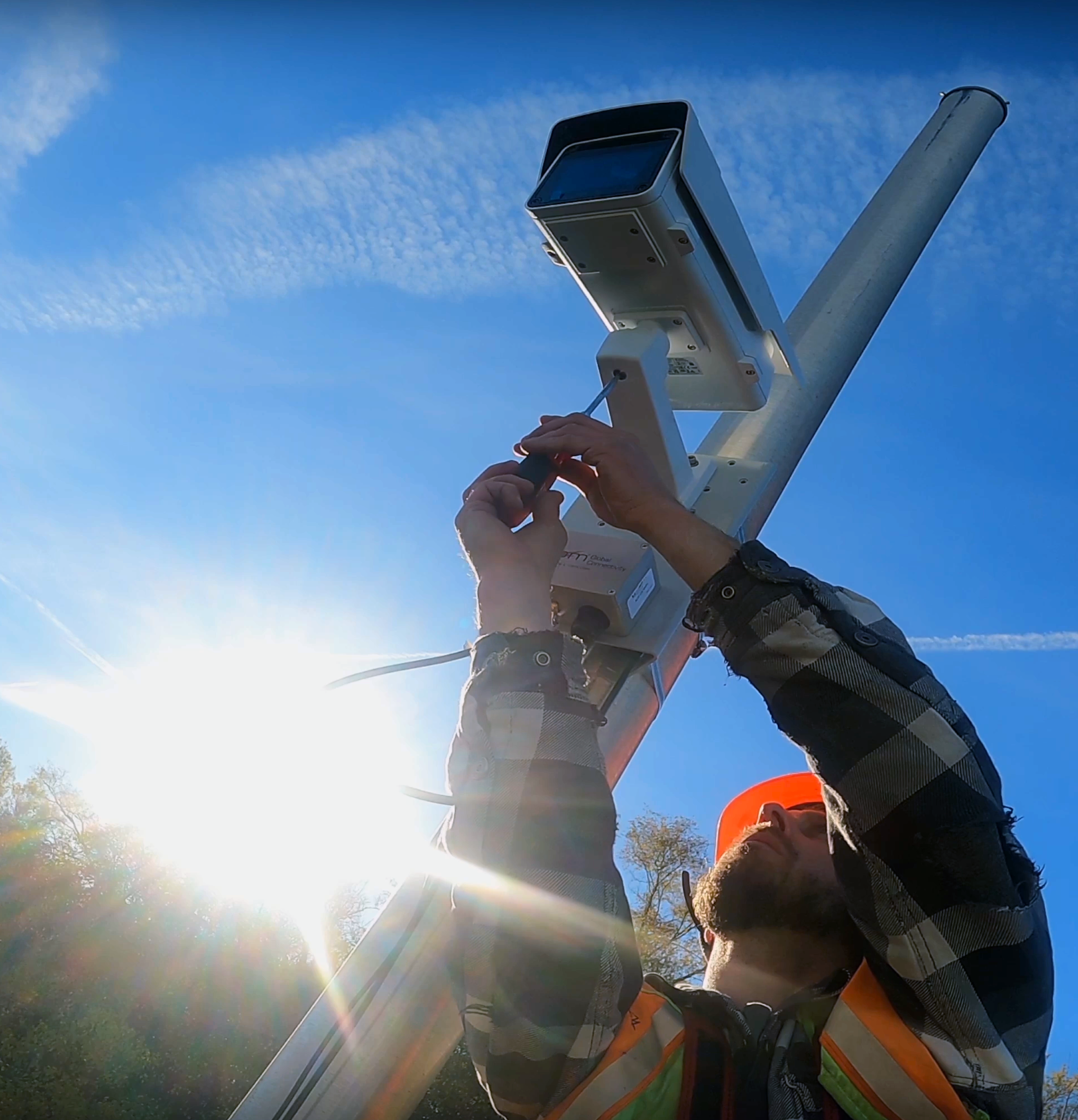
Sometimes the useful improvement is physical. Quarterhill’s TMB-13X intersection radar, announced in a TOPAS-registered UK version in September 2026, detects vehicles and cyclists using up to nine configurable virtual loops. Mounted above the road, it offers an alternative to cutting detection loops into the pavement. Less installation disruption is a concrete reason to consider a new sensor.
These approaches need conditions that support them: appropriate roadside equipment, dependable connections to existing workflows and people able to act on the output. Fixed-price implementation costs can still outrun assumptions. A sensor’s flag also needs to enter the right inspection process. Automation is useful when the institution around it can use the decision.
Return to the truck. The inspector has a better basis for deciding whom to stop. The compliant driver may keep moving. Quarterhill’s work is at its most persuasive when the machinery makes that exchange less cumbersome. The road user need never learn the name of the company that arranged it.