At exactly five o'clock on a summer day, 100 Montrealers pressed record. They were scattered around the city, each looking at a different corner of it, each making a tiny choice about what belonged in the frame. The assignment was synchronized; the result was not. Street life, spontaneous performances and the small rituals of the city arrived together as a many-eyed portrait. Even the music was captured at the same hour.
The campaign is a useful way into Sylvie Charette's work because it put control and participation in unusual balance. Charette had joined Tourisme Montréal in October 2021 as vice-president of marketing and strategy, as the visitor economy was beginning its post-pandemic restart. Her brief covered five core areas and audiences ranging from leisure travelers to convention buyers, travel specialists and foreign journalists. A city had to be positioned internationally, but the people already living there had to recognize it too.
The conventional move would have been a polished montage made about Montreal. This one was made partly by Montreal. Residents were not hired scenery. They were the recording system, and their simultaneous viewpoints became the claim: this place is active in more ways than one camera can hold.
The career before the city
Charette did not arrive at destination marketing by following a straight tourism track. Her public career crosses categories that behave differently at the shelf and surprisingly alike in real life: mobile phones, passenger rail, coffee, digital-first internet service and, finally, a city. Each asks a customer to imagine not just an object but a future experience. A phone service promises smoother connection. A train sells the journey along with the seat. Coffee can become a daily ritual. A destination sells time not yet lived.
She spent ten years at Bell Mobility in management positions that included consumer communications. She joined Rogers in 2002 and, by 2008, was vice-president of marketing and communications in Quebec. There, one documented career highlight was helping create a single communications platform for the Rogers brand. She also held a marketing and communications vice-presidency at TELUS. These were businesses of network maps, plan details and customer friction, where an elegant promise has to survive contact with a bill.
“The technology often makes our lives easier ... make our customers' lives simpler.”Sylvie Charette, on a Rogers service launch in 2012
That sentence is less a flourish than a test. Does the product reduce effort? Can marketing express the reduction without making the machinery feel heavier? In 2013 and 2014, as Videotron's vice-president of branding and interactive media, Charette led brand and digital media teams and was charged with sharpening the company's position while keeping communications customer-focused.
A career built across experience systems
By 2015 she was senior director of marketing planning and communications at VIA Rail Canada. At Nespresso Canada, where she served as vice-president of marketing and e-commerce, the assignment brought brand, culture and physical ritual together. She spoke for a partnership with the Toronto International Film Festival and sat on the jury of a Design Exchange competition that challenged designers to rethink the coffee break with recyclable aluminum. When Montreal and Laval began collecting used capsules, she explained the practical detail that made the system legible: a vividly green bag that sorting teams could easily spot.
In 2019, she returned to Videotron to lead marketing and customer experience for Fizz. The job joined awareness to execution. Her remit included digital go-to-market strategy, customer acquisition, customer experience and digital operations. The brand could not stop at a clever voice; the service path had to carry the same idea.
A city is a product no one controls
Tourisme Montréal presented a different operating problem. The organization coordinates a network of roughly 1,000 members and partners. Hotels, restaurants, festivals, cultural institutions, neighborhoods, transport providers and residents all help make the thing being marketed, but no marketing department can issue them a single script. The work is partly persuasion and partly orchestration.
At her appointment, four principles were attached to Charette's way of working: passion, collaboration, care and commitment. They can sound soft until placed beside the structure of a destination campaign. Collaboration means a film crew of 100 residents. Care means locals can feel like participants rather than inventory. Commitment means keeping an idea coherent across leisure and business markets, local pride and international attention, summer heat and winter darkness.
The seasonal campaign made that coordination visible. Summer opened at five. Autumn followed the city's gradual turn from lingering warm days toward food, exhibitions, local design and rest. Winter treated shorter days as longer nights, moving through illuminated streets toward Igloofest. The campaign did not paste one mood onto twelve months. It used the seasons as distinct versions of the product.
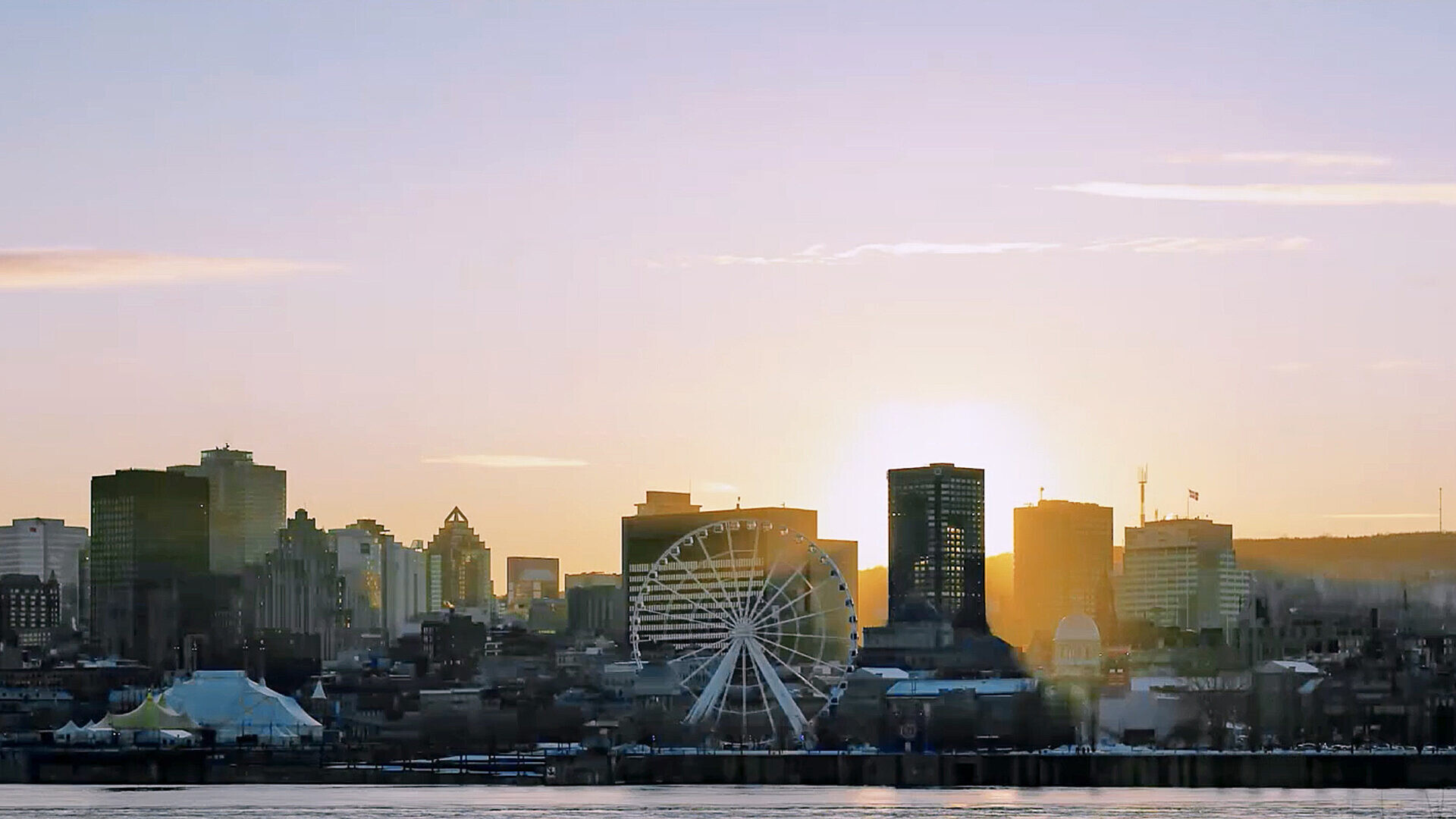
Charette described the ambition as a unifying campaign that could celebrate the metropolis's energy while connecting marketing to the tourism product. That last clause matters. A destination organization can buy attention, but the city has to pay it off. The seasonal work tied the promise to what a visitor could actually do: gather, eat, watch, walk, stay out late, notice the light change.
The summer film reached nearly 14 million completed views across formats and markets. In December 2022, Tourisme Montréal was named Entreprise de l'année by Association marketing Québec, notably for the campaign. The award announcement emphasized the use of residents and the campaign's international reach. Charette redirected credit to the Montrealers acting as proud ambassadors and to the team that assembled their work.
When absence becomes the brief
Another campaign began with something Montreal did not have. The route for the Paris 2024 Olympic flame did not include the city, even though Montreal's French population exceeded that of many cities the flame would cross. Tourisme Montréal responded with Faites passer la flamme à Montréal, a symbolic invitation for the flame to visit. The proposition was specific, understandable in seconds and easy to share.
It also had the confidence to play with the omission instead of hiding it. More than 3.3 million YouTube views followed, along with international press and thousands of shares. The campaign won the Creative Thinkers category at the Skift Global Forum. Charette's public reaction did what her other campaign comments tend to do: she named the team and partner agencies, and highlighted the combination of market understanding, a clear creative concept and agile execution.
The pattern is useful: look for the live tension, not a generic slogan. Give it a local reason. Make participation natural. Then let the city keep its sense of humor.
Building beyond the campaign
Destination marketing is also accountable to the destination. Tourisme Montréal created an internal sustainable-development committee in 2022 to bring those principles into each department. Charette represented marketing on the group in 2024, alongside colleagues from destination development, sales, member relations, finance and the chief executive's office. The organization adopted a sustainability policy in May 2023.
That cross-functional setup fits her career. Brand choices cannot remain inside advertising when they touch transport, events, visitor behavior and local economic life. The same operator who once connected a digital-first mobile brand to customer operations was now part of connecting a tourism promise to how an organization worked.
Her influence also appears person to person. Quebec marketing executive Simon Parent has described Charette publicly as a mentor, former boss and inspiring friend. When Dany Pedneault announced that he would take over Tourisme Montréal's marketing leadership in 2026, he thanked her for listening, vision and a legacy he summarized as a solid team, a strong brand and a collaborative spirit. Campaign results travel well on a résumé. A successor's description of what remains is harder to manufacture.
“My new journey will unfold with joy, curiosity, space to explore and new ways to contribute.”Sylvie Charette, announcing her next chapter
Leaving the city in motion
In February 2026, Tourisme Montréal announced that Charette would leave on May 15 after nearly five years. The organization credited her with helping rally teams and partners during the tourism restart, strengthening Montreal's reach across leisure and business markets, and contributing to the destination's repositioning and growth. Her own note was proud and open rather than overly final. She thanked the team, named Montreal's creativity, culture, gastronomy and energy, and left the next role unspecified.
That openness feels consistent with a career built by carrying lessons between categories. Telecom taught the value of making complexity feel simple. Rail joined movement to anticipation. Nespresso connected a physical ritual to culture and design. Fizz made digital operations part of the brand. Montreal required all of those muscles, then added a thousand partners and four seasons.
The 100-camera film offers the cleanest closing image. A marketing leader set the time, assembled the partners and created the conditions. Then other people showed what the city was. Charette's work at Tourisme Montréal suggests that the job was never to manufacture Montreal's energy. It was to build a frame generous enough for that energy to appear.