In 2002, a major Miami music label asked Diego Prusky to build a website. It was an apparently manageable request: make the thing, put it online, deliver it. Looking back in 2026, he described that assignment as the beginning of more than two decades in digital marketing. The brief had opened a door onto a much larger question. Once music moved online, how would artists and labels reach the people who might care?
Prusky had arrived at that door by an unusual route. He trained as a chemical engineer in Uruguay, became involved in software development, and eventually built a career around audiences and brands. Today he leads InPulse from Miami. The company works across the United States and Latin America, where a shared language can conceal a remarkable number of different conversations.
His career is best understood through those conversations. A client requests an asset. A strategist asks what the asset is supposed to accomplish. Somewhere between the two, an apparently technical job becomes a business problem. The website was the opening question. He has spent the intervening years finding reasons to ask another.
Uruguay, software, and a wider map
Prusky studied at Universidad de la República. While finishing his studies, he developed expertise in software. In 1998, he moved from Uruguay to the United States for software-development work. His early American working life included IT consulting in New Jersey and St. Louis, a less predictable prelude to an entertainment-marketing career than a stint backstage.
Uruguay remained part of the business. His agency had an operation there, drawing on people who understood technology and spoke Spanish as a first language. The clients he pursued were largely outside the country. Universal Music Latino, Warner Music Latina and Sony Music were among the labels associated with that early practice.
There is a practical distinction here between crossing a border and understanding what changes when you do. A regional operation can share infrastructure while still needing local judgment. For Prusky, software expertise and cultural understanding became complementary capabilities. The people building the machinery also needed to understand the conversations it would carry.
- 1998Uruguay to US software work
- 2010The InPulse Digital name
- 2016The Story Room partnership
- 2019Agency relaunch
- 2024InPulse rebrands
A manicure earns its close-up
An early E! Online Latino campaign offers a wonderfully small illustration of his method. During red-carpet season, the agency connected a celebrity manicure feature with an invitation for fans to photograph their own nails. An app let participants share those photographs through the channel’s social accounts. The audience had something to do, and something of its own to contribute.
The idea began with an existing interest in nail colors and manicures. Celebrity coverage supplied the occasion. Fans supplied their own version. Even a red carpet, that rather formal machinery for admiring other people, could become a place for participation.
Prusky also described work with footballer Rafa Márquez, connecting him directly with fans and the media through social channels. Those examples give the audience a role. The useful question is how a brand, athlete or artist can enter an activity people already value. A campaign becomes more interesting when its subject has company.
He returned to that issue in his 2023 writing on TikTok. He urged brands to research audiences and competitors before producing content, examine the formats people respond to, and develop a voice suited to the platform. Simply moving material made for another channel into a short-video feed would miss much of the point.
His emphasis was on observation: content themes, styles, viewing behavior and the fit between creators and audiences. A video’s brevity does not make the thinking behind it brief. In his account, the work starts well before anyone presses record.
When the channel becomes the customer
In 2016, Prusky co-founded The Story Room with Antoinette Zel. Zel’s background included leadership at MTV Networks Latin America, El Rey Network and the advertising agency La Comunidad. She became CEO; he became director of strategy and technology. The partnership joined media and advertising experience with his grounding in software and digital strategy.
The Miami-based company launched with 50 employees across offices that included Mexico City, Buenos Aires and Montevideo. Its client roster included BBC Worldwide Latin America, Food Network Latin America, Mattel brands, Sony Music and NBC Universal. The geography and the work were already broader than one market or one kind of entertainment.
The pairing also gives an account of agency building than the solitary-founder portrait. Creative work depends on people who can interpret a brief differently and agree on what success should mean. Prusky’s story has collaborators in it because the business did too.
By 2022, he was describing a television practice that had begun with E! Entertainment and expanded into Food Network, Pluto TV and Paramount+ launches. The work followed an industry changing the way it reached viewers. InPulse’s teams operated across several Latin American countries, combining a regional perspective with local execution.
He stressed the need for campaigns to bring content, influencers, activations and paid media into a coherent story. He also identified time and budget as agency challenges. The ingredients may be creative, but the kitchen still has a clock and an invoice.
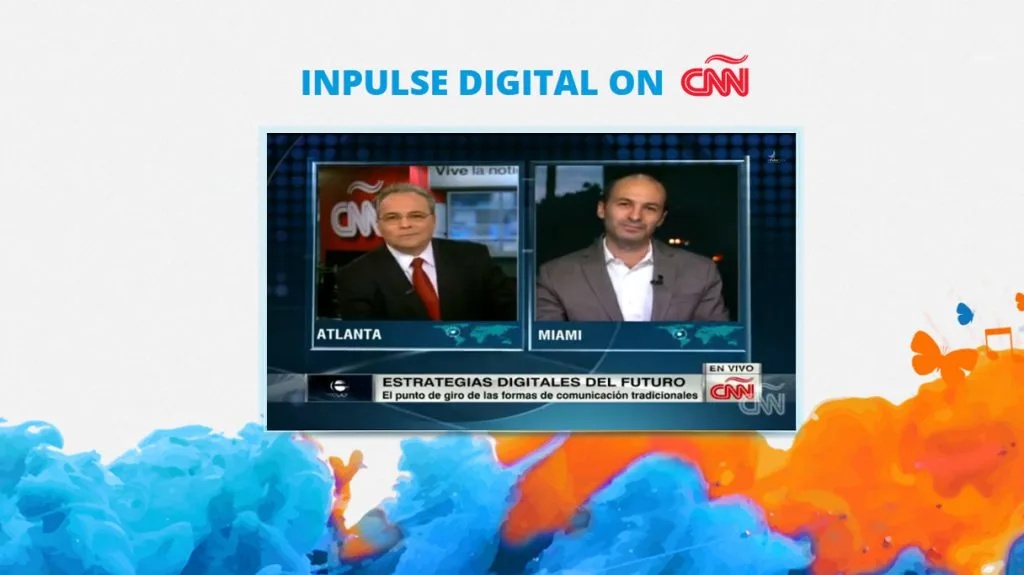
His CNN conversation with Camilo Egaña covered social strategy, professional work with influencers and the commercial use of celebrities’ social channels. He spoke about television and social media working together. The appearance captures an earlier stage of the same concern: people move between media, and a campaign needs to account for that movement.
The numbers belong to the team
A BBC Studios project makes this work more concrete. In 2018, the company’s Latin American brand needed to reflect its changing production and distribution business. A campaign sought to reconnect existing fans while also speaking to broadcasters, streamers and other commercial partners.
The project combined Spanish- and Portuguese-language storytelling with franchises people already recognized, including Doctor Who and Top Gear. Prusky appears among its credited collaborators, alongside Zel and colleagues at BBC Studios and The Story Room. The entry became a finalist in three categories at the 11th Annual Shorty Awards.
Reported in the campaign’s awards entry. Team results; engagements are interactions, not a count of unique people.
The figures describe a campaign and a period, rather than a permanent verdict on its participants. That distinction matters. An audience number can show activity. Its usefulness depends on knowing what was counted, when it happened and which business purpose it served. A large numeral is an excellent typographic device; it still needs a noun.
A brand name loses a word
In late 2024, InPulse removed “Digital” from its brand name. The new positioning emphasized working through the untidy middle of marketing: changing platforms, uncertain outcomes and the need to make decisions with incomplete information. Creative director Edmundo Bianchi participated in explaining the change.
For a founder whose career began in digital work, dropping that word was a revealing choice. The agency was describing a broader responsibility, with audience research and business objectives informing creative decisions. The delivery channels remained important. They sat inside a larger argument about what the work should achieve.
Prusky also discussed AI as another tool for creative exploration. In late 2024, he described using it to research references, consider options and develop ideas through discussion. The description was modest enough to be useful: a tool could add another perspective to a creative conversation without resolving every decision inside it.
In January 2025, he described the agency’s work with Truecaller on a Latin American content strategy and with Burger King in Mexico on social media. Mexico was a particular focus, with Nuria Feliu joining as country manager. The examples brought his argument back to particular brands, audiences and markets.
He wanted creative ideas that could be sustained and that belonged recognizably to the brand. A funny post might earn attention. The harder question was whether that attention could support a continuing relationship. Even the joke had a job description.
The mentor arrives with questions
Prusky’s work as an Endeavor Miami mentor extends that habit of looking beneath the request. He has spoken about enjoying the challenge of helping companies find a path to growth. The mentoring conversation gives him a different setting in which to examine goals, business models and the decisions around them.
“I like to research and think in advance”Diego Prusky, on preparing to mentor
His approach includes asking what an entrepreneur hopes to get from a session, rather than assuming the answer. He stresses understanding how the team operates and where the founder’s expertise lies. “Empathy is key,” he says. Experience becomes useful through preparation and listening.
His advice includes keeping a simple three-to-five-year plan and hiring senior people who are better at the jobs they need to do. These are ordinary-sounding recommendations with real consequences. A plan helps decide what deserves attention. A capable colleague makes it possible to entrust someone else with meaningful responsibility.
Still willing to be corrected
There is a small public exchange that belongs beside the campaigns. In a 2014 column, Prusky discussed cultural differences in Hispanic marketing. A reader challenged his assessment of Halloween’s importance among Latin American audiences. In his reply, he accepted her point and acknowledged the celebration’s growing popularity.
It is an unglamorous anecdote, which is part of its appeal. Audience expertise requires revision. People change their habits without first asking permission from a presentation deck. A strategist who listens can improve the next recommendation; a strategist defending every old sentence has rather more work to do.
In his March 2026 retrospective, Prusky described InPulse as a team of more than 100 people. He also admitted that his curiosity sometimes leads to late-night conversations with AI. The technology has changed considerably since those first music-label websites. The appetite to examine it appears to have survived.
The agency’s motto, he wrote, is “There’s always a way.” In his story, finding that way has meant paying attention to the business, the medium and the people receiving the message. A label wanted a website. More than twenty years later, the next question still deserves its own answer.
Continue the conversation
Profiles, interviews, columns and a campaign on film.