The first thing to fail was the room. In early 2020, AARP had a familiar, effective ritual: its state offices joined more than 300 in-person events each year, often alongside iconic Black institutions. Then the calendar became unusable. The COVID-19 pandemic did not merely cancel venues. It interrupted a system for sustaining trust with communities that had every reason to notice when an institution suddenly went quiet.
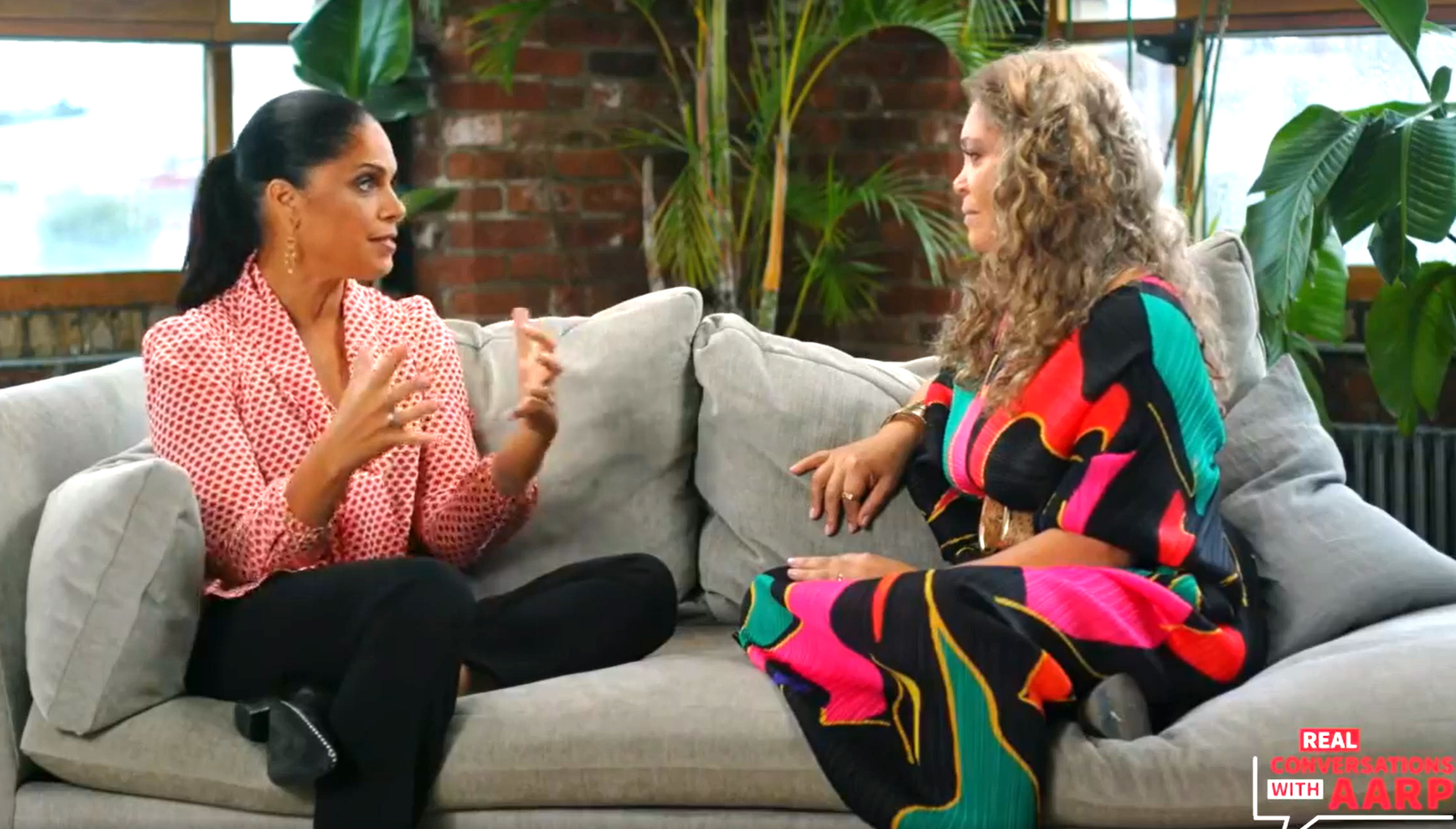
AARP hired BUOYANT to move that relationship online. Calling the result a livestream would be like calling a restaurant a stove. The Washington agency built a digital-first program of half-hour and hour-long conversations for Black, Hispanic and Latino, Asian American and Pacific Islander, and LGBTQ audiences. It booked studios in multiple cities, produced remotely and in person, handled sets and post-production, and developed Spanish-language programming. More than 50 interviews and events followed. They drew more than 2 million views.
The interesting part came after the audience arrived. Spam bots were swarming AARP's Black Community page, trying to lure older visitors elsewhere. A crude interpretation of an agency brief would place that outside the creative team's jurisdiction. BUOYANT treated it as part of the experience and implemented an artificial-intelligence moderation tool. The page had to be safe enough for the story to work.
“A safe space to be brilliant.”BUOYANT's second definition of its own name
The delivery system is part of the message
This habit appears again in BUOYANT's work for Comcast Xfinity. The agency produced concerts ranging from a ten-camera arena shoot to intimate studio performances, with virtual editions sent through YouTube Live and Facebook Live. The streams connected with viewers, but the platforms' privacy rules kept crucial registrant data out of reach. Xfinity could attract attention without learning enough about the people giving it.
So BUOYANT developed Xfinity Front Row, a custom livestreaming and video-on-demand platform. It retained the reach and polish of familiar video services while giving the campaign better access to useful audience data. The agency then created 1VOICE Forward, featuring six Grammy-nominated gospel artists, plus a regional showcase with digital voting and an in-person streamed final.
The recurring move
- Listen for the community's real constraint
- Find what the channel withholds
- Build or configure the missing layer
- Measure participation, not output
That is BUOYANT's competitive position in miniature. A production company can make the concert. A digital agency can build the platform. A multicultural consultancy can advise on voice. A research shop can measure response. BUOYANT sells the combination - strategy, narrative, identity, video, web development, events, public relations and analytics - because culturally specific work tends to expose the seams between those specialties.
A company founded against code-switching
Eric Rigaud founded BUOYANT in 2015 after a career that had already crossed several versions of American persuasion. At Procter & Gamble, he was one of three Black brand managers on a floor of more than 100 people. He later worked on BET's nationwide Rap-It-Up HIV/AIDS initiative, in philanthropy and in civic technology. He understood both return on investment and the peculiar exhaustion of translating oneself for the workplace.
His founding premise was personal: create an agency where Black, Brown and LGBTQ people could bring their full selves to work without code-switching, and connect their labor to a more equitable future. Today BUOYANT says it is 100 percent Black-owned, MBE-certified, and more than 85 percent staffed by people of color. The team includes strategists, filmmakers, designers, programmers, marketers, event producers and analysts.
This matters because representation is not only what appears in frame. It shapes who gets interviewed, which risk gets noticed, whether a translation feels native, how a community page is moderated and what counts as a successful response. BUOYANT's work is strongest when those decisions accumulate into a system.
The product hiding inside the campaign
Consider LaneChanger. Schuyler Bailar, the first openly transgender athlete to compete on an NCAA Division I men's team, had built a speaking practice with more than 150 annual appearances before the pandemic. Demand was not the problem. His calendar was. Every new audience required more of the one resource that could not be multiplied: Bailar himself.
BUOYANT edited his core presentation and answers to recurring questions into a video learning course. It built a public web presence, prepared a sponsorship deck and added a monetization path through Teachable. A speech became reusable intellectual property. The agency did not make the advocate more tireless; it removed tiredness from the distribution model.
Borrowed reach
Fast distribution, familiar interfaces and large audiences. The tradeoff is limited control over data, safety and the shape of participation.
Owned learning
More setup, more responsibility and a clearer view of who engaged, what they needed and what should happen next.
Jobs for the Future offers another version. BUOYANT has produced more than 40 signature videos, vodcasts and podcasts for conferences and campaigns. At the Horizons conference, an isolated room seating roughly 100 people became a live video-podcast studio. Sixty-minute conversations were captured so they could travel as social clips, advertisements, newsletters and podcast episodes. Event coverage stopped being an archive and became an inventory.
For No Kid Hungry, the agency chose a subtler transformation. Food insecurity is often narrated as deprivation. BUOYANT's “What Are You Hungry For?” campaign asked young people aged 13 to 25 about passions, challenges and ambitions. Hunger remained present, but it did not get to flatten the people experiencing it. The difference was a shift in protagonist, not production value.
Dream first, then make the spreadsheet useful
BUOYANT says it begins storytelling engagements with a question: “In an ideal world, what would tomorrow look like?” This could produce a morning of expensive fog. In the agency's best projects, it works as a forcing device. Define the desired future first, and today's obstacles become design constraints rather than the whole identity of the people in the campaign.
The approach also explains the newer Buoyant Health practice. Its stated problem is not lack of awareness but the gap between awareness and participation. The practice combines healthcare strategy, communications, stakeholder engagement and events. Named work spans Corewell Health, Eli Lilly, BridgeBio, Gilead Sciences and AstraZeneca. BUOYANT says its maternal mental-health campaign for Corewell helped secure a $2.5 million grant from Pivotal Ventures.
The business itself is conventional in one important respect: it is a private professional-services firm paid through projects and ongoing engagements. The reusable lesson is one of sequencing. Before commissioning more content, identify what failed first. Is the obstacle the story, the room, the platform, the safety layer, the data or the finite hours of the person delivering the message?
The boundary of the method
Owning more of the experience is not automatically wiser. A custom platform needs maintenance, privacy discipline, distribution and enough repeat use to justify its complexity. Artificial-intelligence moderation needs human oversight, especially when cultural nuance is the work. And a dream-first workshop is useful only when the people represented can influence what gets built. Without those conditions, the integrated model turns into an agency doing too many things at once.
But when the conditions hold, BUOYANT offers a clean idea to copy: treat the channel as seriously as the message. A borrowed platform may be fine. A room may be irreplaceable. A video may be exactly enough. The trick is to notice when the thing carrying the story is quietly defeating it - and then redesign that thing too.