A coke oven is a machine for waiting. Load the coal, let the heat do its work, and resist the temptation to hurry. SunCoke Energy describes a typical cycle lasting 48 hours. The result is a carbon-rich material that helps turn iron ore into iron inside a blast furnace. But the oven produces something else: heat that can become steam or electricity. One industrial job has a second paying output.
- SunCoke sells coke, recovered energy, bulk handling and steel mill services.
- Long-term contracts pass through important costs, but customer dependence remains.
- A $325 million acquisition extends its business to electric arc furnace operators.
That pairing explains much of SunCoke’s appeal. Steelmakers need consistent material. Expensive ovens need dependable customers. Recovered energy adds value to an operation already running hot. The fascinating question is what happens when the customer’s furnace changes. SunCoke’s recent history offers an unusually concrete answer, complete with a closed facility and an acquisition.
Two products from the same heat
The company’s roots sit in Vansant, Virginia, where three test ovens were built in 1960. Sunoco acquired the Jewell operation in 1979. Heat-recovery technology arrived at Indiana Harbor in 1998; a Brazilian facility followed in 2007. SunCoke became a standalone public company in 2011. Its public-market age understates the decades spent learning what coal, refractory brick and combustion will tolerate.
In SunCoke’s process, gases released by the heated coal burn above the bed and then beneath the oven floor. That heats the charge from both sides. Negative pressure draws gases inward; excess heat can be recovered downstream. Unlike conventional by-product cokemaking, which recovers chemical products from the gas stream, this approach burns the volatiles. The engineering choices shape both the product and the environmental controls.
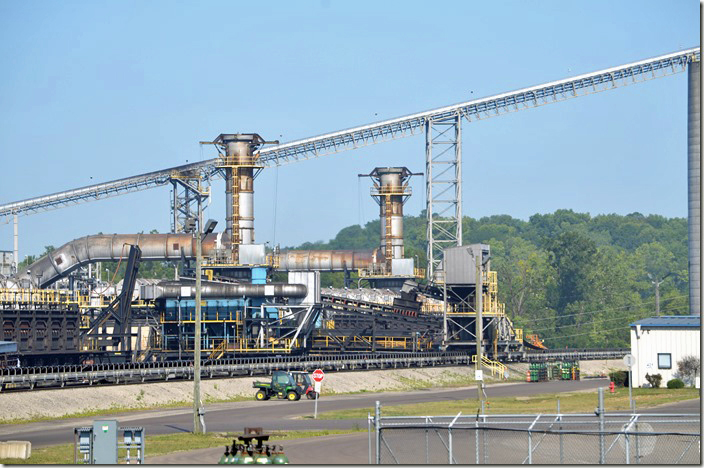
Heat recovery improves the use of energy already released in production. It still belongs to coal-based ironmaking, with the associated emissions and environmental obligations. Its practical audience is a mill operator seeking reliable coke and usable energy. You cannot order it like office software. Buying from SunCoke means fitting a supply relationship into a demanding physical process.
Carbonization + combustion
The contract beside the furnace
Cleveland-Cliffs and U.S. Steel are named domestic coke customers. SunCoke also serves foundries and overseas blast furnace operators, while its Brazilian business earns technology licensing and operating fees through its ArcelorMittal relationship. Foundry coke became a commercial product in 2020. These are specialized customers buying an input whose quality affects the next production stage.
The commercial mechanism is take-or-pay. Within contractual limits, a customer takes the coke or pays for material it does not take. Coal, transportation and certain operating costs pass through to the customer. SunCoke, in turn, must meet operating and volume requirements. The arrangement gives both sides a reason to commit to assets that cannot easily be repurposed or relocated.
That makes revenue a slightly slippery scorecard. Lower coal prices can reduce reported sales through those pass-through provisions. A smaller sales number need not mean an equivalent deterioration in the underlying service economics. Investors have to examine volumes, yields and contract terms alongside revenue. The company’s expertise spans running ovens and arranging agreements that support their operation.
A signature cannot hold demand still
The distinction became painful in 2025. SunCoke reported that Algoma Steel breached its contract and refused further coke deliveries at the end of the third quarter. Its annual report says it was pursuing enforcement and recovery. Haverhill I subsequently closed, and the company recorded a $90.1 million impairment at that facility. The commercial relationship failed before the asset ran out of engineering history.
Algoma separately announced its first steel production from a new electric arc furnace in July 2025. SunCoke’s filings identify the spread of alternative steelmaking processes as a risk to blast furnace coke demand. These events illustrate the exposure; they do not establish the legal merits of the contract dispute. Cost pass-throughs cannot resolve every disagreement, or prevent the customer’s production system from evolving.
The $325 million adjacent move
SunCoke had already announced its response to a broader market: buy Phoenix Global. The deal closed on August 1, 2025, at an announced price of $325 million, funded with cash and revolving-credit borrowing. Phoenix brought slag handling, metal recovery, scrap preparation and other mill services, including relationships with electric arc furnace operators. It widened the jobs SunCoke could perform around steelmaking.
“The acquisition of Phoenix is an excellent strategic fit for SunCoke”Katherine T. Gates · May 2025
The logic is straightforward. A mill may change how it melts metal while still needing scrap prepared and slag moved. Phoenix also brought international operations and contracts with fixed revenue components. At announcement, SunCoke expected $5 million to $10 million in annual synergies. That was a target. The acquisition preceded the reported Algoma breach, so it should not be presented as a purchase prompted by that later event.
The logistics business extends the same industrial intimacy. Terminals receive, mix, store and transfer bulk materials between transport modes. SunCoke reports approximately 40 million tons of annual terminal processing capacity. Customers gain handling infrastructure and connections to ports; SunCoke earns another role in the movement of industrial material. Other terminal operators, in-house services and competing transport arrangements remain alternatives.
What the next quarter can tell you
By July 2026, there was evidence of progress: second-quarter consolidated Adjusted EBITDA reached $69.6 million, versus $43.6 million a year earlier. Phoenix and higher terminal volumes helped. This non-GAAP measure excludes specified costs and is distinct from net profit. Net income attributable to SunCoke was $13.1 million. Management raised its full-year Adjusted EBITDA outlook to $250 million-$265 million.
The machinery still gets a vote. A Middletown turbine failure reduced energy sales before its return to service in May 2026. SunCoke’s stated culture emphasizes safety, integrity and operating performance, priorities with tangible consequences here. The transferable lesson is to earn more roles around an existing customer while being precise about which risks a contract transfers. It works less well when customers stop investing, service volumes weaken, or essential equipment fails. SunCoke can broaden its usefulness; it still needs the mill to run.
Company website ↗ · LinkedIn ↗ · Company news ↗ · Earnings & webcasts ↗
Next scheduled results: October 27, 2026. Profile updated October 23, 2026.