Katherine Gates was already working with SunCoke before she joined SunCoke. For roughly two years, while still at the law firm Beveridge & Diamond, she worked with the company on secondment. Her arrival on the payroll in February 2013 came after a substantial introduction to the place. The eventual chief executive had taken an unusually thorough look around before becoming an employee.
That small detail helps explain a career that can otherwise look abrupt when compressed into a biography: lawyer becomes head of a business that makes coke for steelmakers. Spread the dates out, and a different picture appears. Gates spent more than a decade inside SunCoke before becoming CEO on May 15, 2024. Along the way, her responsibilities grew from environmental and safety counsel to legal leadership, human resources, operations and the board.
By August 2025, she was welcoming a newly acquired industrial services business into the company. Phoenix Global brought SunCoke into additional international markets and services for electric arc furnace operations. A leader who had learned the existing enterprise piece by piece was now helping change its shape. The interesting question was how far that accumulated knowledge could travel.
First, get to know the machinery
Gates earned a Bachelor of Arts, summa cum laude, at the State University of New York College at Geneseo, followed by a law degree at Georgetown University Law Center. Georgetown identifies her with the class of 2001. She also clerked for the U.S. Department of Justice and the Environmental Protection Agency. Her professional training placed her close to the meeting point of industrial activity and public rules.
At Beveridge & Diamond, Gates became a partner, served on the management committee and co-chaired its civil litigation practice group. These were responsibilities within the firm as well as work for clients. Before her corporate career broadened, she had already acquired experience in the management of a professional organization.
The secondment connected that legal work directly to SunCoke. Then came the permanent move in 2013 and promotion to vice president and assistant general counsel in July 2014. In October 2015, Gates became senior vice president, general counsel and chief compliance officer. She also joined the board of the general partner of SunCoke's then publicly traded partnership subsidiary, a role she held through June 2019.
When promoting her in 2015, then-CEO Fritz Henderson singled out her understanding of “the engineering and science behind our operations.” It is a useful piece of the story. Even at that stage, the case for giving Gates more responsibility included her grasp of how the company physically worked. The legal department had become a route into the machinery.
A business with heat to spare
Understanding SunCoke requires a brief detour through a material most people never buy. Its coke goes into blast furnaces used to make steel and into foundries producing cast iron. The product sits upstream of more familiar objects and industries. Bridges and machinery receive considerably more attention than the industrial inputs that make their manufacture possible.
SunCoke's process also recovers excess heat for steam or electricity generation. That makes energy recovery part of the operating business, alongside the production of coke. A turbine, a supply agreement and the quality of the material leaving a plant all belong in the same management conversation. There are easier businesses to explain at a dinner party.
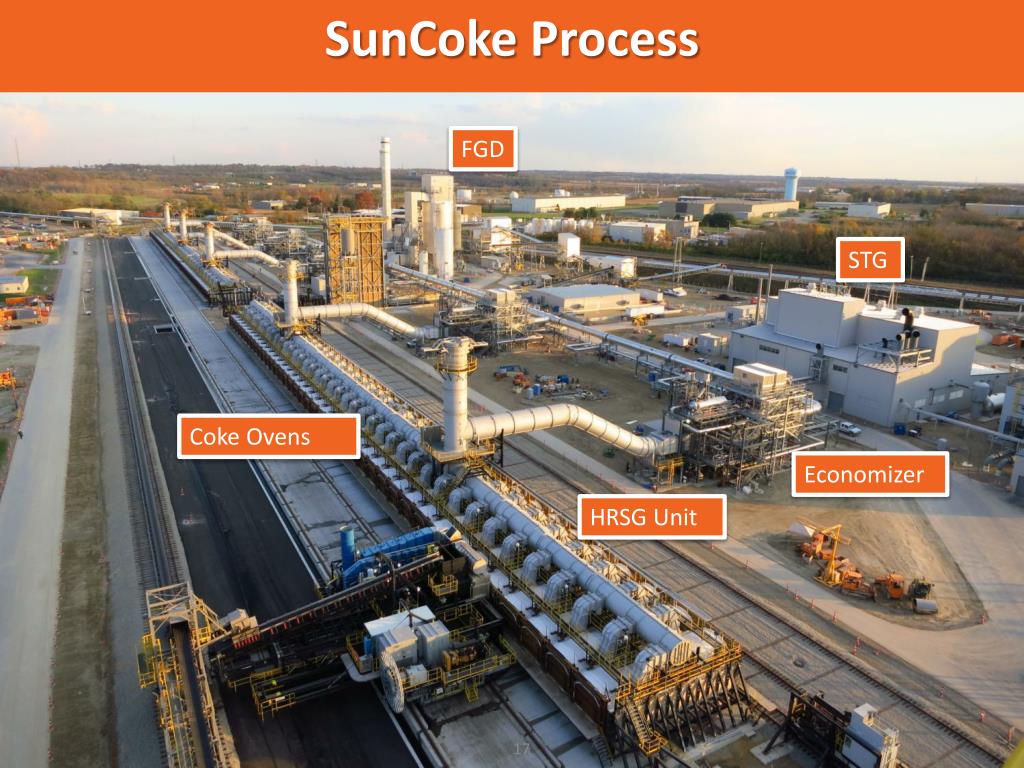
Much of SunCoke's coke business operates under long-term, take-or-pay agreements. These arrangements help define the relationship between producer and customer over time; commodity cost pass-through provisions also matter to the economics. For a lawyer moving into broader management, that is familiar territory with increasingly large consequences. The contract and the plant have to make sense together.
Gates's later responsibilities added another dimension. From November 2019, she served as chief legal officer and chief human resources officer. A company operating industrial facilities depends on the people who run and maintain them as well as its commercial arrangements. Her remit now covered both the rules of the enterprise and substantial responsibilities for its workforce.
The scale of that workforce makes the personnel role particularly relevant to her preparation. At the end of 2025, SunCoke reported 1,527 U.S. employees and approximately 950 international employees across five countries. It said 53 percent of employees were represented by labor unions. These are substantial working relationships for a leadership team to manage alongside its customer agreements. Gates had carried the human resources title before she carried the presidency, adding that perspective to the legal experience she brought into the operating role.
The succession had a middle chapter
SunCoke announced Gates's promotion to president in December 2022, effective January 1, 2023. She joined the board at the same time. Michael Rippey remained CEO, while Gates assumed general responsibility for managing operations. This gave the succession a middle chapter: she could carry the president's operating responsibilities before taking on the chief executive title.
The distinction matters. There were two separate changes, separated by more than a year. The board described the promotion as part of its long-term succession plan. When Gates succeeded Rippey in May 2024, she retained the presidency and her board seat. By then, the progression had included the law firm, the corporate legal function, human resources and company operations.
“Katherine has demonstrated excellent judgment and leadership in each role she has held since joining SunCoke in 2013.”
Michael Rippey, December 2022
Rippey's description focused on a record accumulated across assignments. That is a more specific endorsement than a general declaration that someone is ready for leadership. It points to repeated decisions, made in different jobs, that persuaded colleagues and directors to expand her authority. Gates's promotion was being explained through work they had already seen.
The sequence also gives her story its particular rhythm. The company did not bring in a new chief executive to begin learning the business from outside. It appointed an insider whose responsibilities had gradually widened. Whatever the advantages of that familiarity, the next stage would require decisions about how the enterprise should develop beyond its established base.
Phoenix changes the job
On August 1, 2025, SunCoke completed its acquisition of Phoenix Global. The announced transaction value was $325 million, funded with cash and revolving credit borrowing. “We are thrilled to officially welcome Phoenix into the SunCoke family,” Gates said. She described the opportunity in terms of new customers and markets. The acquisition extended the portfolio into services associated with electric arc furnace operations, widening SunCoke's participation in steelmaking.
That distinction gives the transaction more meaning than its price alone. Coke serves the blast furnace route. Phoenix added work around other steelmaking operations, including the handling and processing of slag and the preparation and movement of materials. SunCoke would have more ways to serve the industry in which it already worked.
Announced transaction value
For Gates, the management task expanded with the business. Familiarity with SunCoke's existing contracts and operating culture would have to be applied to an acquired organization. Financing the purchase, integrating the operations and developing customer relationships were distinct parts of the work. A completed transaction gives a strategy a starting date; the daily operating results arrive afterward.
Her stated direction had already included diversification. In her message accompanying SunCoke's 2024 sustainability report, Gates described plans to broaden customers and products, including foundry coke and logistics opportunities. Phoenix made that direction tangible. The acquisition put money, assets and additional operating responsibilities behind an ambition she had articulated before the deal closed.
The answer arrives in operating details
By July 30, 2026, Gates could point to a quarter in which both Domestic Coke and Industrial Services contributed to improved performance. SunCoke reported consolidated adjusted EBITDA of $69.6 million, compared with $43.6 million a year earlier. Adjusted EBITDA is a non-GAAP operating measure; it is separate from net income and should be read alongside it.
One year, a different business mix
Net income attributable to SunCoke also rose, reaching $13.1 million in the quarter, compared with $1.9 million a year earlier. That provides another view of the period alongside adjusted EBITDA. Both figures belong to the company as a whole. They reflect the work of operating teams and the businesses included in the group, as well as management decisions. Reading them together gives a fuller picture of the enterprise Gates was leading after Phoenix joined it.
The details were more revealing than a single rising bar. Phoenix's inclusion and increased terminal handling volumes helped results. Domestic Coke benefited from improved coal-to-coke yields. There were offsets, including reduced coke volumes following the closure of Haverhill I. The picture involved an acquired business, changing market conditions and differences in plant performance.
Another development was especially concrete: the Middletown turbine returned to service in May 2026. For a company that recovers heat to generate power, a working turbine has an obvious place in the financial story. Gates highlighted its return alongside the segment results. This was the sort of connection between machinery and earnings that her career had brought her steadily closer to managing.
In September 2026, Gates welcomed steel industry executive Wendell Carter to SunCoke's board, emphasizing his engineering and manufacturing experience. The language echoed a theme that had followed her own advancement: knowledge of the process matters. Technology, operations and commercial judgment remain closely connected in the business she leads.
As of October 23, the next scheduled public checkpoint was SunCoke's October 27 release of third-quarter results. Gates's career had reached a stage where the evidence would keep arriving in tons handled, customer relationships and equipment returned to service. The long preparation was complete. Running a broader SunCoke was now the continuing assignment.
Follow the work
Explore her career, SunCoke’s operations and the developments in this story.