Steven Dodge was preparing to leave American Tower, and he had an awkward observation about founders. Their presence could become a problem. In January 2004, announcing his retirement as chairman, he argued that his successors deserved room to run the company and responsibility for the results. He would remain a substantial shareholder. He would also stop hovering. For someone who had spent years acquiring things, this was a rather interesting thing to give away: control.
The gesture came with arithmetic. Dodge and his affiliates planned to convert their ten-vote Class B shares into ordinary one-vote Class A shares. Their voting power would fall from about 21 percent to less than 5 percent. Many executives speak warmly about empowering colleagues. Dodge was proposing to alter the share register. It is a less lyrical form of encouragement, but considerably harder to misunderstand.
His career is usually counted in companies: American Cablesystems, American Radio Systems, American Tower, Windover. Count it another way and a different pattern appears. He kept finding something he wanted to build, learning enough to do it, and eventually making room for other people. Even his retirement needed a construction project.
The borrower on the other side of the desk
Before the towers, there was a bank. Dodge graduated from Yale in 1967 with an English degree, served as a Navy officer, and entered commercial banking. Cable television became his professional education. At Bank of Boston he evaluated and financed an industry whose prospects were still being worked out, customer by customer and town by town. The view from a lender’s desk gave him an unusually close look at the people doing the building.
Looking back on his move into cable, he explained that the learning curve at the bank had flattened. The entrepreneurs across the desk seemed to be enjoying themselves. He wanted to join them. American Cablesystems began in 1978, an ambitious change of seating arrangements for someone who had previously assessed other people’s borrowing.
Capital mattered as much as curiosity. Investor David Croll and TA Associates backed Dodge’s cable venture; by 1986, the enterprise was valued at more than $200 million. This was an undertaking with financial partners and strategic help, rather than the solitary feat that a tidy founder biography can suggest. The person who could spot an opportunity also needed people willing to finance it.
By 1987, American Cablesystems served nearly half a million subscribers. It had gone public the previous year. Cable rewarded the work of building and operating distribution systems at scale. Dodge had moved from studying those systems to owning the responsibility for them. In 1988, the business was sold to Continental Cable. He was ready to try a different medium.
- 1978Cable systems
- 1988Radio stations
- 1995Tower business
- 2003CEO handover
- 2004Chairman retirement
Radio came with people attached
Dodge entered radio in 1988 with Eric Schultz and a group of eight stations. The appeal lay partly in the difficulty. A station needed talent, programming, research and marketing to come together every day. A transmitter could deliver a programme reliably; it could do very little about whether anyone wanted to hear it. The business required judgment about people as well as equipment.
The early years were uncomfortable. Dodge later acknowledged a succession of mistakes before the team found its footing. American Radio Systems eventually operated more than 100 stations. In 1998 it merged into CBS at a valuation of $2.6 billion. There is a useful interval between those two facts: a business that would eventually attract a major buyer had first required its founder to endure being inexperienced.
Radio also offered a quieter opportunity. American Radio already owned towers. Wireless operators began asking to rent space on them. Here was a customer request worth taking seriously: companies with a new use for an asset that the broadcaster already understood. The tower business began within American Radio in 1995 and emerged as a separately traded company in June 1998.
A place to put the future
At a Washington dinner in 2018, Dodge recalled building towers along a Florida highway corridor on speculation. The account is refreshingly provisional. He could see demand forming, but the outcome still depended on customers turning up. A tower erected ahead of demand is a bet made unusually visible. It stands there while everyone waits to discover whether the judgment was good.
By early 1999, American Tower was operating more than 1,800 towers across 44 states. Its network had regional operating hubs and a national footprint. These were physical sites that had to be acquired, maintained and made useful to customers. The abstraction of wireless communication rested on a practical inventory of places where equipment could go.
The business also passed through a severe market crisis. In 2002, American Tower’s shares fell below a dollar. Dodge publicly challenged bankruptcy rumours and pointed to improving operating performance. A promising industry could still produce a frightening balance-sheet moment. The distance between seeing a market early and building a durable company was filled with decisions that enthusiasm alone could not make.
Jim Taiclet had joined as president and chief operating officer in September 2001. On October 10, 2003, the board named him chief executive, with Dodge continuing as chairman. The succession gave an executive already responsible for the tower and services operations the top job. A few months later came Dodge’s announcement that he would leave the chairmanship too.
“the shadow of a founding chairman serves no productive purpose”
Steven B. Dodge, on retiring as chairman, 2004
The line has a dry practicality. A founder’s reputation can fill a room even when the founder says very little. Dodge was willing to acknowledge that influence and reduce it. His departure made the next management team’s authority clearer. It also freed him to pursue work whose results could be inspected on a walk through town.
The next project was down the street
Windover took him into real estate development in Massachusetts and Florida. After years running public companies, he could work on housing, landscapes and neighbourhoods. The new ventures brought him back to building at a more immediate scale. He and Anne also became benefactors of Montserrat College of Art and The Cabot in Beverly. Business and civic life now occupied much of the same map.
In Beverly, the map centred on the railway station and Rantoul Street. Windover’s Depot condominiums arrived in 2008. Beverly Crossing continued the housing development. Chris Koeplin later recalled Dodge looking at the area during his commute and seeing the possibility of something better. The train journey had supplied an enduring assignment.
The work had consequences beyond the developer’s intentions. New housing changed the street, and residents raised concerns about traffic and parking. That belongs in the story too. A neighbourhood is full of people with their own ideas about its future. Building there meant entering an argument about how Beverly should grow, as well as putting up apartments.
The artistic side of this chapter had an earlier rehearsal. At Hotchkiss, Dodge had enjoyed designing elaborate stage sets. Decades later, his interest in the arts included helping institutions attract leadership and financial support. The boy occupied with scenery had become an adult concerned with whether the theatre could keep operating. There are worse ways for a school enthusiasm to age.
Leave the lights on
At Sotheby’s, Dodge became lead independent director in December 2012. His duties included chairing sessions of non-management directors, serving as a liaison with the chairman and helping shape board agendas. The role put him back among questions of authority and accountability. William Ruprecht, the auction house’s chairman and chief executive, praised his ability to build consensus and develop talent.
Closer to home, the Essex County Community Foundation remembered a donor interested in education, the arts and encouraging future philanthropists. His generosity could be anonymous. The Cabot’s 2019 celebration reflected on his legacy while raising more than $1 million for restoration work. Root, the youth workforce development organisation, gave its Community Leadership Award in his memory that November.
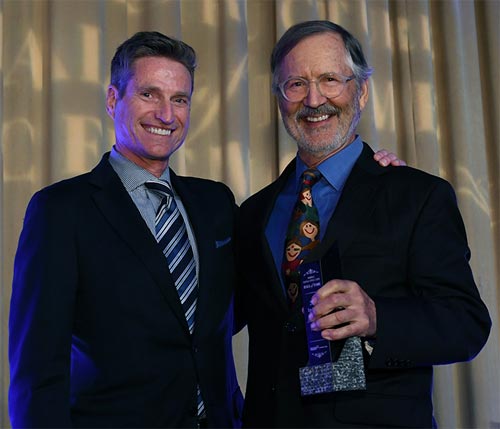
In November 2018, the wireless industry had inducted Dodge into its inaugural Mobile Infrastructure Hall of Fame alongside Neville Ray, Steven Bernstein, John Kelly and José Mas. His successor Taiclet introduced him. It was a fitting arrangement: the founder being honoured by someone to whom he had entrusted the business. The event also supported training and apprenticeships for the people who would build the industry’s next chapter.
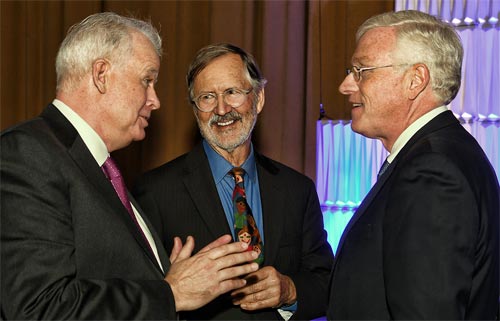
Dodge died in January 2019, aged 73. Colleagues remembered humour as readily as commercial judgment. Tony Peduto, who worked with him in cable and towers, recalled that having fun belonged among his goals for a company. The insistence seems sensible. If a career is going to consume decades, a little enjoyment ought to survive the budget meetings.
His family remembered a reader, a Red Sox supporter and a companion on fishing trips. The corporate titles describe only part of that life. The Cabot’s 2025 programme still thanked the Anne and Steve Dodge family for its support. Years after the founder had left his companies, and after his death, there were still places where other people could gather because he had helped keep the doors open.