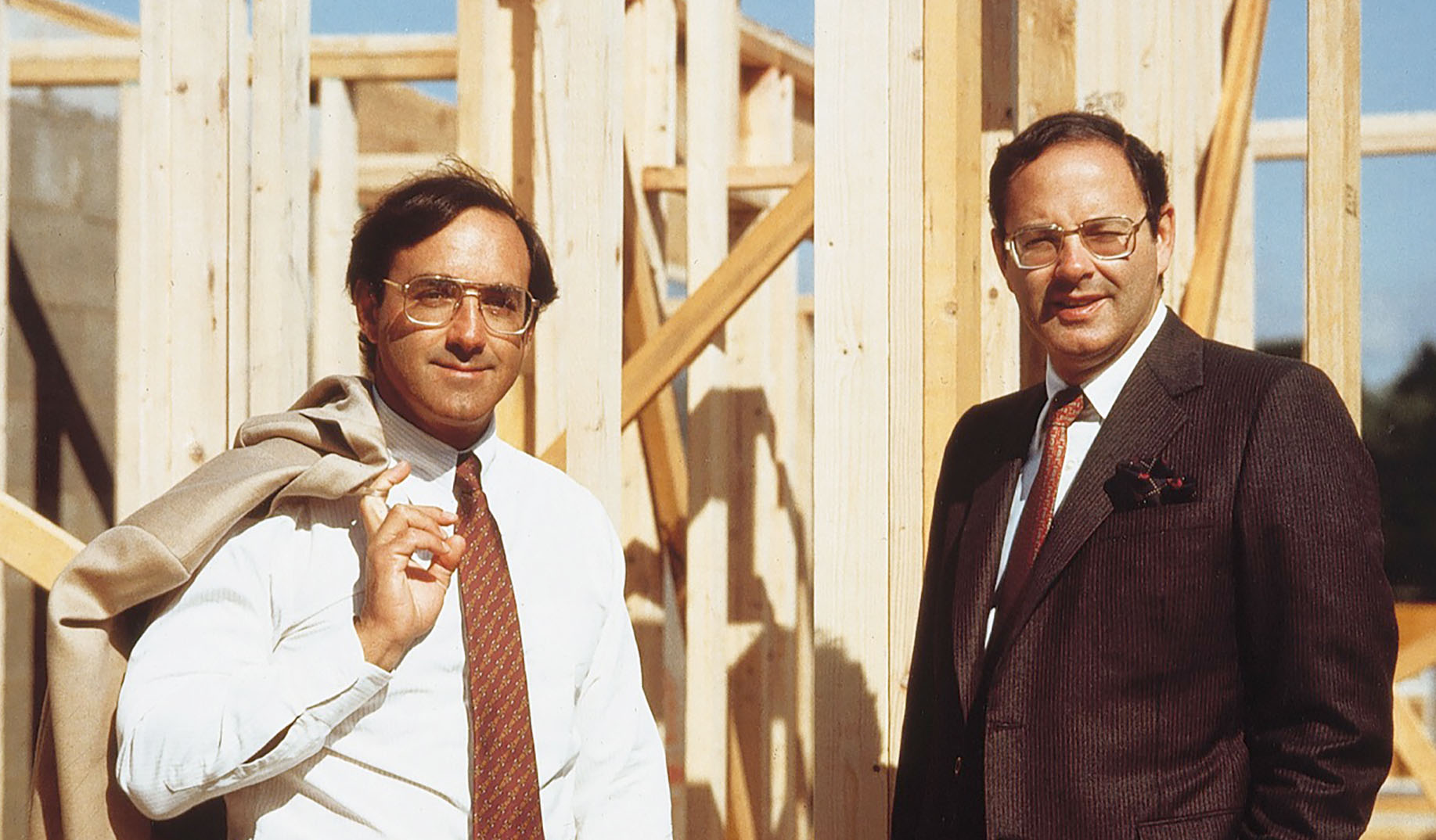
Robert Toll had two finished houses and decided to keep them. For a young builder, this was an unusual way to get paid. A house could become a sale, or it could become an argument: walk through here, look around, imagine yourself at home. In 1967, Bob and his younger brother, Bruce, chose the argument. They used their first two colonial-style homes outside Philadelphia as models for houses they would build on nearby lots. Twenty more contracts followed.
The choice contained much of the business that came afterward. Customers could see a finished proposition before committing to an unfinished one. The brothers could sell a repeatable design while allowing a buyer to picture a very personal future. A sample home had to do two jobs: demonstrate the building and supply the daydream. Bob understood that the second job mattered as much as the first.
Years later, he put the point with pleasing candor: “We satisfy dreams and egos.” Plenty of businesses make that promise quietly. A luxury homebuilder has to fit it with plumbing. Toll's work lived in the space between practical construction and the private meanings people attach to an address.
His own route into building was short enough to sound like a change of mind. Born in 1940 and raised in Elkins Park, Pennsylvania, he graduated from Cornell in 1963, then earned his law degree at Penn in 1966. He spent about a year practicing law before joining Bruce in the family trade. Their father, Albert, had been a homebuilder. Bob brought a lawyer's education to a business where the fine print eventually becomes somebody's kitchen.
The school that met on Mondays
Building houses gave Toll something law practice had not: an enterprise he could shape over decades. The company went public in 1986. By 2017, its fiftieth anniversary, the brothers were back at the New York Stock Exchange to ring the bell. They were also inducted into BUILDER magazine's Hall of Fame that year. The suits and ceremonies were one version of the story. The Monday meetings were another.
Doug Yearley, who joined in 1990 and succeeded Bob as chief executive in 2010, remembered more than 900 Monday nights with him. Those evenings covered land purchases, strategy, and the accumulated judgments that make an experienced builder difficult to replace. The food was bad pizza. The hours could be absurd. Yearley eventually asked whether, after a decade, he might be allowed to go home earlier.
“You and I are going to turn the lights off every Monday night,” Bob replied. That is an affectionate memory with a fairly demanding employment policy attached. Yearley called the sessions Toll University. The curriculum involved real money, actual ground, and a teacher who apparently considered midnight an administrative detail.
There was a more pointed teaching aid. George Casey, an early Toll Brothers project manager, remembered a wooden pitchfork standing in the conference room in the late 1970s. It warned people to learn from one another's mistakes rather than make expensive discoveries independently. When Casey later had lunch with Bob, the pitchfork was still serving its purpose nearly forty years on. Some companies commission a statement of values. This one had farm equipment.
Behind the theater sat a serious organizational problem. A builder working across regions needs local judgment and a consistent way to examine risk. The Monday tradition kept headquarters available to managers in western time zones and brought land decisions under close scrutiny. It also made knowledge social: people learned how Bob questioned a proposal by staying in the room while he did it.
An address is a promise
Toll had a compact expression for the locations he wanted: “at the corner of Main and Main.” It was memorable because it compressed a complicated decision into a phrase that colleagues could carry around. Before the model home, the decoration, or the sales conversation came the land. Where a house stood was part of what the customer bought.
The appeal of that formula did not make development universally welcome. Expansive suburban housing could meet resistance from people who wanted open land and existing landscapes preserved. Toll's career belongs to that argument, too. The buyer imagining a future home and the neighbor imagining a changed community could look at the same parcel and see different losses and gains.
He stayed involved long after handing over the chief executive's job. In 2019, he was still reviewing community sales and offering advice, visiting headquarters every other Monday or joining by telephone. He called himself a kibitzer. The word suggested someone offering unsolicited comments from the sidelines; his command of the details suggested a rather experienced spectator.
In January 2022, the company announced he would leave its board at the March stockholder meeting and continue as chairman emeritus. His formal responsibilities were shrinking, but the habits he had taught had already spread through other people's working lives. That is the less photogenic part of succession: the successor has heard your questions often enough to ask them without you.
“at the corner of Main and Main”
Bob Toll’s shorthand for location
Fifty-eight children, years of obligation
Bob and Jane Toll took a similarly extended view of education. In 1990, they made a commitment to 58 third graders at William F. Harrity Elementary School in West Philadelphia. If the children finished high school, the Tolls would cover college or vocational education. Third grade is early to make a promise about college. It is also early enough for the promise to become part of a child's expectations.
The commitment included enrichment and mentoring during the intervening school years. That detail matters. A tuition pledge waits at the far end of a long journey; support during school helps someone get there. The Tolls remained connected with members of the group as the children grew up. This was philanthropy with a timetable much longer than an unveiling ceremony.
One participant, Naeemah Nelson, earned an anthropology degree from George Washington University in 2004 and later an MBA from the University of North Carolina. She also joined a national Say Yes to Education board. Bob had hoped the children would eventually help somebody else. In Nelson's case, that return to the idea became a formal responsibility.
A promise reaching from elementary school to college or vocational education.
The law career he helped others keep
His relationship with Penn made another kind of persistence possible. Bob had left legal practice; he and Jane helped other people afford to remain in it when the work they wanted paid less than commercial alternatives. Their giving supported scholarships, summer work, and loan repayment. The obstacles were spread across a career, so the assistance was spread there, too.
A $10 million gift in 2006 expanded the school's public interest program, which became the Toll Public Interest Center. Further support helped fund unpaid summer placements and assistance for graduates. In 2018, a $3 million gift launched the Toll Public Service Corps and supported additional help for alumni. The projects kept returning to the same practical question: could someone choose service and still pay the bills?
In 2020, the Robert and Jane Toll Foundation committed $50 million to expand Penn's public interest scholars and fellows programs. The plan aimed to double the number of public interest graduates over the following decade through full and partial tuition scholarships. That was an ambition with a measurable horizon, rather than a claim that the work had already been done.
Patricia Stottlemyer, a 2017 Penn Law graduate and Toll scholar, described the scholarship as essential to her ability to attend. During law school, she worked on an asylum case for a Central American family through Penn's Transnational Legal Clinic. The distance between a donor's decision and a client's legal representation can seem abstract. A scholarship recipient doing the work makes the connection visible.
Back to the lake
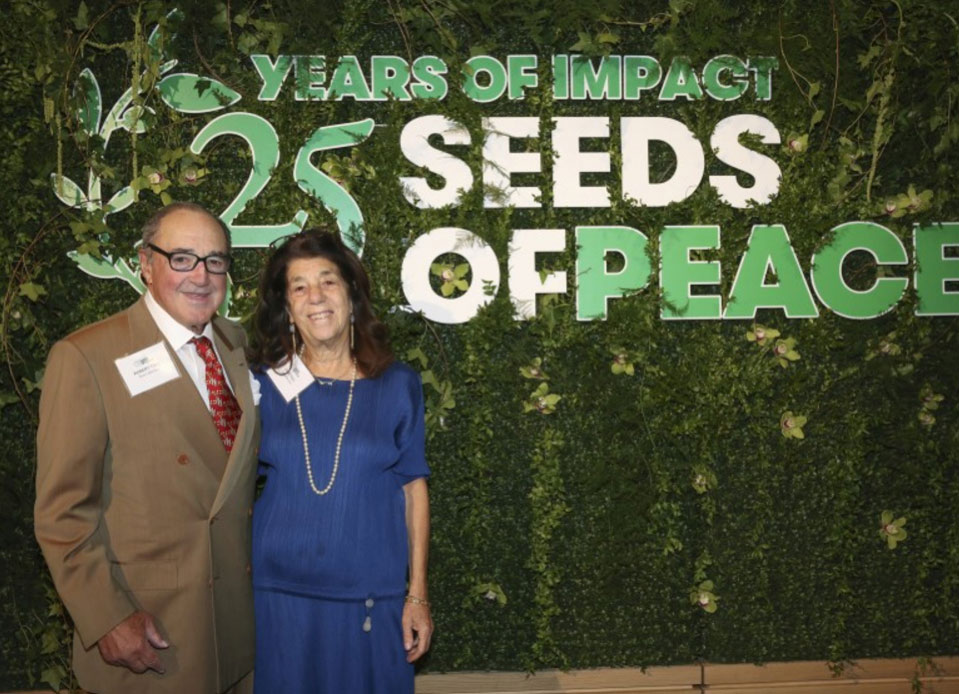
There was another place Bob kept returning to: Pleasant Lake in Maine. As a boy he attended Camp Powhatan; later he worked there as a counselor. The Toll family bought the camp property in the 1990s. When John Wallach sought a home for Seeds of Peace, the site offered somewhere young people from opposing sides of conflicts could meet, share ordinary routines, and talk.
Bob's contribution included the ground itself, board service, and boating lessons. He also organized Toll Brothers work days that brought builders and craftspeople to maintain the camp. A company built around construction had useful things to offer a place full of cabins and teenagers. The help was tangible enough to need tools.
Janet Wallach remembered him crushing pretzels into ice cream, playing sports, swimming, and watching the sunset from his dock. Sunday evening brought the return to reports and preparation for work. The camper and the executive occupied the same weekend. His leisure had competition in it, too: sailboat racing, tennis, golf, and skiing all appeared in family and company recollections.
Bob died on October 7, 2022, aged 81. Jane, their five children, and twelve grandchildren survived him. The business carried the family name. Other parts of his work could be harder to spot: a graduate able to take a public service job, an adult still connected to a promise made in third grade, a camper learning to steer a boat. He began by keeping two houses open so people could see what might come next. He spent much of the rest of his life finding other ways to do that.