The trouble with a music festival is that everyone has come to hear the band, and a surprising amount of the day is spent trying to find someone called Jared. Friends scatter. Email chains become archaeological sites. A phone that can summon almost anything proves less useful at summoning the person who has your ticket. For Steve Martocci, a programmer who kept meeting his future co-founder at shows, this familiar nuisance became the beginning of GroupMe.
His career has repeatedly returned to the space around music: how friends gather for it, how musicians work on it, how a sound travels from one person's laptop to another's song. The attraction is personal. Martocci loves the music, but he has been unusually willing to spend his working life on the awkward practicalities surrounding it. Someone has to organize the party. Someone also has to make sure the unfinished track survives.
A band breaks up. A programmer gets going.
Martocci graduated from Carnegie Mellon University in 2004 with a degree in Information Systems. That year Phish broke up, interrupting an enthusiasm that had taken him around the country. In his telling, the breakup helped send him into a programming job. It is an appealingly undignified career catalyst: the band stops touring, and suddenly the résumé gets attention.
Before GroupMe, he founded Sympact Technologies, which worked on dynamic images for email marketing, and became a lead software engineer at Gilt Groupe. Music remained close enough to become another project. Bandwith.us handled friends-and-family ticketing for festivals including Lollapalooza and Austin City Limits, as well as touring acts. The ticket list, hardly the glamorous end of the entertainment business, was already giving him something useful to build.
At Carnegie Mellon, he had wanted an education that joined business, software and people. He later described Information Systems as a good fit for that mix. Entrepreneurship classes and advice from instructor Babs Carryer helped him get started. He enjoyed bringing products into use and managing teams; writing code was one part of the job he wanted.
That combination helps explain why his most recognizable early product arrived through a friend's request. In May 2010, Jared Hecht called with a communication problem. The two knew each other through the bands they liked and the shows they attended in New York. Hecht's fiancée was heading to a festival in Colorado. Keeping a group together through email was cumbersome, and smartphone ownership and reliable data service could not be assumed.
The party needed a group text
Hecht and Martocci built a prototype at the TechCrunch Disrupt Hackathon in Manhattan. The constraint mattered: the service had to reach people through ordinary text messages. It could not demand that an entire circle of friends buy the same phone before making plans. The prototype became GroupMe, and both founders left their jobs to work on it.
By spring 2011, the company had won the Breakout Digital Trend award at South by Southwest. It was handling more than a million texts a day when Carnegie Mellon profiled its graduate. A small coordination problem had become a product for groups whose members did not necessarily share devices, habits or patience.
“We want the product to work for anyone, anywhere, anytime.”
Steve Martocci, 2011
That promise placed a useful limit on the urge to add features. GroupMe offered more capabilities as it grew, including conference calling, while Martocci kept emphasizing ease of use. A group communication service asks people to recruit one another. Every extra complication can become someone else's reason to stay out of the conversation.
Skype acquired GroupMe in August 2011. Microsoft completed its acquisition of Skype that October. The speed of that sequence makes the hackathon sound like a magic trick. There had been substantial work before the weekend, though: engineering jobs, an earlier company, ticketing projects and years spent around the people whose difficulty he was trying to solve.
What programmers had that musicians needed
Another music conversation pointed toward Splice. Jon Gutwillig, guitarist in the Disco Biscuits, had raised a question with Martocci about the tools programmers enjoyed and musicians lacked. Developers could keep versions of their work and collaborate through systems designed for that purpose. Musicians had their own complex creative software, yet managing the work around a track remained awkward.
Investor Fred Wilson remembered Martocci describing musicians' working habits and asking why they had nothing like GitHub for storing different versions. The analogy was practical. A song changes as people work on it. An earlier choice can become valuable again. A collaborator needs to understand what happened while they were away. Losing that history makes the next creative decision harder.
Matt Aimonetti brought the other half of the partnership. He and Martocci met at a conference in Bogotá. Aimonetti had written open-source software that GroupMe used; they also discovered mutual friends. They discussed working together before settling on music. His experience as an audio engineer made that direction more than a programmer's speculative interest.
Splice began in 2013. Its early identity centered on music creation and collaboration. For Martocci, who had already helped friends stay connected around a concert, it was another opportunity to work on the coordination that music requires. The audience had moved from the crowd to the studio, and the files had become rather larger than a text message.
The secret sauce goes on sale
In 2015, Splice Sounds introduced individual, royalty-free samples. Musicians could choose the sound they wanted rather than buy a whole pack for one useful piece. The company developed into a marketplace where a loop, a drum hit or a texture could become an ingredient in someone else's recording.
Persuading producers to supply those ingredients took work. A distinctive sound could feel like a competitive advantage, something to keep inside the studio. Martocci encountered resistance to sharing that material. Payment offered a reason to reconsider: sounds that had once stayed private could earn money when other creators used them.
The change also required a different understanding of originality. A licensed sample can appear in more than one song. That arrangement is central to the marketplace, but listeners do not always know it. When a Laxcity sample appeared in Justin Bieber's music, accusations of copying followed because another artist had used the same material. Laxcity explained that it came from a royalty-free pack. The shared ingredient was available to both.
A sample library therefore has two jobs. It must make finding a sound convenient, and it must make the conditions of using it intelligible. Martocci discussed that distinction in interviews about sampling and music rights. A producer looking for a starting point needs confidence that using it will not leave a licensing puzzle for later.
A little sound can have a long journey
By early 2022, Splice had paid more than $55 million to creators. Its sounds appeared in recordings by Dua Lipa, Doja Cat and Justin Bieber. Those two facts describe different sides of the same business: familiar records reaching listeners, and people earning money by making the material inside them.
The catalog also offered room for music beyond the usual commercial centers. A Senegalese series brought local instruments and sounds into packs assembled with producer Iss 814. For Martocci, the platform could help that work reach a wider audience. A musician recording a particular instrument did not have to become a household name for someone elsewhere to hear and use it.
There were other ways to lower the cost of starting. Splice introduced rent-to-own software in 2016, allowing musicians to pay over time for production tools. Its catalog grew through acquisitions, including Sample Magic and Indaba Music. The company's changing shape followed the practical needs of people making tracks: sounds, software and ways to keep working when money was limited.
Martocci's own account of the work is refreshingly specific. “Code was my canvas,” he said. The musical contribution he could make was a software contribution. He could admire the performance and still find his useful place several steps away from the microphone, making the next person's work easier to begin.
Eventually, somebody else conducts
At GroupMe, Martocci had argued for an engineering culture that gave engineers direct input into the product and kept them connected to the business. He also urged founders to ask investors for help with hiring and introductions. Money bought time; a useful conversation could change what happened during it.
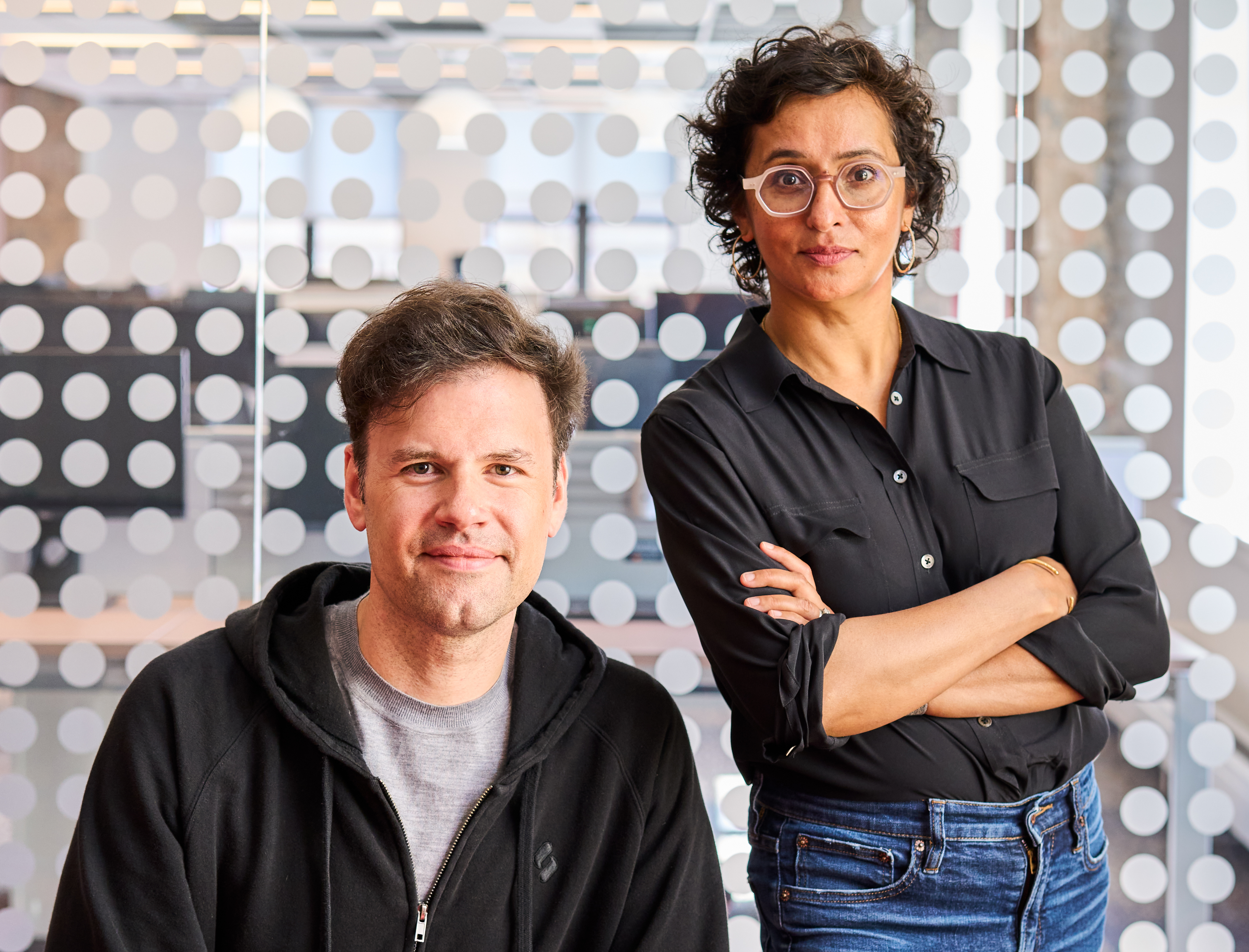
By May 2022, Splice had more than four million users and over 200 employees. Kakul Srivastava, already a board member, became CEO. Martocci moved to executive chairman and chief strategy officer. He praised her understanding of products for creators. The company he had started with another engineer now required leadership across a considerably larger organization.
Splice has continued to change. It acquired Spitfire Audio in April 2025, then introduced its INSTRUMENT plugin that October. In July 2026, an update added Spitfire Audio Originals and sample transformation through Craft. These are chapters in the company's life after Martocci's CEO tenure, extending the collection of things musicians can work with.
His story remains rooted in a remarkably ordinary experience: loving music and finding the surrounding arrangements unnecessarily difficult. A concert needs friends who can find one another. A recording needs files that can be shared, sounds that can be used and people who can afford to keep making them. Martocci kept finding work in those details. The band supplies the evening's spectacle. He has made a career of attending to what happens between the songs.