Stephen Lease noticed something about people trying on sunglasses. They would reach for a black pair, put it back, then try orange and blue. A smile would follow. The more adventurous choice had apparently been waiting for permission. At goodr’s original $25 price, permission was relatively inexpensive. A customer could leave with something a little ridiculous without turning the purchase into a referendum on personal taste.
Lease built a company around that opening. He is goodr’s co-founder and CEO, although he prefers Chief Executive Octopus. The sunglasses have names that sound like conversations overheard at the wrong end of a wedding reception. Flamingos On A Booze Cruise is an actual product. So is Swedish Meatball Hangover. Somewhere beneath the plumage sits a practical question: can running equipment do its job without making its wearer look painfully committed to running equipment?
The question suits Lease, a Colorado native now based in Marina del Rey, California. He runs long distances, plays golf barefoot, and describes himself as partly flamingo. His public persona comes with enough animal references to trouble a zoning board. But following his career reveals an unusually sustained interest in limits: price limits, decision limits, and the point at which a founder must change how he leads.
Five rehearsals before the sixth company
Before goodr, Lease had started or helped start five businesses that failed. Earlier work included selling industrial water-treatment systems to golf courses. It is a considerable distance, aesthetically, from industrial water treatment to pink sunglasses. Both jobs, however, required him to understand what another person actually wanted to buy. Enthusiasm for your own idea offers little protection when the buyer has a different priority.
He learned to launch ventures cheaply and watch what happened. Closing the first was painful; repetition made him more willing to stop spending effort on an idea that was going nowhere. The useful inheritance from those attempts was a working method. Try something small enough to survive. See whether anyone wants it. Keep going when the evidence earns another round.
goodr began in 2015 as a side project. That arrangement gave the idea room to develop while its founders still had other work. Lease has stressed how valuable that breathing room was. The business could find customers before it had to support everyone’s rent. For a founder with five previous disappointments, the modest beginning looks less like hesitation than an education being put to use.
A runner looks around
Lease’s running life supplied both a community and a research group. Training conversations with fellow runner and business partner Ben Abell helped develop the idea of a brand that felt more playful. Then Lease noticed how many runners around him were wearing ordinary inexpensive sunglasses or fashion frames rather than costly sports eyewear. The category’s conventional offering was failing to persuade people who were already buying plenty of running gear.
The resulting brief was wonderfully unglamorous. Glasses should look good, stay put, avoid bouncing, and remain affordable. The original $25 target gave the team something concrete to work backward from. A boundary on spending could also become a boundary on needless elaboration. Every feature would have to justify its place in a product meant to be an easy purchase.
The first production order was 1,800 frames. By 2024, Lease was describing container orders of 82,000 pairs. Those are different logistical worlds, joined by the same object. A runner wanted sunglasses that would behave themselves; the company’s marketing was under no corresponding obligation. The frames could stay steady while the names wandered off in search of a flamingo and a drinks menu.
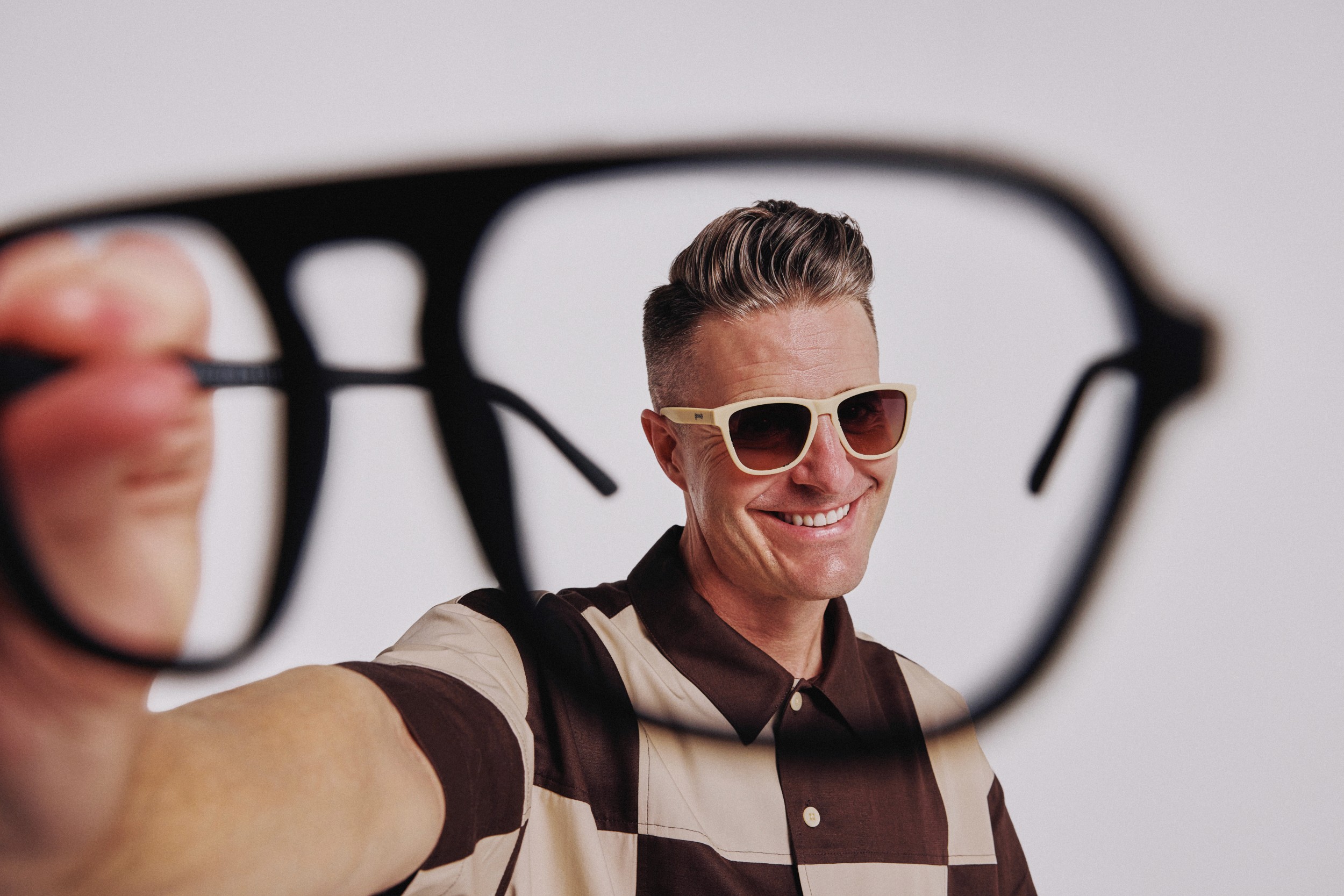
The flamingo has a job to do
goodr eventually organized its product thinking around four Fs: fun, fashionable, functional, and ’ffordable. The missing letters are doing a fair amount of administrative work. Together, those four requirements offer a way to assess new products without treating every opportunity as an invitation. Lease and his co-founders had to decide whether they were building a broad lifestyle business or an eyewear business. Eyewear gave them a clearer center.
Scarcity entered the story less elegantly. Early on, the company would sell its inventory, order again, and wait. Customers had trouble getting hold of the glasses. A shortage can look like a marketing masterstroke from the sidewalk; inside the business, it can simply mean another difficult wait for stock. Lease has acknowledged that the resulting demand and urgency were useful, even as the operating pattern was hard to sustain.
Limited colors and releases later gave that urgency a more intentional form. The joke names helped make individual pairs memorable. So did the brand’s willingness to make customers feel welcome in something bright. Function and price got the glasses into the conversation. Personality gave buyers a reason to remember which ones they had bought, and perhaps to care about the next pair.
An octopus discovers the org chart
Inside goodr, the animal theme acquired management responsibilities. Employees belonged to flocks, and the company eventually grouped those flocks into herds. Lease described a progression from a very flat structure to 13 team leaders reporting directly to him. That arrangement exposed his own limits. He was missing things. In 2021, the company reorganized again. Even an octopus could use a more sensible reporting structure.
The admission matters because the cheerful vocabulary can obscure the underlying work. Renaming a department will not resolve who makes a decision. Lease’s account of the changes shows a founder willing to revise a system that had once suited him. The point of a structure was to help the people inside it do their work, which meant its continued existence had to be earned.
The same mixture appeared in Tuesdays with Carl, the company’s all-hands gathering named for its flamingo mascot. Lease described a produced event with a stage, a showrunner, and rotating employee hosts. A meeting could carry information and give colleagues a turn in front of the room. Production and play had to be planned. Someone still needed to make the event work on Tuesday.
“You build containers.”Stephen Lease, on freedom and accountability
Safe friction, with fewer emails
Lease has allowed employees to invent job titles while dispensing with internal email in favor of other shared communication tools, including Slack. Those choices are easy to photograph and easy to repeat. His more demanding idea is that freedom needs a clear account of responsibility. People should know where they can choose for themselves and where they will be held to an agreed standard.
“You build containers,” he has said. The phrase is a useful clue to his thinking. A container supplies an edge, leaving room inside it. The original price target served that purpose for a pair of sunglasses. In a team, clear expectations can do something similar. Colleagues have space to act because the boundaries of the assignment are understood.
goodr has also put time into feedback practices. Its culture discussions describe preparing for difficult conversations, making a specific request, and giving meetings an honest description. Lease himself has received advice to ask more questions and speak less in leadership meetings. That is a particularly apt assignment for someone who has made a public identity out of having an opinion.
The aspiration is what he calls “safe friction”: enough trust for people to disagree usefully. A workplace committed to authenticity needs a way to handle the inconvenient moment when two authentic people want different things. Preparation, candor, and follow-through become part of the bargain. The flamingos are welcome to argue, provided the argument helps them get somewhere.
A microphone for the unfinished work
Lease and Shaun Tinney have made those experiments public through CULTURE goodr. The podcast turns internal practices into subjects for conversation: ownership, feedback, meetings, company values. In May 2025, a rewind episode returned to the idea of valuing work over results. That distinction offers room for a well-prepared attempt to fail without teaching everyone to avoid the next difficult assignment.
There are outside voices in that conversation, too. Lease interviewed Seth Godin about leadership, commitment, and culture. Godin’s What To Do When It’s Your Turn (and It’s Always Your Turn) is a favorite of his. Talking about the responsibilities of leadership is an agreeable use for a founder’s microphone, especially when the discussion leaves room for the founder to learn something.
Mentorship has also made a practical difference away from the recording equipment. Morris Miller, whom Lease met at an Inc. event in 2018, recommended using revenue per employee to help make hiring decisions. Lease credited that advice with replacing guesswork in staffing plans. The anecdote adds a useful detail to the portrait: he may enjoy an improbable title, but he is quite prepared to welcome a workable calculation.
The final credit
Lease’s relationship with Metropolitan State University of Denver contains its own delayed finish. He walked at commencement in 2005 believing he had completed his degree. Years later, the university contacted him about one missing credit. An independent study allowed him to finish, and he officially graduated in 2016. The institution’s alumni spotlight records the distinction, rescuing a graduation date that otherwise comes with an unusually large asterisk.
He has spoken warmly about the university’s accessibility and its willingness to help him complete that last step. The connection continued: MSU Denver named him its 2024 Distinguished Alum of the Year, and its Spring 2026 commencement program listed him as a keynote speaker. A student who needed another route to the finish line had become someone invited to address the people crossing it.
By April 2026, goodr’s operations leadership was describing distribution in more than 40 countries. That scale asks more of the business than a clever product name. Inventory, partners, decisions, and expectations all become harder to coordinate. Lease’s stated ambitions increasingly concern the team and culture needed to keep doing good work as the company grows.
The pleasure of his story is in how often the playful parts require careful preparation. A bright pair of frames needs a viable price. An irreverent company needs people who can disagree, decide, and deliver. A graduation sometimes needs one more credit. Lease keeps making room for the improbable, then working on the conditions that allow it to happen. The octopus has plenty to keep his hands occupied.