A customer rarely walks into a store asking for an omnichannel strategy. She wants the right thing, in the right size, without turning the purchase into a research project. Stephanie Bleau built a career by staying close to that plainspoken reality. Then, after years of translating customer behavior into campaigns, websites, merchandise choices, and operating plans, she carried the same instinct into a different room: the classroom.
At Dawson College in Montreal, Bleau now teaches in Marketing and Digital Communication, with work spanning regular and continuing education. The setting is new. The raw material is not. Her students can encounter concepts that she has already watched collide with budgets, legacy systems, store operations, creative ambition, and the small frictions that decide whether a shopper trusts a brand.
Her path there was not designed as an academic case study. It began with law studies at Université Laval, followed by a B.A. at Concordia and an MBA at HEC Montréal. Fashion pulled her into production and wholesale. She spent most of the 1990s at InWear Group, eventually directing Canadian wholesale for the Danish fashion business, then took a general-management role at IC Companys. Product, distribution, sales, and brand were not separate diagrams. They were the same commercial system viewed from different desks.
The web store had to remember the fitting room
Bleau joined Reitmans in 2001 and stayed through 2013, leading marketing, visual presentation, and e-commerce. An earlier profile of her described a consequential decision near the start of that run: bringing mass marketing and an advertising agency into a company that was already successful. The “Designed for Real Life” work broke with the fantasy language of fashion advertising by centering recognizable women and practical lives.
The more revealing moment came in 2010, when Reitmans put its full assortment online. E-commerce was hardly novel by then, but translating a national apparel chain to the web still demanded more than a checkout button. Reitmans had built trust around fit across petite, plus, tall, and other silhouettes. Online shopping removed the fitting room and the practiced eye of store staff. Bleau's public explanation of the launch focused on restoring that confidence.
“We know exactly how Reitmans women shop and we wanted to create an online shopping experience that reflects this.”Stephanie Bleau on the 2010 launch of Reitmans.com
The site organized size information by silhouette, provided instructions for measuring at home, allowed guest checkout, showed shoppers a visual mini-cart, and connected browsing to local store inventory. None of those choices is spectacular in isolation. Together they reveal an operator's version of customer experience: find where confidence leaks out of the journey, then repair it with specific decisions.
Bleau made the promise explicit. Reitmans wanted to give an online shopper the same confidence in fit that she felt in a store. The lesson has aged better than many digital predictions from that period. A channel does not erase the job customers hired the old channel to do. It changes where the business must prove it can still do that job.
The portable playbook
- Listen for the customer's practical constraint before choosing the technology.
- Name the trust the old channel created, then design it into the new one.
- Treat product, interface, service, and operations as one experience.
Marketing kept getting wider
At Bentley Leathers, Bleau's titles chart the widening brief. She began in 2014 as chief marketing and customer experience officer. Merchandise joined the title in 2016. In 2017, she became president. The sequence matters because it captures an idea that modern organizations often say but struggle to practice: a brand is not owned by the marketing department. It emerges from the product, the service, the store, the digital experience, and the operating decisions connecting them.
A 2016 conversation about women in the C-suite caught Bleau reflecting on ambition. Early in her career, she had watched a general manager who did not seem especially capable or confident. His example produced an unexpected thought: if he could run a company, she could too. It was an accidental mentorship, delivered by contrast.
“I always learn from everybody. In fact, some of my worst bosses gave me the best lessons.”Stephanie Bleau, 2016
There is wit in the line, but also a management system. Bleau treats observation as usable material. A poor boss clarifies a standard. A store visit exposes a gap between concept and execution. A customer request becomes an interface requirement. Curiosity is valuable because it eventually has to become practical.
A career moving closer to the whole business
InWear
Reitmans
Bentley
BESTSELLER + EY
Montreal
Her next retail chapter added geography and scale. At BESTSELLER, Bleau led customer experience, marketing, and e-commerce across Canada and the United States, then served as country manager for e-commerce and marketing in Canada. When the company selected Labelium as a digital agency, she praised the match in entrepreneurial spirit and emphasized transparency, curiosity, belonging, autonomy, and shared ambition. The language points to another constant in her work: performance is social infrastructure as much as a dashboard.
A move to EY in 2022 turned that operating experience into strategic counsel. As a business-consulting director, she also served as a judge for McGill's Retail Innovation Challenge, evaluating student teams working on real business cases. It was a visible bridge between the corporate and academic worlds. She had already lectured in the McGill-HEC Montréal EMBA program and mentored MBA students. Teaching at Dawson made the bridge a weekly practice.
Even her advice about in-store technology sounds like it came from someone who has had to maintain the thing after the launch party. In a public discussion about interactive displays, Bleau urged teams to begin with customer needs and actual shopping moments, establish a clear hierarchy across every source of information, and decide in advance how content would be updated at scale. She recommended testing for customer response, employee engagement, and the realities of content production before a full rollout.
That is a more demanding definition of innovation than installing a screen. It makes the glamorous object answer to the unglamorous system around it. Someone must own the content. Store employees have to understand the role it plays. A shopper must get more value from it than from the phone already in her hand. Measurement begins before expansion, not after the invoice. Bleau's advice preserves room for creativity while insisting that an idea earn its place in the operation.
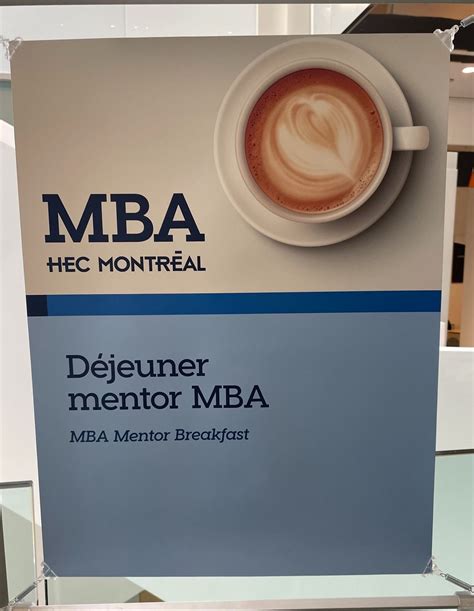
Bleau has mentored MBA students at HEC Montréal, part of a broader shift from running the playbook to helping others write their own.
The operator becomes a translator
Bleau's public description of herself on the youth-mentoring platform Academos is concise: curious, happiest working with teams, and passionate about solving problems creatively and practically. Her listed interests range from branding and e-commerce to basketball, nature, animals, design, culture, and humor. It reads less like a polished executive biography than a clue to how she relates to people. The expertise is serious; the posture is open.
That openness shows in a small request she made to her professional network while preparing a marketing-research course. She was looking for industry reports on consumer packaged goods and food and beverage that her students could actually access, something comparable to the trade intelligence available in fashion. It was an educator's version of customer research: identify the resource gap, ask the network, and lower the barrier for the people doing the work.
The classroom gives her career a useful reversal. For years, her task was to turn research into decisions. Now she can turn decisions back into material for research, debate, and judgment. A size chart becomes a discussion about reducing uncertainty. A cross-border agency relationship becomes a lesson in incentives and transparency. A promotion to president invites questions about how functional expertise expands into general management.
Her work outside school extends the same idea. Bleau has presented herself publicly as an independent consultant and mentor since 2024. She also volunteers as a fashion stylist with Dress for Success Montréal, which supports women entering or returning to the workforce. Clothing, in that context, is not a seasonal assortment. It is part of how someone prepares to be seen at a consequential moment.
The arc might look like a turn away from retail. It is closer to a redistribution of what retail taught her. Wholesale trained attention on movement and relationships. Reitmans connected brand promises to practical fit. Bentley expanded marketing into merchandise, experience, and company leadership. BESTSELLER added international digital operations. EY required the pattern to travel across clients. Dawson asks her to make the pattern legible to beginners.
A former executive in a classroom can easily become a dispenser of war stories. Bleau's public record suggests a more useful role: translator. She has repeatedly occupied the seam between functions, between store and screen, between theory and execution, between a student's question and an industry that rarely pauses to explain itself.
The durable lesson in her career is modest enough to miss. Stay curious long enough to see the whole system. Keep the customer concrete. Learn from impressive people and disappointing ones. Then pass the pattern forward while it can still help somebody make a better decision.