In the early 1990s, Stephan Sigaud had a problem with a familiar corporate shape. Executives commissioned customer research. Researchers returned with findings. The people closest to the accounts listened politely, then reached for one of two defenses: we already knew that, or that is exactly what we thought. The survey had produced data, but the organization had produced antibodies.
Sigaud, then president of a New York consultancy specializing in industrial and business-to-business markets, responded with a small act of procedural judo. Before asking customers what they thought, his team asked employees to fill out the same survey as if they were the customers. Sales, marketing, manufacturing and R&D recorded what they believed customers valued and how well the company delivered it. Later, the actual customer answers arrived. The space between the two became the point.
It was called gap analysis. Its cleverness was less about the name than the choreography. Employees had committed their assumptions to paper before seeing the evidence. They were participants, not an audience waiting at the end of a PowerPoint. The method turned disagreement into something visible and gave the eventual recommendations a better chance of surviving contact with office politics.
“By doing the gap analysis, you’re giving the employees the chance to participate up front.”Stephan Sigaud, 1992
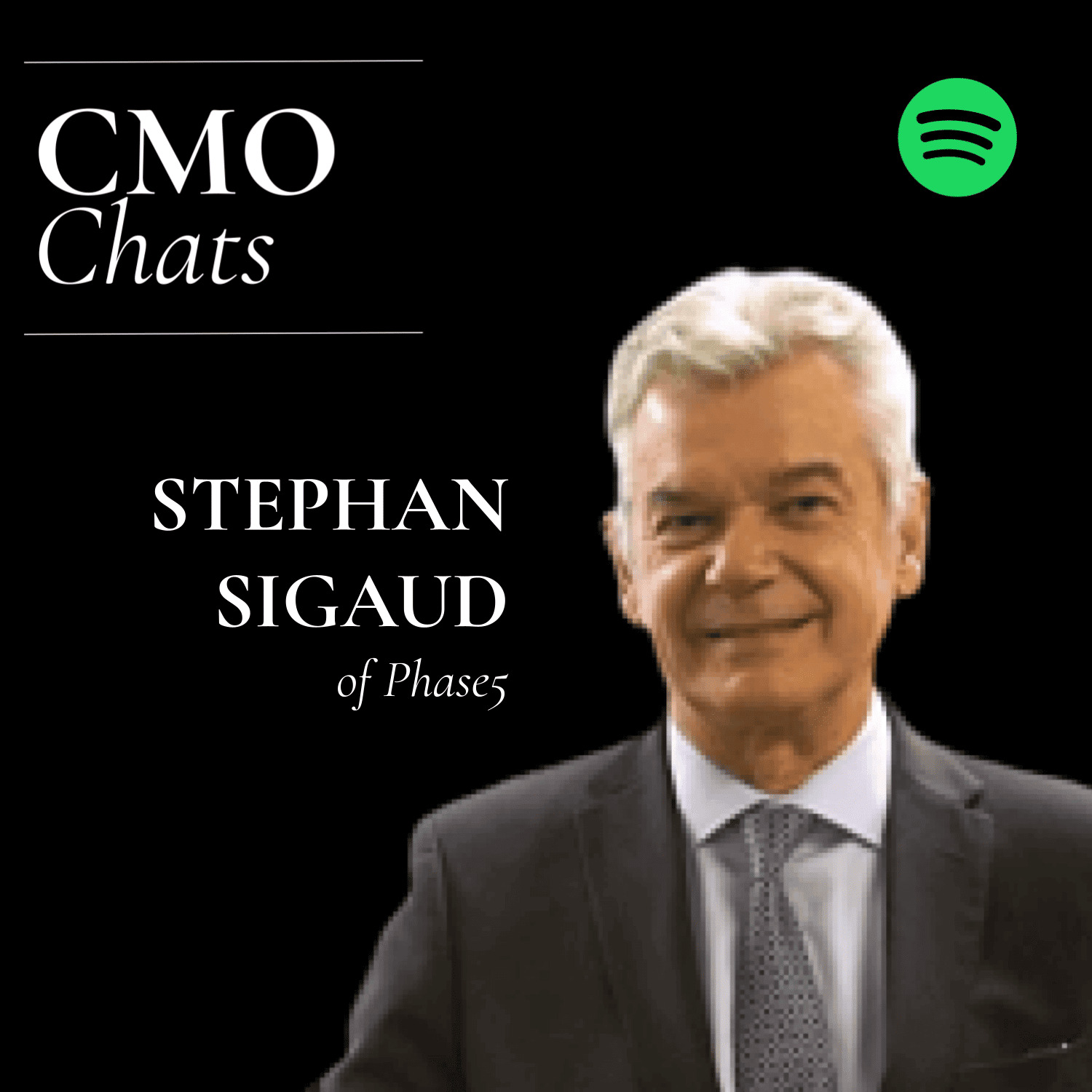
More than three decades later, the same concern runs through Sigaud’s work as Chief Marketing Officer at Phase 5 in Toronto. The labels have expanded: customer loyalty, customer experience, user experience, brand, innovation, analytics, AI. The operating question remains stubbornly practical. What must happen inside a company for knowledge about customers to change a decision?
A career built along the fault line
Sigaud’s career has followed the fault line between research and operations. His firm IDSI focused on customer satisfaction in B2B environments. In 1994, FIND/SVP acquired the company, took on its staff and business, and put Sigaud in charge of a new customer-satisfaction division. By the next decade he was at Harris Interactive, eventually leading U.S. solutions research groups and its loyalty work.
At Harris, he helped introduce a commitment model that treated satisfaction as only part of loyalty. The model combined rational and emotional dimensions, including trust, in an attempt to connect attitudes with behavior. The vocabulary was changing, but the instinct was recognizable. A score by itself was too thin. The useful measure had to explain what customers might do and where a business could intervene.
A move to Northstar Research Partners in 2010 put him in charge of corporate development, go-to-market strategy and new offerings. At Kantar TNS Canada, he then led customer experience across the Americas before taking on marketing and business development in Canada. The jobs moved from research practice to growth, but they never left the customer very far behind.
The arc also explains why Sigaud gives a one-word answer when asked to define the head of marketing’s role: “growth.” He does not describe growth as a campaign output. He talks about building the strategy, seeing what is changing, enabling the response and making it happen. Marketing, in this view, is both radar and transmission. It detects a signal outside the company and helps the institution move.
The best risk was a smaller company
In September 2017, Sigaud stepped away from the scale of global research groups and joined Phase 5, a privately held research and consulting firm. His initial mandate was broad: help shape global growth, strengthen the brand, expand the offering and build client relationships. He later called the decision the biggest risk of his career and “the best risk I’ve ever taken.”
The attraction was proximity. At a smaller firm, he could see his decisions travel. Experience from the corporate world could become a new practice, a clearer story or a direct change in how the company approached the market. Phase 5 also had an unusual combination to work with: conventional market research alongside UX and experience-design capabilities. Customer centricity could move from diagnosis toward design.
That choice suggests a quiet career trade. Large institutions offer resources, reach and specialized roles. Smaller ones compress the distance between judgment and consequence. Sigaud chose the place where his accumulated experience could touch more of the system. He was not abandoning scale so much as changing the kind of leverage he wanted.
“I’m curious, I’m adventurous, and so I’m always looking to better understand what’s going on.”Stephan Sigaud, 2021
Curiosity is the trait he returns to when describing his career. His version has direction. Look forward, but also sideways. Watch what adjacent fields are doing. Attend conferences not simply to be seen, but to hear the language people are beginning to use. He calls that a marketer’s “listening post.” The phrase is revealing: curiosity is not a hobby in this model. It is infrastructure.
The customer journey does not sit still
The pandemic supplied a brutal test. Phase 5 had relied on conferences and in-person events to raise its profile and share ideas. Sigaud shifted toward virtual events, content marketing and other digital tactics. He spoke about the move with something close to relish because it forced creativity. The audience was moving, so the company had to move with it.
He made the same argument about customer journey maps. Familiar touchpoints had changed, and so had the emotions attached to them. A map built for the old environment could not simply be laminated and trusted. Companies had to rediscover the journey. It was a temporary crisis with a permanent lesson: every map is a hypothesis about behavior under specific conditions.
AI now sharpens that lesson. Interfaces can fade while an automated system completes more of the customer’s task. Traditional metrics may capture an interaction and miss the outcome. Expectations can move during a single product cycle. The customer problem has not disappeared; it has migrated. Researchers must ask where the friction went, how trust is being formed and which result the customer actually values.
Sigaud’s older work offers a useful discipline for this newer landscape. Do not confuse satisfaction with loyalty. Do not confuse the existence of data with organizational understanding. Do not wait until the final presentation to involve the people expected to act. And do not assume the customer journey is stable because the diagram still looks tidy.
Research has to travel
Sigaud’s professional associations extend the same work into community. He has served on the Canadian board of the Insights Association and as its Toronto regional chair, chaired the Toronto network of the Customer Experience Professionals Association, and co-chaired the Canadian Marketing Association’s customer experience council. He has also judged industry awards, including a 2026 program focused on digital customer experience.
These roles make sense beside his day job. Research is a profession built on standards, shared methods and the movement of ideas between companies. A useful insight rarely belongs to one department for long. It must cross from analyst to executive, from executive to product team, and from product team to the employees who shape the experience. Every crossing introduces the possibility of distortion or indifference.
The range of sectors in his public work also matters. Financial services, technology, telecom, automotive, hospitality, retail, nonprofits and public organizations have different customers and different constraints. Yet the recurring organizational drama is surprisingly portable. Teams overestimate what they know. Metrics become detached from behavior. A finding loses force as it moves away from the people who collected it. Sigaud’s emphasis on people, processes and numbers at once is a response to that messiness. Numbers can establish the pattern. Process can give the pattern somewhere to go. People decide whether it arrives with enough credibility to influence a choice. Remove any one of the three and customer centricity risks becoming a slogan pinned above the same old decisions.
The practical takeaway from Sigaud’s career is not a single metric or framework. It is a design principle for decisions: give evidence a route into the organization. Invite skeptics early. Connect the number to an outcome. Notice when conditions change. Keep a listening post at the edge of the business, especially when everyone inside feels certain.
That 1992 survey exercise still feels modern because it understood something dashboards often forget. Companies do not act on facts in the abstract. People act on facts they can locate inside a shared process. The question inside the question is always about adoption. What would have to be true for this organization to believe its customers, and then do something about it?