Stacey Nelson Smith had a naming problem. The business she had started in 1999 was called AdEase, a tidy promise for a company selling advertising. By January 2015, its work had become complicated enough to make the promise sound peculiar. Her team was taking on community problems, working with public agencies and trying to influence what people did after they encountered a message. Ease was becoming a rather optimistic description of the assignment.
So she changed the name to Civilian. The business had already done much of the changing. Its new introduction arrived after years of decisions about clients, projects and purpose. An agency accustomed to helping other organizations explain themselves had reached the point where it needed to explain itself again.
A name catches up
Smith began with a sole proprietorship. Early clients included small retailers; the agency also worked on restaurants, housing developments and insurance. The route toward social marketing developed over time. Pro bono work figured in that journey, eventually becoming part of a much larger change in what the organization wanted to do for a living.
By the rename, the announcement described a 35-person business with more than $20 million in billings and a presence in several California cities. Those are historical figures, but they establish the scale of the decision. Smith was giving an operating company with staff and clients a new public identity.
“This is a case of brand identification catching up to agency identity.”
Stacey Nelson Smith, January 2015
The sequence gives her story its shape. A new name can announce an ambition. In Smith’s case, it recognized a direction the business had been taking already. The flag in Civilian’s logo gave that direction a visual marker: a position the agency was prepared to commit to.
The useful problem in the paint can
A year before the rename, AdEase won a two-year, $4 million media contract for PaintCare in California. The planned campaign covered all 58 counties, using television, radio, print, outdoor and online media to introduce people to a paint recycling service. There was already a network of more than 500 drop-off locations. The communication job was to help make the system part of people’s lives.
Leftover paint is an agreeably concrete way to understand Smith’s business. A can can sit in a garage long after the room has changed color. Making someone favor recycling is one task. Helping that person recognize a convenient way to deal with the can is another part of the same assignment. The public benefit depends on an action.
Smith’s enthusiasm for the contract centered on the opportunity to put targeted media to work for a cleaner California. The tools were familiar agency tools. Their destination had shifted. An advertising budget was being used to connect an existing service with people who might use it.
That work also helps explain her interest in the commercial logic of social marketing. In a 2017 article, she examined why businesses would invest in behavior change, considering sales, operating costs, collaboration and the delivery of stated commitments. She treated purpose as something a company could build into its decisions and services, with practical reasons to sustain it.
Consider San Diego Community Power. Civilian developed the organization’s brand with a creative team led by Art Ebuen. A six-month process included a messaging session and four mood-board directions. The resulting identity brought five founding cities into one visual system while allowing each city its own color. It was an exercise in helping a shared service feel connected to individual places.
The details also show where the founder’s role meets the team’s. Smith leads the agency; a public client brief listed her responsibility as relationship oversight. Designers, researchers, account staff and media specialists bring distinct skills to an assignment. Following her career therefore means paying attention to the organization she has built, including the people whose names belong on the work.
For an agency with a community focus, a project like that has several audiences at once. There are the people commissioning it, the cities represented by it and the residents who will encounter it. The company’s job includes making those relationships legible. It is a practical expression of the direction Smith had chosen years earlier, requiring both an idea and the patience to develop it with other people.
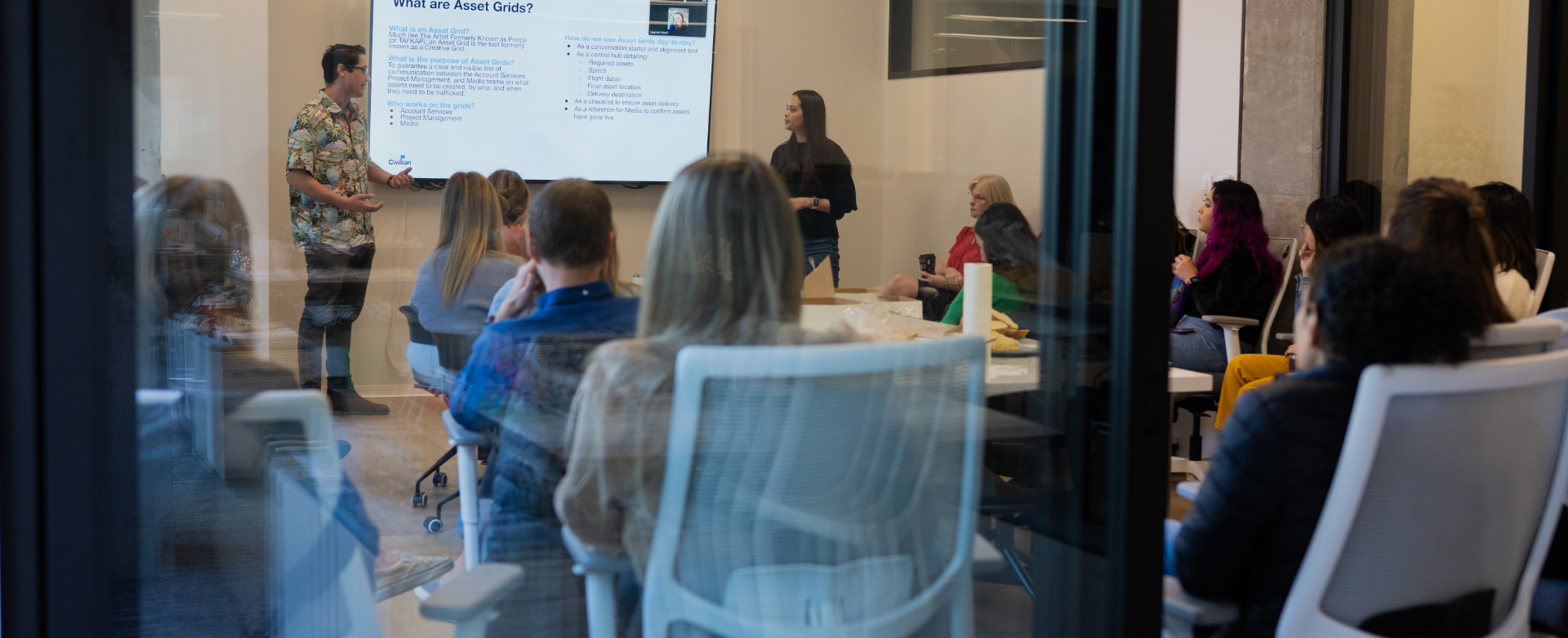
There is a useful discipline here for a founder: an attractive idea still needs a working business around it. Civilian’s services include audience research, strategy, creative production, websites, media buying and public engagement. The company has to understand a problem, make something people can use and get it in front of them. Good intentions have quite a production schedule.
A balance sheet for the mission
Civilian became a Certified B Corporation in October 2018. The certification supplies an external framework for examining a business whose public identity rests on its social purpose. Employees, community, environmental practices and governance all become part of the conversation about how the company operates.
Its published B Impact Score is 98.9. The profile also records an earlier assessment score of 81 in 2018. These figures describe the agency’s assessment; they are not a score for Smith personally or a measurement of the effectiveness of every campaign. They make one part of the company’s commitments available for inspection.
Overall B Impact Score
The agency also helped establish B Local San Diego, bringing its business philosophy into a local network. That is a different kind of connection from a client contract: companies comparing practices and finding other organizations that have chosen similar constraints.
In August 2026, Civilian described preparing for recertification under revised standards. The continuing task matters to the story. A company that has defined itself around public benefit still has to examine its own workplace, purchasing and decision-making. A certificate gives that examination a framework and a reason to recur.
An office with the doors open
Smith’s operating choices are visible in the agency’s move from Liberty Station to downtown San Diego. Describing the new premises in 2022, she emphasized an open floor plan, sliding walls, outdoor access and space for colleagues and clients to gather. The agency also sought a LEED-certified building that fitted its sustainability priorities.
“We wanted a space that supported our vision of teamwork, openness, and transparency,” she said. The statement attached broad workplace values to a fairly specific list of requirements. People needed places to brainstorm, meet clients and spend time together. The physical setting had to make those activities possible.
Her conversation with Jeff Blanton on Conscious Curiosity, recorded in June 2022, put collaboration alongside purpose and B Corp certification as leadership concerns. Each brings the founder back to the people doing the work. An agency can sell creativity only if it gives colleagues conditions in which to produce it.
“People like to go to work and know that what they’re doing is meaningful.”
Stacey Nelson Smith, Conscious Curiosity
In January 2024, Civilian announced its place among Ad Age’s Best Places to Work, one of 25 small agencies selected. The process included employer questionnaires and employee surveys. Smith described the recognition as reflecting the attention the company had given its culture and staff. The employee responses add another perspective to that account.
Five words, with an exception
At ten, Smith wanted to write. Asked for an alternative livelihood, she chooses charter boat captain. Her suggested dinner guests range from Anderson Cooper and Dick Cheney to Justin Timberlake, a seating plan with considerable potential for conversational crosswinds.
Her self-description combines adventure, affection, independence, competition and an interest in food. It exceeds the team questionnaire’s word allowance, which earns a small editorial indulgence on account of her being the boss. She also names foster children as a cause she cares about. These are glimpses she has chosen to make public, without the polish of a corporate mission statement.
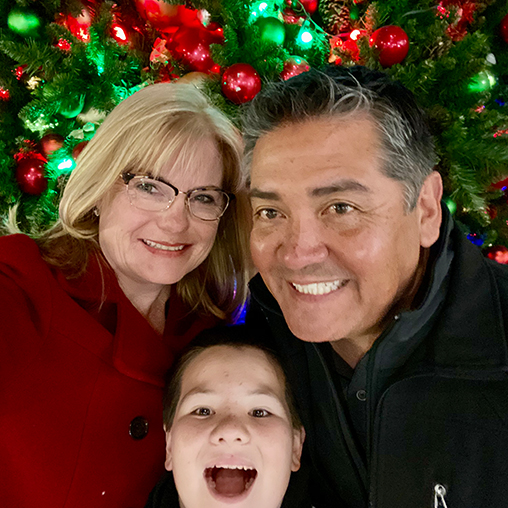
The details give the formal career a little air. An agency founder spends much of her public life explaining an organization. Here, for a moment, there is room for an imaginary job at sea and a dinner invitation that would require some thought about the table.
The next assignment is still an action
At Civilian’s 25th anniversary in December 2024, Smith described the next chapter in terms of broader impact and deeper partnerships. The ambitions followed a long period of changing the kind of work her agency pursued. Civilian now serves public agencies, foundations, nonprofits and businesses with a stated purpose, with work spanning sustainability, transportation, education and economic development.
Smith has also announced a partnership with the Conrad Prebys Foundation, describing Civilian’s remit as strategic communications, public relations and social media. The assignment connects the agency to a philanthropic organization in its home region. It gives her stated interest in deeper partnerships a specific form: helping an institution communicate the work it supports and engage the community around it.
Its October 2026 account of environmental campaigns returns to the scale of ordinary decisions: leftover paint, recycling and participation in a community energy provider. Those examples keep the agency’s mission close to something a person can actually do. A campaign has to meet people amid the habits and inconveniences of an existing day.
For Smith, the continuity runs from the early agency through the later name. She has kept the machinery of a marketing business while changing the assignments it is built to take on. Research, design, media and relationships remain tools of the trade. Their usefulness depends on what happens beyond the agency.
That makes the 2015 rename a revealing moment to return to. Civilian gave the business a description it could carry forward. Smith had already spent years assembling the work that made the description credible. The name took a day to announce. Giving it something to mean had taken considerably longer.