A shirt can look perfectly convincing on a screen and remain a terrible idea on a person. This small indignity occupied Sridhar Tirumala long before artificial intelligence became a compulsory ingredient in every business presentation. At Trupik, the company he co-founded, the question was wonderfully ordinary: could a shopper see how a garment would fall on their own body before buying it?
In Hyderabad in 2015, answering that question involved a visit to a retail kiosk, a depth-sensing camera and a digital version of yourself. The ambition was to carry something of the fitting room into a mobile phone. For Tirumala, now co-founder and co-CEO of NeuRetail, the physical shop has remained a place worth working on. His businesses have changed; the distance between a computer's understanding and a person's experience keeps providing work.
A fitting room with a camera's eye
Trupik began in Silicon Valley in 2013. Its founding team included Tirumala, Vikranth Katpally, David Harmon and Aravind Inumpudi. In October 2015, the company moved its operations to Hyderabad. It had raised $1 million in seed financing from the Silicon Valley-based Kommareddy Group of Investors. The following month, Tirumala was describing plans for another financing round and expansion beyond the city.
Those plans belonged to an early-stage company finding its market. The product itself was more tangible. Trupik used Microsoft's Kinect depth-sensing camera to collect reference points and construct a shopper's virtual avatar. Customers could then use an app to examine how garments of different sizes and fabrics would drape on them, with store collection or home delivery available for selected merchandise.
Indian Terrain, Raymonds, Wills Lifestyle and Allen Solly were among the initial menswear brands involved in the Hyderabad pilot. The starting point mattered: customers entered an actual store to create the digital persona they would later use outside it. The shop supplied the clothes, the customer relationship and the first encounter with the technology. The phone extended that encounter.
Tirumala put the emphasis plainly in 2015: “Our biggest value proposition comes when you are able to create a new experience for the consumers”. Trupik could license its technology to a brand or take a share of transactions through its platform. However digital the interface became, the business still had to work for a retailer.
“Fashion is highly personal, and is highly iterative in nature.”
Sridhar Tirumala, 2016
The algorithms person, with an eye on the shop
Tirumala's contribution at Trupik was rooted in algorithms and modelling. His collaborators brought complementary specialties: Inumpudi worked on optimization, Katpally on hardware, and Harmon on physical simulation. Harmon also had experience in film effects, including work associated with The Hobbit and Tangled. A convincing digital garment turned out to have something in common with a convincing imaginary world.
A 2016 account of the company described Tirumala's remit as stretching from ideas and branding to code. That breadth helps explain the particular character of the venture. The mathematics had to produce a usable image; the image had to help someone choose; the choice had to connect back to a store. Each stage placed a different demand on the same product.
By October 2016, Tirumala said Trupik had partnerships with 16 premium brands. He also made a distinction between placing a garment image over a customer's photograph and recreating the body in three dimensions so that clothing could be draped around it. This was his account of the product's approach, with fit and appearance as the questions he wanted it to answer.
The underlying ambition was a more individual form of recommendation. Price and popularity could tell a retailer what sold. Tirumala wanted the system to help a particular customer decide what suited them. His description of a personalized fashion adviser carried an unusually practical concern: people trying clothes rarely settle the matter in one attempt. Shopping has revisions.
- 01VisitIn-store scan
- 02Recreate3D persona
- 03TryMobile fitting
- 04ChooseCollect or deliver
Another problem with appearances
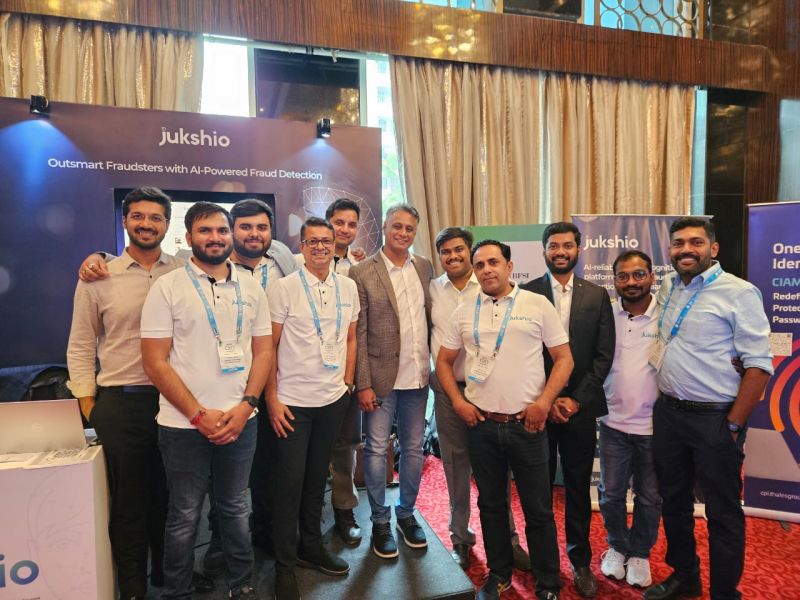
His work at Jukshio brings a different set of consequences to computer vision. The company identifies Tirumala as its CEO and Shivani Pulimamidi as co-founder. Its products address digital identity verification, where recognizing a face is only part of the task. A system also needs to distinguish a real interaction from a manipulated or substituted one.
Jukshio's product history places the launch of its digital KYC and attendance offerings in 2019, a wider Indian telecom rollout in 2020, and online and offline facial identification capabilities in 2021. It describes an expansion into banking, financial services and retail in 2023. These are different operating settings, with different practical demands on identification.
In November 2024, Tirumala discussed the difficulty created by photographs available on social media and other public sites. Fraudsters could alter those images to construct fraudulent identities. His warning concerned a troubling feature of digital life: material intended to make a person recognizable can also become material for impersonating them.
He has also described Jukshio's direction as moving from individual solutions toward a broader platform. Its offerings include document and facial verification, liveness detection, attendance systems and enterprise access management. The common business question is whether an organization can make decisions using information it can trust. A face on a screen may begin the process; it cannot settle every question by itself.
Back in the aisle
NeuRetail returns the story to the shop floor. Tirumala and Pulimamidi are its co-founders and co-CEOs. The company's stated aim is to build an autonomous retail platform and personalize shopping. Its team spans electrical engineering, mechanical engineering, industrial design, firmware, hardware and data science. There is plenty here that cannot be fixed by rewriting a line of promotional copy.
NeuRetail reports that its platform has been implemented in 52 stores with a retail chain in India. That is a company-reported deployment figure, rather than a claim about the total size of its present business. It gives a concrete setting to a project otherwise easily buried beneath the language of AI.
Deployment reported by NeuRetail for one retail-chain implementation.
The product range includes smart carts, baskets and point-of-sale systems. The proposed shopping experience lets customers bill and bag purchases as they move through the store. Recognition technology and weight measurement support verification; an on-cart screen supplies information and offers. Separate tools cover customer-journey analytics and promotions. The company markets integration with existing inventory, promotion and payment systems.
For a shopper, these are familiar activities rearranged: choosing, checking, paying, carrying. For a retailer, they touch several systems at once. A trolley acquires responsibilities that once belonged to a counter. One can admire the engineering while remembering that a shopping cart's first obligation remains getting around the aisle.
NeuRetail promoted its offering at NRF 2025, naming Tirumala among the team and inviting visitors to booth 357. Its pitch emphasized plug-and-play deployment and zero capital expenditure. These were commercial propositions, aimed at the retailer weighing the cost of changing a working shop. The language had travelled some distance from a virtual shirt, but the customer still stood in a real store.
The co-founder beside him
Pulimamidi's presence runs through NeuRetail, Jukshio and the wider SukShi ecosystem. Her public description of Tirumala adds something that a product catalogue cannot. Following NeuRetail's launch, she thanked him as her co-founder, mentor and best friend, praising his “integrity, vision and intensity”. It is a colleague's affectionate assessment, and a glimpse of the working relationship behind the shared title.
That relationship sits within SukShi's wider effort to connect AI businesses, learning and employment. SukShi presents rural upskilling and the development of entrepreneurs as part of its mission. Its stated model links commercially viable enterprises with social benefit. For Tirumala, the organizational setting therefore includes the people learning to build and operate technology, alongside the products those people produce.
Teaching appears earlier in his public career, too. In January 2016, while leading Trupik, he delivered a session on innovation and entrepreneurial skills at Holy Mary Institute of Technology in Hyderabad. The workshop formed part of a digital literacy and skills program. It placed him in front of students while his own company was still working through its first retail deployments.
People still have to make it work
In July 2025, the IIT Madras alumni Sangam program listed Tirumala and Pulimamidi for a keynote on human-machine synchronization. It also identified him with the institute's 1995 undergraduate cohort. The subject brought the human side of the enterprise into the title of the talk, alongside the increasingly capable machines.
Across these ventures, the recurring questions are concrete. Will the shirt fit? Does this identity belong to the person presenting it? Can a shopper finish a purchase with less interruption? Tirumala has worked on each through businesses with colleagues, hardware, software and customers attached. The questions make a useful way to follow his career because they keep the person using the technology in view.
The fitting-room problem remains a particularly good introduction. Clothes can be measured; choosing them remains personal. A digital model can add information without deciding what someone should want. Tirumala's early ambition was to make that choice easier. Years later, with a shopping cart in the picture, the store is still open.