Jeff Feng has a useful answer to anyone who thinks a doctorate must be the harder option. He once worked in a convenience store. Remembering the job years later, he called it “harder than doing a PhD.” The comparison gives his career a pleasing symmetry. He learned to study how machines see, then built a company around the shop floor, where the transactions keep coming and nobody awards a degree for getting through the shift.
His company, Cloudpick, develops systems that let customers choose products and leave without stopping to scan every purchase. For a shopper, the attraction is pleasantly unacademic. You would like your drink. You would prefer to avoid a queue. Behind that small wish sits a much less modest engineering problem: understanding what happened between a person, a product and a shelf.
Yet one of Feng’s consequential decisions concerned ownership rather than recognition. In 2020, Cloudpick closed its self-operated stores and concentrated on providing technology to other retailers. The founder who helped shoppers walk out had decided his company should leave the retail operation too.
The engineer arrives at the shelf
Feng’s education took him through electronic engineering at Shanghai Jiao Tong University, where he graduated in 2006, and a software engineering master’s degree there in 2009. He completed a University of California computer science doctorate in 2014. Work applying computer vision to retail for American technology and retail businesses followed.
The progression matters because a physical shop is full of relationships that a receipt cannot explain. A receipt records a purchase. It says considerably less about the visit that produced it. An engineer looking at the same room can ask which movements, objects and interactions might become legible to a computer.
Feng has described moving from research in two-dimensional analysis toward the three-dimensional world. That sounds like a change in geometry. In a store it becomes a change in the questions a system can answer. A product has a position. A customer reaches toward it. Something moves. The useful task is connecting those events, repeatedly, amid the ordinary disorder of shopping.
There is a temptation to tell an engineering founder’s story as a straight line from qualification to invention. Feng’s own accounts make room for a less solitary beginning. He has said Cloudpick’s founders went to school together. In 2017, they saw online retailers looking toward physical locations for growth and began developing technology for that opportunity. Shared schooling became a commercial collaboration.
A room with a digital double
When explaining Cloudpick in 2021, Feng reached for a comparison familiar to anyone who has bought something online. An e-commerce operator can study the journey around a transaction. A physical retailer often has the result without a comparable account of what preceded it. He wanted to give the shop an equivalent ability to observe its operations.
His explanation was spatial. Vision sensors could reconstruct a store as a digital model, bringing the room into the computer. He described that reconstruction running at 30 frames a second. Shelves, products and the people moving among them become parts of a changing scene that software can analyze.
The appeal extends beyond removing a checkout stop. A retailer might use a better picture of activity to reconsider the layout or investigate product performance. For Feng, the customer’s experience and the operator’s information belong in the same conversation. An easy purchase is the visible result of a system doing a considerable amount of accounting about the room.
“The real motivation is trying to optimize customers’ shopping experience.”
Jeff Feng, 2021
Read that ambition from the shopper’s end and the technology almost disappears. People need no special affection for computer vision to appreciate finishing an errand sooner. This is part of the difficulty of the business: the more smoothly the system works, the less attention a customer needs to pay to the invention.
From the operator’s end, invisibility has to be earned. A store is a working environment with stock, payments and changing human behavior. Its digital double has to remain useful when the room is occupied. The successful demonstration must survive the entirely unreasonable habit customers have of behaving like customers.
Learning which business to keep
In an early interview, published in 2018, Feng was already discussing serving business customers and developing a data platform alongside cashierless shopping. Cloudpick then had its own shops as well as partnerships. The technology supplier and the retailer were sharing a company.
That arrangement offers a founder something attractive: a place to show the complete experience. It also gives the company two demanding occupations. Running a shop means taking responsibility for the business inside the room. Supplying its systems means making something another operator can use. Each can teach the other, while competing for attention and capital.
The 2020 decision resolved that tension in the company’s structure. Feng later explained that closing Cloudpick’s own stores reduced capital commitments and made international expansion easier. Retailers became the customers for the technology. Cloudpick could pursue deployments without carrying every shop as an operating business of its own.
There is no elaborate romance in that choice, which is one reason it is interesting. It changes what growth requires. Another location can become an installation for a partner rather than another shop to manage. The company’s boundaries become part of the product strategy.
The unglamorous question: does it pay?
Feng’s conversations about adoption return to the retailer’s working day. Explaining the technology is an initial task. Demonstrating value requires getting close to the operation, observing performance and working through the economics of a rollout. A prospective customer needs more than a glimpse of a futuristic shop.
In his 2023 conversation with Alex Sawaya, he discussed comparing conventional staffing costs with a technology-supported operation. He also described uses beyond payment: adjusting product assortment, improving shelf arrangements and making promotions more responsive. The pitch moves across the store because the bill for the technology must fit within the whole business.
For a founder with a research background, this demands a second vocabulary. Recognition describes what the system can perceive. Return describes why someone will buy it. A retailer has to translate the first into the second before approving the expenditure. The mathematics on the shop floor has a habit of interrupting the mathematics in the lab.
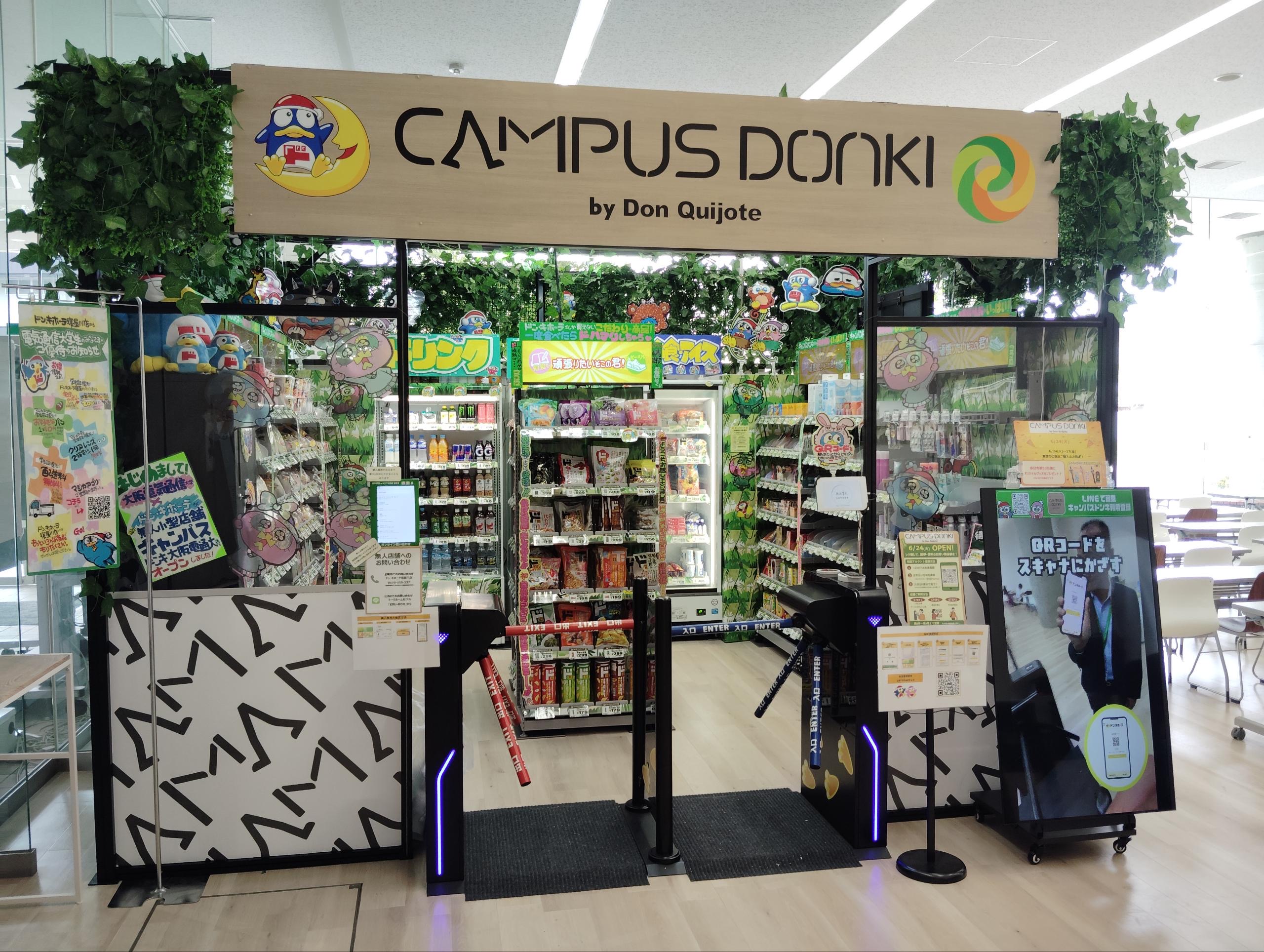
Feng’s proposed settings make that calculation concrete. He has pointed to office lobbies, campuses and transport hubs, places where demand can exist without making a conventionally staffed shop attractive. A small site with inconvenient economics becomes a possible customer. Location does some of the commercial work that a technical specification cannot.
the space→02 Recognize
the interaction→03 Complete
the purchase
A founder among other people
The record of Feng’s work contains classrooms, retail partnerships and public discussions as well as algorithms. At the 2021 World Artificial Intelligence Conference, he joined a discussion about digital life alongside business and government participants. His subject had moved from research into a conversation about how everyday places should function.
That setting helps explain the unusual range of people an applied-technology founder must address. An engineer wants to understand the system. A retail executive needs to understand the operation. A shopper would quite reasonably like to know how to enter, buy something and leave. The same invention has to make sense at each distance.
In February 2025, Cloudpick announced Feng’s recognition in Shanghai’s 2024 digital-intelligence integration Leading Pioneer selection. The company described a final involving 20 candidates from different industries. Its photograph places him among a group holding red certificates: an occasion when the technology founder has to stand still and become part of the picture.
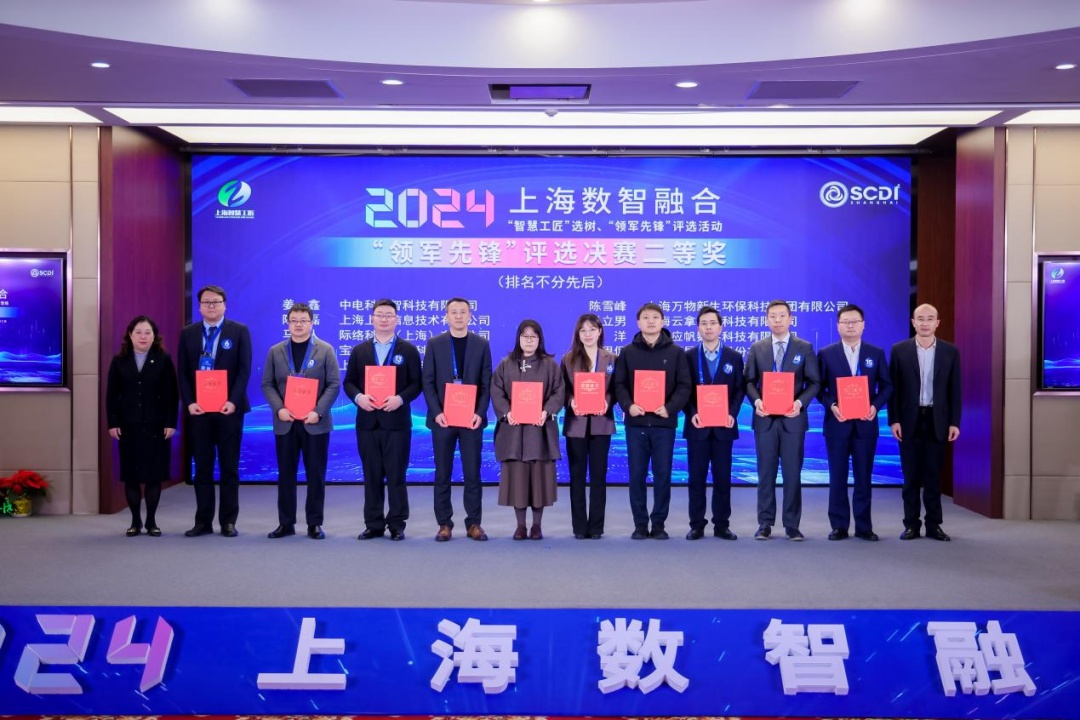
Another company announcement recorded an AI leadership award at a Beijing ceremony in April 2025. Such occasions provide markers in a career spent turning research into installations. They are public moments in work whose everyday outcome is meant to feel quite ordinary.
The next room
Cloudpick’s stated purpose is to move people away from mechanical, repetitive work toward more creative and valuable tasks. That ambition gives Feng’s earlier convenience-store experience a continuing place in the story. The repetition he remembers is precisely the kind of activity his company proposes to automate.
His public LinkedIn activity in 2026 included demonstrations of campus shopping and automated materials collection. The latter takes the underlying idea into a different room: someone removes supplies, and the system connects the physical movement with an operational record. The setting changes, along with the demands of the organization using it.
Feng has also discussed bringing automatic recognition and checkout to supermarket carts and baskets. The direction is revealing. After reconstructing the shop, he wants versions of the technology to travel with the purchase. The large room and the small basket present different forms of the same question: what was taken, and what should happen next?
His career has already involved one decisive answer about what Cloudpick itself should take on. It stopped owning the shops. The business continued around the systems inside them. For a founder who once compared retail work unfavorably with doctoral study, there is a certain logic in keeping the engineering and handing over the keys.