The person checking your supplier's work might live closer to the factory than you do to your own office. For SQA Services, that is the point. A manufacturer can buy a component halfway around the world. Knowing whether its maker understood the drawing, controlled the process, and recorded the evidence is a different purchase entirely.
- SQA puts quality specialists at supplier sites, backed by a managed program team.
- STEPQ connects inspections, audits, findings, and corrective actions in one system.
- The useful question comes before production: does the supplier understand what it must build?
That distance between ordering and knowing is SQA's business. It conducts supplier audits, source inspections, assessments, and quality engineering work for industries where an unnoticed defect can have consequences far beyond a rejected shipment. Its market includes aerospace, defense, life sciences, electronics, energy, and consumer products. The service is practical: extend a customer's quality organization to places its own people cannot constantly be.
A local person. A global problem.
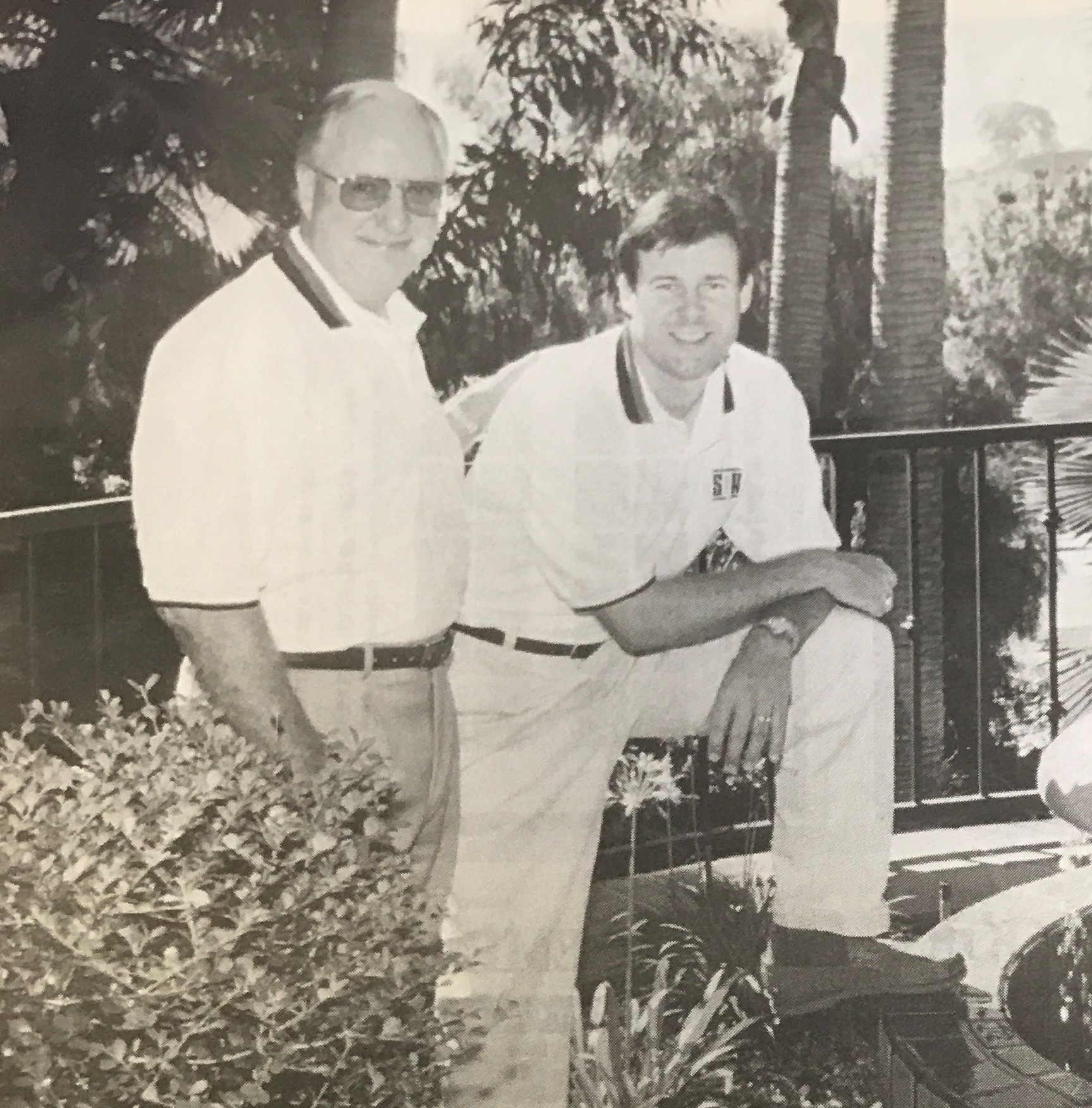
SQA began in August 1995 with a father and son, Jim McKay and J. Michael McKay. The initials stand for Supplier Quality Associates. Jim brought a history in supplier quality management stretching back to the 1970s. The company released STEPQ in 2000, placing software inside a business whose essential work still happened at somebody else's factory.
Its current associate network reaches more than 90 countries. One associate in Japan describes inspecting subcontractors for a U.S. satellite-system manufacturer. The arrangement removes an obvious absurdity: flying someone across an ocean when a qualified person already lives near the work. Local presence can also make language, scheduling, and cultural differences less obstructive.
But proximity alone is easy to buy. SQA adds coordination. A dedicated program team selects associates, schedules suppliers, reviews reports, and follows corrective actions. Field Engineering Directors provide technical leadership. Content management aligns auditors with the customer's requirements. The person at the factory is the visible end of a larger operating system.
The inspection is only the beginning
Follow an inspection through the system. A client or authorized supplier submits a request. SQA coordinates a local associate, who works to the customer's procedures or relevant industry standards. Results can include measurements, documents, photographs, and samples. They reach the customer through STEPQ or the customer's own system. Discrepancies trigger notification; corrective action can remain with the client or be coordinated by SQA.
- 01Define
requirements - 02Inspect
locally - 03Record
evidence - 04Manage
actions
A simplified workflow, based on SQA's inspection process.
STEPQ handles audits, inspections, engineering events, quality agreements, and CAPA, shorthand for corrective and preventive action. Its mobile inspection system, MICCS, gives field professionals instructions and supporting material, then guides them through a controlled sequence. The attraction is consistency: a measurement taken far away should arrive with enough context to be useful.
This makes SQA a managed services business with its own technology. Customers engage it for defined assignments or broader programs, including short- and long-term engineering support. A buyer supplies technical requirements, locations, time frames, and a purchase order or contract. The economic case rests on travel, internal coordination, and the cost of quality failures. A sensible evaluation compares the whole assignment, including follow-up work.
Then the factories closed
In 2020, the weakness of a business built around physical access became painfully clear. SQA's summer newsletter described an immediate loss of almost half its business as plants closed and travel restrictions took hold. Most people accepted 25% salary cuts; the company reported avoiding layoffs. That is a much more revealing cost figure than a marketing promise about efficiency.
“Immediate loss of almost half of the business”
Mike McKay, SQA's Summer 2020 newsletter
SQA gathered experienced auditors to redesign remote work around logistics, legal requirements, security, communications, and audiovisual access. Remote audits went from almost zero in March to nearly 30% of audit activity in August. The disruption also changed an office decision: Mike wrote that he had nearly signed an eleven-year lease involving millions of dollars before choosing more flexible premises.
The lesson has limits. A remote review depends on the evidence available and the access a supplier provides. A camera cannot automatically reproduce every physical inspection. SQA's current desktop evaluations range from information collection to remote assessments by lead auditors, with depth agreed during scoping. The choice of method belongs to the risk being investigated.
Move the question upstream
Some of SQA's most interesting work happens before there is a finished part to reject. Its Requirement Consumption Review is a single-day, cross-functional examination of whether a supplier understands a specific job. Purchase documents, engineering definitions, manufacturing plans, inspection methods, and capacity become subjects for discussion. Gaps produce actions and follow-up.
Its managed Production Part Approval Process, or PPAP, follows a related logic: assess readiness, support the first execution, then review subsequent supplier submissions. The supplier is meant to develop its own capability. For a new launch, site transfer, or engineering change, this offers a useful discipline: test understanding before production turns misunderstanding into inventory.

Current CEO Michael Guymon previously worked at SpaceX, Rocket Lab, and Heliogen, and had partnered with SQA before joining. In April 2026, his published discussion of aerospace quality argued for bringing controls into execution, alongside emerging AI tools. SQA's recent life-sciences writing makes a parallel point: closing a CAPA record means little unless the corrective action works.
What the buyer is really buying
SQA names pharmaceutical customers including Pfizer in its public materials. Rx-360 separately announced SQA as an audit partner in 2020. Those relationships place it among specialist supplier assurance providers; Verify Global is another option offering managed audits and a performance platform. Buyers can also staff the work internally. SQA's proposition combines geographic coverage, technical specialists, program management, and shared records.
The habit worth copying is modest: give every finding an owner, connect it to evidence, and check whether the fix held. Outsourcing works best when the customer can explain its requirements and suppliers permit meaningful access. SQA offers people and a process for making that happen. The buyer still has to decide what acceptable quality means.