Two customers walk through a checkout. Everything works. Fifty arrive, each making a hundred transactions, and suddenly the interesting questions begin. Does the screen keep up? Which action slows down? Where do the errors collect? In one Frugal Testing project, that difference between two users and fifty became the experiment. The team built browser automation, ran it in parallel and compared processing times. A convincing demonstration had become something more useful: a test.
- The work: outsourced software testing, from user journeys to APIs and security.
- The product: FrugalTest runs cloud load tests with reusable JMeter scripts.
- The useful idea: rehearse the busiest day before customers arrive.
Frugal Testing occupies an unglamorous but consequential corner of the software business. Someone must investigate the gap between a feature that works and a service people can depend on. Its pitch brings together testing specialists and a cloud tool that simulates demand. The customer buys help answering an awkward question: what happens when this thing becomes popular?
01 / Fifty people at the till
The checkout project involved a mobile point-of-sale platform. The client wanted fifty concurrent users, each performing one hundred transactions, with a consolidated report. Frugal Testing configured Selenium Grid on Windows, wrote scripts covering the application’s functions and collected visual logs and error screenshots. It also compared the fifty-user run with a two-user run.
Notice what was being measured. This was a browser-level exercise, designed to expose problems during actual screen interactions. The team reported functional defects as well as performance issues. For a buyer, that distinction matters. A server can answer a request while the person waiting at the till still has a miserable experience. The screen belongs in the experiment.
comparison run
load run
There is a second, quieter lesson here. Buying a test does not mean buying a clean bill of health. The useful deliverable may be a list of fixes. Frugal Testing’s account says the customer learned how the application behaved under load and what needed attention. Finding trouble was the assignment.
02 / Rent the crowd. Keep the scripts.
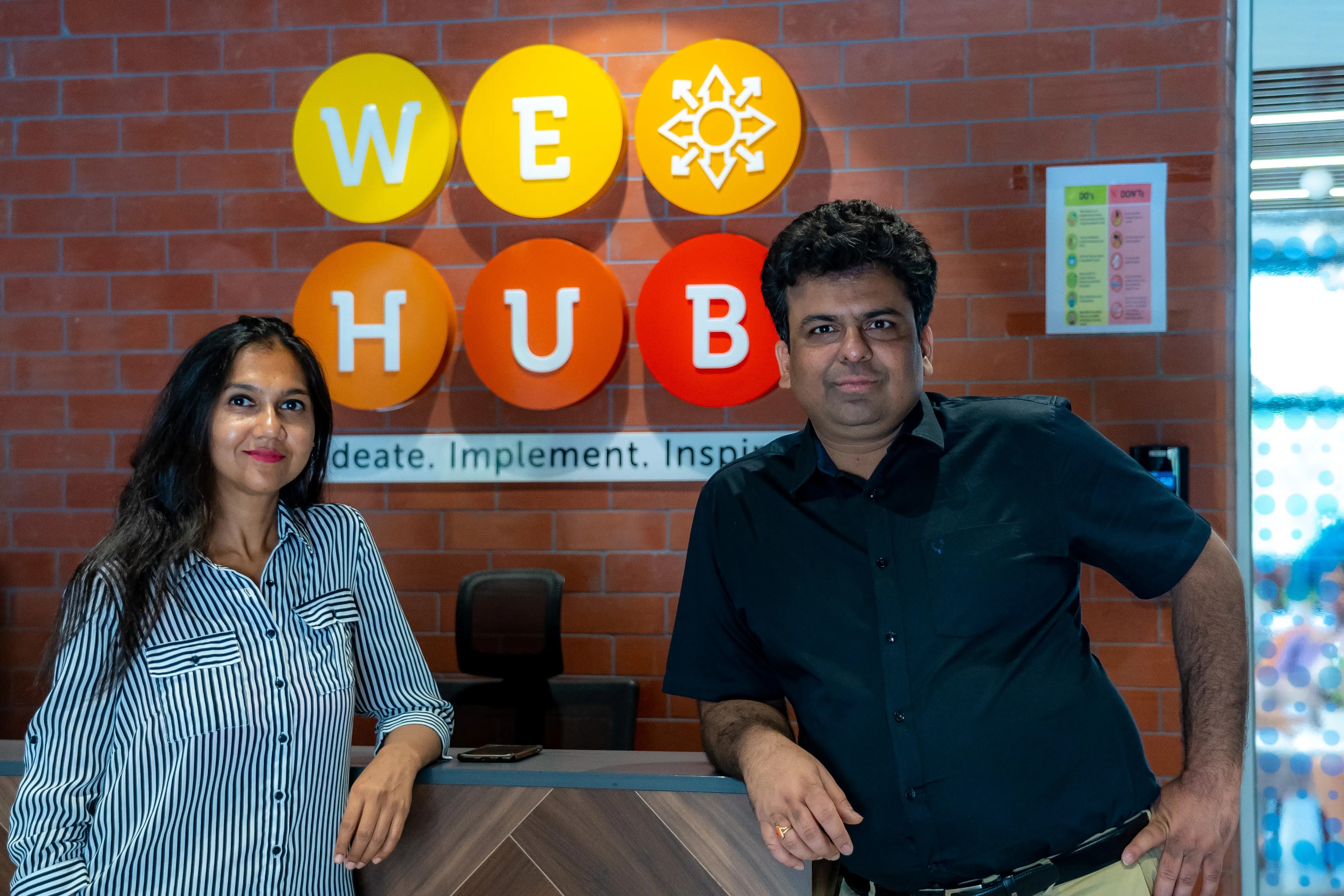
Rupesh Garg and Bharti Garg founded the company in 2016. Today its founders page identifies Rupesh as CEO and Chief Architect, and Bharti as CTO and Co-founder. The business spans managed quality engineering and FrugalTest, its browser-based performance-testing product. Customers can commission engineers to do the work or use cloud capacity to run tests.
The product accepts existing Apache JMeter JMX projects and allows exports. Teams specify concurrent users, duration and network conditions, distribute traffic across regions and inspect live results. That compatibility is a practical selling point: an existing test library can travel into the cloud. Customers need not begin by rewriting every script.
The published pricing makes the economics concrete. The free tier lists five tests, twenty concurrent users and a ten-minute maximum duration. Basic starts at $148 per test; Pro starts at $323 and lists 5,000 concurrent users. Both paid tiers specify costs per location and a sixty-minute maximum. Managed testing engagements require separate scoping.
FrugalTest competes for a budget that could go toward self-managed JMeter infrastructure or a commercial cloud platform such as BlazeMeter. Frugal Testing also competes for work a company might give its own QA team. Its combination of engineers and software addresses both decisions. The appeal is strongest when a team needs testing capacity and help interpreting what it produces.
03 / The exam has two sides
A remote-examination project makes that interpretation tangible. The application had to carry live video from candidates to proctors across 3G, 4G and Wi-Fi connections. Frugal Testing describes using two frameworks for different protocols and generating load for both roles in parallel. It increased the test population in batches of 200, 800 and 2,000 users.
The company says packet-loss measurements exposed poor data transfer between the examinee and server, allowing problems to be addressed early. The exercise asks more of a test than “can the page load?” A proctor needs the video to arrive. A candidate needs the connection to hold. The workload has to account for both people.
“helped us to fine-tune our infrastructure”Srinivas Manem, Udbhata Technologies
Company-published customer testimonial
Udbhata’s named testimonial describes balancing traffic across screens, roles and geographies. Elsewhere, an unnamed Singapore fintech case reports a MySQL review, three architectural failure points and a code change associated with a threefold speed improvement. These company accounts suggest a useful discipline: diagnose the workload and architecture before deciding how much infrastructure to buy.
04 / A rehearsal needs a script
The company displays customer names including Paytm, CRED, Dubai Police and Emirates, alongside the Udbhata reference. Its market runs from young software businesses to established organizations whose applications have operational consequences. A payments team, an airline and a classroom platform need different scenarios, even when they use some of the same testing tools.
The service menu extends through functional, mobile, API, security and regression testing, including Microsoft Dynamics 365 work. The company also advertises AI-assisted test generation and planning. Its published engagement sequence starts with discovery, moves into test construction and continues with monitoring and reports. The sequence gives customers something concrete to evaluate beyond a catalogue of technologies.
Automation still needs scrutiny. The Jenkins plugin directory flags unresolved CSRF and permission-check vulnerabilities affecting Frugal Testing plugin version 1.1 and earlier. That finding concerns the integration plugin; it does not establish a flaw in every Frugal Testing service. It is a reason to review the particular components a team intends to deploy.
The approach also depends on representative scenarios, usable test data and people available to fix what emerges. A synthetic crowd following the wrong journey can produce reassuring numbers about an irrelevant question. Readers can borrow a modest starting point: choose one important journey, establish a small-load comparison, increase demand and investigate the difference. Frugal Testing’s business begins where that difference becomes too consequential to guess.