The audience was already in the building. That was the clue. Salt Lake Acting Company had introduced online subscriptions after moving to Spektrix, but asking patrons to visit the box office, scan a code or remember to buy later still interrupted the evening. So staff brought iPads and portable payment terminals to the seats. In Spektrix’s account, the theatre recorded 568 more subscriptions than the previous summer, with 300 linked directly to that mobile approach.
For a company selling cloud software, it is a pleasingly physical success story: someone walks over and has a conversation. It also captures Spektrix’s proposition. Ticketing technology earns its keep when it helps an organization understand people and act on that understanding. The sale matters. So does the next visit.
A database with a sense of occasion
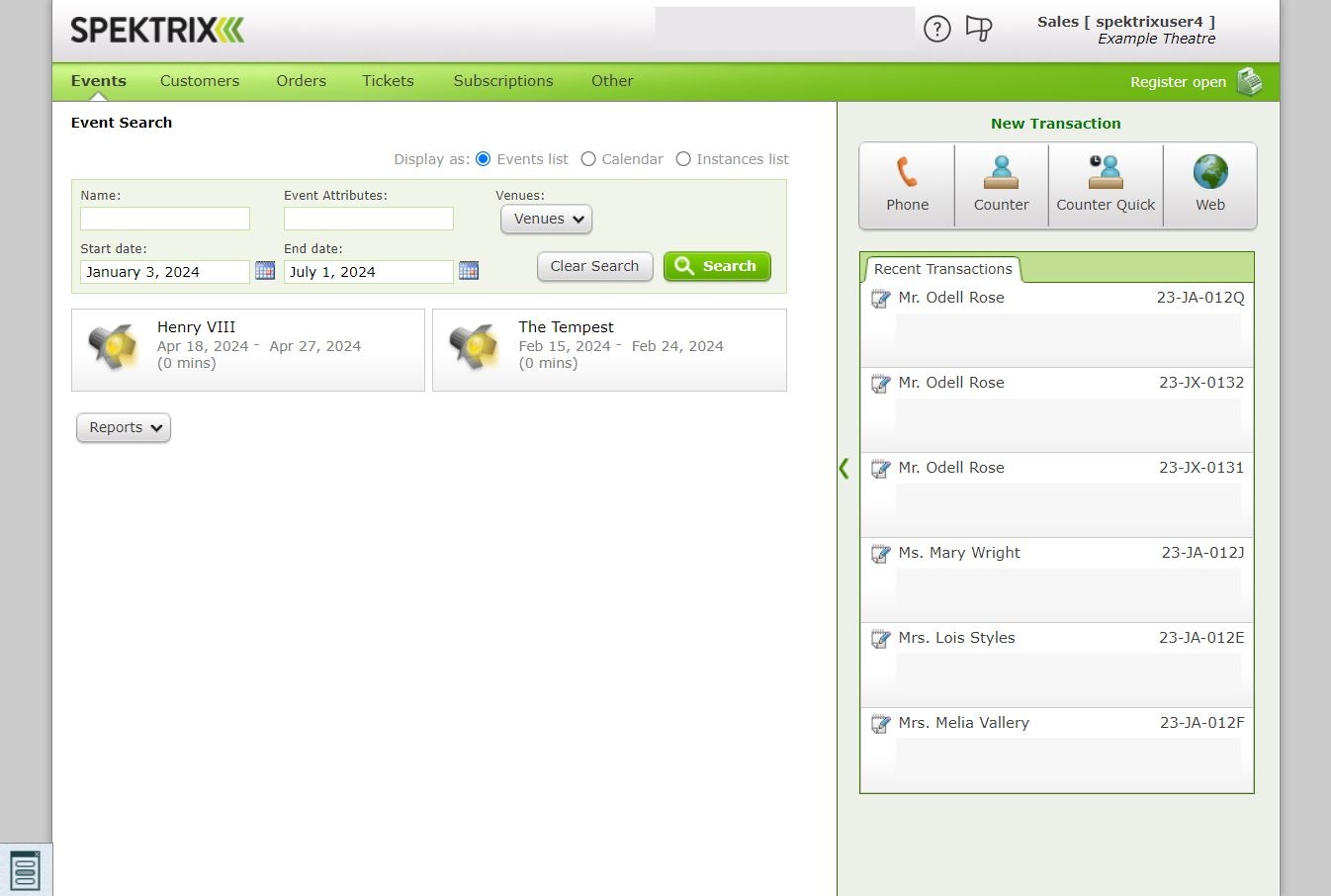
Spektrix supplies ticketing, customer relationship management, marketing and fundraising software to cultural organizations. A theatre can use it to sell seats, manage subscriptions, recognize donors and target communications. A museum can connect admissions with memberships. Those activities feed a shared picture of the customer, making it easier for different departments to work from the same information.
The company reports 825 clients across the United Kingdom, Ireland, United States, Canada, Australia and New Zealand on its website, reviewed in September 2026. The Barbican Centre, V&A Dundee and Honens sit within a customer base that stretches well beyond conventional theatre box offices. Its case-study index says 121 organizations switched in 2025.
Consider the ordinary institutional muddle this addresses. A visitor may be a subscriber to the marketing team, a donor to development and a ticket number at the door. Connected records give those teams a chance to recognize the same person. That is a practical reason to buy a specialist CRM: fewer contradictory conversations, and a better-informed invitation next time.
Two technicians, one small office
Michael Nabarro and Matt Scarisbrick met at university, where their interests included theatre lighting and sound. Experience running a theatre exposed Nabarro to the limitations of the available software. They founded Spektrix in 2007; its first users at RADA began selling tickets in 2008. Cambridge Junction and Derby Theatre joined that year too.
The founders chose cloud software without servers in the venue. Their first office measured 200 square feet and accommodated five people. The company’s own history admits that they initially underestimated the complexity of theatres’ requirements. Anyone who has tried to reconcile subscriptions, seating and special offers may find that admission reassuringly familiar.
By 2009, a live data migration for Sutton Theatres was helping establish another part of the offer: taking responsibility for moving customer records. A replacement system must carry an institution’s memory with it. Otherwise, the shiny new interface starts life with a very expensive case of amnesia.
The people are part of the product
Spektrix packages consultation and training with its software. Users can seek practical help, take classes, work through learning materials and meet peers at the company’s Hubs. Its support offer encompasses discussions about what an organization wants to achieve, as well as which setting to change.
This is a consequential choice in a market where software adoption involves several departments. An empty training budget can turn a capable system into a glorified till. Including education in the service charge removes one reason to postpone learning, though staff still need the time and management support to do it.
Honens, the Calgary music organization, illustrates the adoption problem. In its published customer account, staff had struggled with the previous CRM and basic reporting. After reviewing requirements and moving to Spektrix in 2020, the organization reported more confident access to information and automated reports for senior colleagues. The valuable improvement was that more people could actually use the records.
What the bill buys
Spektrix charges a service fee that scales with client activity. Its published pricing says payments begin when the organization goes live, and hosting, maintenance, upgrades, implementation management, support and training are included. When client revenue dips, the company says its charge reduces too.
That makes the relationship sensitive to the venue’s business. It also means buyers should model busy periods as carefully as quiet ones. A fee linked to activity has different economics from a fixed annual license, particularly for an organization expecting rapid growth.
The total budget extends beyond that charge. Card processing and chargebacks, custom website integrations, additional hardware and partner solutions can add costs. A prebuilt Spektrix Subsite purchase pathway is available within the offering; a more customized website can require investment. The sensible comparison is the complete operating budget for the intended setup, including staff time, rather than one attractive line on a quote.
Model the same expected sales and website requirements across each supplier’s proposal.
Arizona rewrites the offer
At Arizona Theatre Company, geography makes segmentation an everyday necessity: Phoenix and Tucson need different dates and messages. The organization uses Spektrix and Dotdigital to shape communication around location, purchasing history and subscriber status.
For Black Friday 2024, a conventional discount sold 168 tickets. In 2025, the company tried a multi-production “Buy More, Save More” offer. Five emails ran between November 24 and December 12, checking purchase history before each send and removing customers once they bought. The reported result was 944 tickets and nearly $70,000 in revenue.
Those figures describe a campaign, not a controlled software experiment. The offer changed alongside the communications. What readers can copy is the sequence: make a relevant proposal, follow up with people who have not purchased, then stop selling them what they already bought. Attribution deserves more care than a triumphant percentage.
Different offers. Different campaigns. Customer-reported results.
The gift shop joins the conversation
V&A Dundee had a different blind spot. Members received a Shopify discount, but disconnected retail and membership records obscured whether they used it. Linking the data let the museum see benefit use at account level and adjust its communications.
Guest administration also involved paper lists and manual updates. The museum connected zkipster for guest management and used Google Forms with Zapier to automate complimentary-ticket requests. These are partner tools around Spektrix, each doing a particular job.
“We know the more members use their benefits, the more likely they are to stay and renew.”
Charlie Beaumont, CRM & Insights Manager, V&A Dundee
The team revised its Shopify workflow at least fifteen times. That detail is more useful than the usual promise of instant transformation. Start with a narrow problem, connect the necessary information, then inspect what happens. The payoff depends on someone owning the workflow and being willing to improve it.
Donations belong in the same picture
Fundraising gives this market its own shape. Spektrix’s campaign tools let organizations group activity, set targets and assign responsibility, while donations are allocated to funds. That supports a broader view of income than ticket sales alone. The person buying a modestly priced seat may also support the organization in other ways.
During the pandemic, the company released a free Ticket Converter, allowing audiences to choose between refunds and donations for canceled performances. In a Manchester Digital interview, Spektrix described making it available beyond its existing clients. The tool addressed a suddenly urgent administrative problem while giving patrons a way to keep supporting venues.
The same interview described engineering apprenticeships for former support staff and participation in Codebar activities. There was also a Slack channel for cute animals, reportedly including alpacas. Even a business devoted to audience data needs something to discuss besides customer records.
Patient capital, public commitments
Foresight’s investment records date its initial backing to December 2018. The £5 million growth-capital deal was publicly announced in February 2019, with product development and North American expansion central to the plan. Transaction adviser Luminii described a minority equity investment. Scarisbrick stepped aside in 2018; Nabarro remains CEO.
The company had grown organically before accepting outside capital. Its account of the decision emphasizes the scope to invest for longer-term ambitions. Subsequent investor reporting points to expansion: Foresight’s June 2025 update described Australian recruitment, a first Australian client and continued onboarding from a Canadian acquisition.
Spektrix has been a Certified B Corporation since July 2021. B Lab’s directory records a score of 95.9. The company says certification involved amending its governing documents to consider community, employee and environmental interests. That is a concrete governance commitment, more substantial than decorating a careers page with a statement about purpose.
The second visit is the real test
Spektrix competes for organizations that need ticketing and relationship management together. Tessitura, AudienceView and PatronManager are among the alternatives buyers can consider. Spektrix’s case rests on the combination of cultural-sector experience, connected data, included consultation and its activity-linked charge. A procurement exercise should test that combination against the venue’s actual work.
Ask each contender to demonstrate a renewal, a donation, an exchange and a targeted follow-up using realistic records. Check how the website and payment journey fit. Spektrix Link now provides administration for prebuilt purchase pathways and digital ticket passes; those options make the audience-facing experience part of the decision too.
The approach is most useful when an organization has repeat relationships to develop and staff prepared to act on what they learn. A one-off event with little follow-up may have less use for this depth. Fragmented ownership of data can also defeat the promise of a shared system. The lesson from Salt Lake City is modest and worth keeping: sometimes the next improvement begins by noticing where the audience is sitting.