Company Profile · Specialty Coffee
The Chemical Engineer Who Roasted Her Way From a Kitchen in Rural Virginia to a National First
Candy Schibli left engineering and international development to build Southeastern Roastery - now the first Black-woman-owned certified organic coffee co-packer in the country. The method is part chemistry, part conservation.
Most coffee founder stories start with a passion for the perfect cup. Candy Schibli's starts with a thermodynamics problem. Before she was roasting up to 600 pounds of coffee a week in Baltimore, she was a chemical engineer, then an international-development worker running microfinance programs for a nonprofit and USAID. Coffee roasting - a controlled application of heat that transforms raw green seeds into something drinkable - looked, to her trained eye, less like magic and more like a process she already knew how to model.
In 2016 she assembled a one-kilogram roaster in her great-grandmother's kitchen in rural southeastern Virginia and began pulling batches. That kitchen gave the company both its start and its name. Southeastern Roastery grew a customer base in the Washington, D.C. area first, then followed the beans north. Today it operates out of a facility on Eastern Avenue in Baltimore, roasting for direct-to-consumer subscribers, wholesale cafe accounts, and other brands that pay Southeastern to roast and pack coffee under their own labels.
What it actually doesCoffee as chemistry, conservation, and community
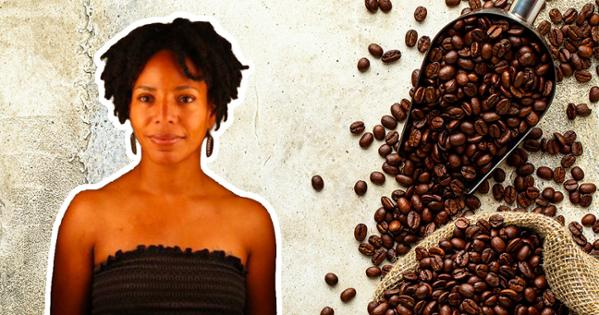
Southeastern Roastery is a specialty-coffee roaster, wholesaler, and co-packer. It sources green coffee through direct-trade relationships - Schibli has hand-selected beans by traveling to growing regions across East Africa, Southeast Asia, and Central America - then roasts single origins and blends in Baltimore. The company describes its approach as blending the "spiritual and scientific," and the roasting philosophy is refreshingly specific: take the coffee "to the brink of sweetness, without tipping over the edge to burnt." The goal is to bring out enough natural sweetness that a drinker reaches for less cream and sugar.
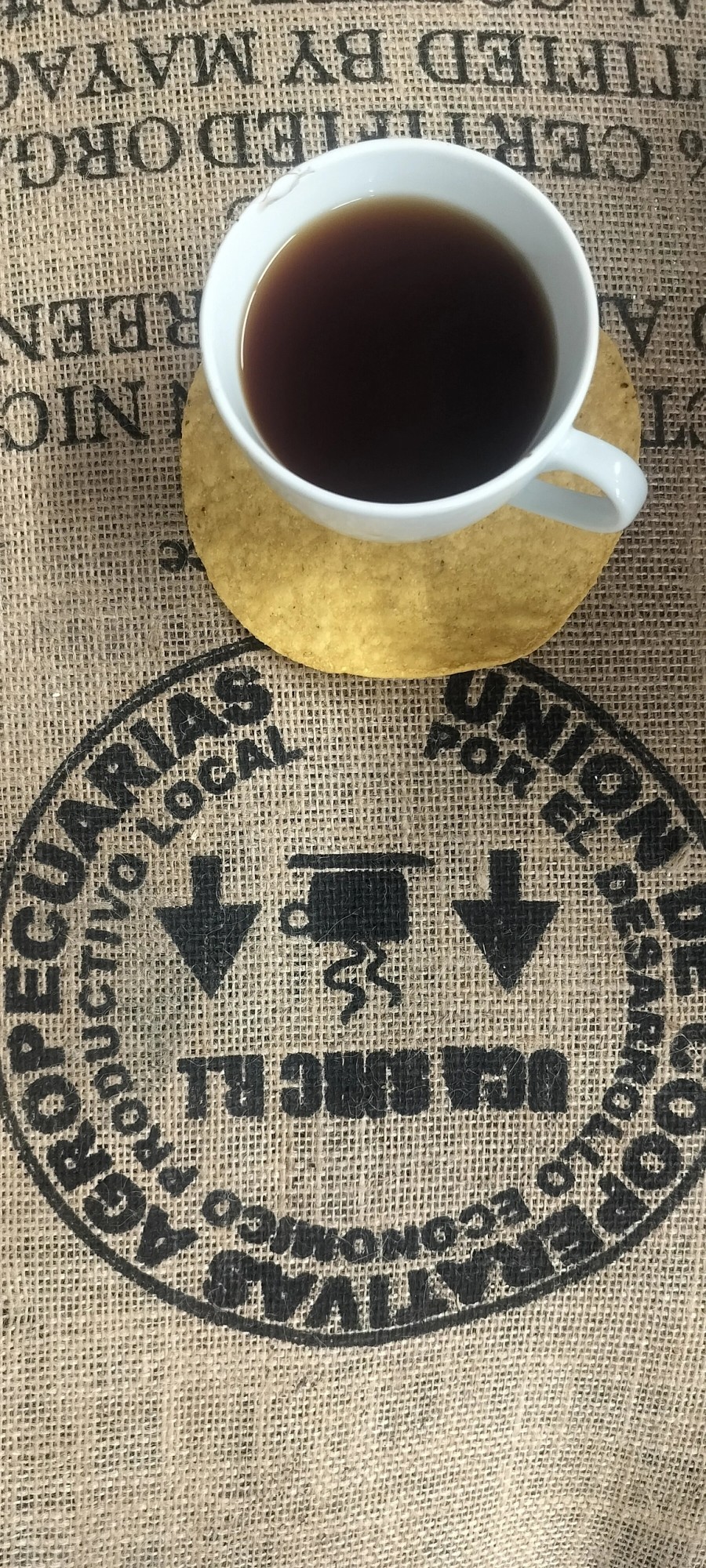
The catalog runs from a Rwandan Kinini and a Papua New Guinea blend to a Bird Friendly Nicaraguan organic coffee, a fermented decaf, and a half-caff for people cutting back. There is canned cold brew for the grab-and-go crowd, and a fundraising arm, BenevolentBean, that lets nonprofits raise money through coffee sales.
The credential stackOver-qualified, on purpose
Schibli holds a B.S. in chemical engineering from Florida A&M University, a master's in international affairs, and a master's in natural resources and sustainable development - the last earned through a dual program splitting time between Washington and the University for Peace in Costa Rica. She is also a Certified Q Arabica Grader, the coffee industry's standard for professional cup evaluation. Put together, that's a founder who can model a roast curve, taste-grade the result, and write the sustainability policy behind the supply chain.
That pivot - from the plant floor to policy, and then to coffee - is the throughline. She spent years in microfinance and microenterprise before deciding, in her words, that the direct impact she wanted was easier to build one relationship at a time than through diminishing policy work. Coffee became the vehicle.
The 2024 milestoneA national first, earned the slow way
In April 2024, Southeastern Roastery announced it had achieved both USDA Organic and Smithsonian Bird Friendly certifications - and described itself as the first Black-woman-owned certified organic roastery and co-packer in the United States. These are not decorative badges. Bird Friendly, administered through the Smithsonian, requires shade-grown coffee that preserves the forest canopy migratory birds depend on. Organic certification for a co-packer means the whole packing operation is audited, not just a single product.
The certifications arrived alongside real equipment. After moving to a larger facility with a vintage Samiac 12-kilo French roaster in 2020, the company added a 20-kilo Mill City Roasters machine in January 2024 to scale output. It also made a counterintuitive call: it closed its small retail area to concentrate on roasting and packing.
The Coffee LabA room built for the senses
Before the co-packing pivot, the public face of Southeastern was the Coffee Lab, a 750-square-foot space that opened in Baltimore's Locust Point in the spring of 2020. Schibli didn't design it like a standard cafe. She filled it with textiles from Indonesia and Ghana, Ethiopian photography, and green plants, and described the room as "a kind of natural yet eclectic safe space that's fresh and spacious." The plan went beyond espresso: she imagined a visual-art gallery and a space where musicians could record live streams, a "collective community safe space" that worked on taste, sound, and sight at once. When the math pointed toward roasting and packing as the stronger business, she closed the retail counter without abandoning the community idea - it just moved into the coffee itself.
Business modelWhere the coffee - and the money - flows
Southeastern Roastery runs on more than one channel, which is what keeps a small roaster viable. There's direct-to-consumer ecommerce and subscriptions, wholesale relationships with cafes, and the quieter engine underneath it all: white-label roasting and co-packing for other brands. That last piece turns a competitor's shelf into Southeastern's customer. The chart below sketches the rough mix.
Revenue channels (illustrative mix)
Channel proportions are illustrative, based on the company's described focus on roasting and packing over retail. Exact figures are not public.
On the capital side, Southeastern has stayed deliberately lean. In August 2023 it closed a small round - roughly $27,900 in debt financing raised through Regulation Crowdfunding on Crowdfund Main Street - rather than chasing venture money it didn't need. For a roaster, capital mostly buys machines and green coffee, and both scale in increments.
The supply chainWomen, all the way down
The sourcing story is where Southeastern separates itself from a generic "ethically sourced" claim. The company prioritizes women producers - including in regions of Guatemala where childcare is a real constraint on women's participation - and works with female-owned importers, women-supported farms, and female-owned bakeries. It even upcycles used coffee bags into handbags with a fashion designer. Every bag ties back to a traceable origin, communicated on the website and through QR codes.
What a reader can borrow
- Use your unfair advantage. An engineering degree became a roasting method most competitors can't replicate on instinct alone.
- Chase the hard certifications. Organic and Bird Friendly are expensive and slow - which is exactly why they become a moat.
- Build a B2B engine under the brand. White-label and co-packing turn other companies into customers and smooth out DTC seasonality.
- Cut what doesn't pay. Closing retail to focus on roasting was a margin decision, not a retreat.
Where it fitsSmall roaster, sharp position
The Mid-Atlantic is thick with specialty roasters - Compass Coffee, Vigilante, Ceremony, Zeke's, and national players like Counter Culture all compete for the same cafes and shelves. Southeastern Roastery doesn't try to out-scale them. It occupies a narrower position: a certified organic, Bird Friendly co-packer with a women-centered supply chain and a founder who can speak to both the chemistry and the conservation. For a cafe that wants a certified, story-rich roaster to make its house blend, that combination is hard to find elsewhere.
The recognition has followed the work rather than led it. Southeastern Roastery has been noted by Barista Magazine, Roast Magazine, and Coffee Review; Schibli was a Halcyon Incubator fellow and placed as a finalist in Carla Hall's Favorite Chef competition. None of that is the point, though - the certifications and the roasting book are. In an industry where "small-batch" and "sustainable" are often marketing gloss, Southeastern has done the paperwork, paid the audit fees, and put a Smithsonian seal on the bag to prove it.
There are honest limits to the model. Certifications and direct trade raise input costs, and a lean, founder-led operation can only roast so much before the next machine and the next hire are needed. The bet is that enough buyers - subscribers, cafes, and mission-aligned brands - will pay for provenance they can verify. So far, roughly 4,800 people follow along on Instagram, and the wholesale and white-label book keeps the roaster busy.
MilestonesFrom kitchen to co-packer
A 1kg machine in a great-grandmother's rural Virginia kitchen; a DC customer base forms.
A 750-square-foot coffee-and-community hub in Locust Point, with a vintage Samiac 12-kilo roaster.
About $27,900 in debt financing via Regulation Crowdfunding funds expansion.
USDA Organic and Smithsonian certs, a new 20-kilo Mill City roaster, and a national-first claim.
Ask Schibli what small business is for, and the answer sounds less like a coffee pitch than a thesis she carried out of her policy years. "I think the crux of small business is to take care of the communities that we're in," she has said. Southeastern Roastery is the working version of that idea - a company built from a kitchen roaster, an engineering brain, and a stubborn belief that a cup of coffee can carry all of it at once.