An empty spa room is an oddly expensive thing. The table is ready. The towels are folded. Somewhere, a guest would happily pay for an appointment. But if the therapist is unavailable, none of that matters. An hour passes, and the room’s inventory disappears. Soothe began with a different inconvenience: getting a massage when the customer actually had time. Eventually, those two problems met.
- Book independent massage professionals at home; beauty services vary by market.
- Hotels and spas can request providers and post available shifts.
- The business lesson: find more customers for the skilled hours you already connect.
The appointment around the appointment
In Soothe’s account of its beginnings, Merlin Kauffman was traveling frequently and struggling to fit massages around his schedule. There was the treatment, then everything required to reach the treatment: finding a provider, getting there, getting back. His 2013 idea was straightforward. Send a qualified professional to the home, hotel or office instead.
Soothe, co-founded by Kauffman and Bradley Herman, became a marketplace connecting customers with independent practitioners. The professional brought the equipment. The customer supplied the location. Software handled the introduction and booking. It was a way to buy back the appointment around the appointment - all that time spent arranging an hour of supposed relaxation.
Today, customers choose a treatment, location and time through the app or website. Massage options include Swedish, deep tissue and sports massage, with 60-, 90- and 120-minute sessions. Skincare, hair and beauty broaden the menu in selected markets. Availability remains specific to the address and the professionals nearby.
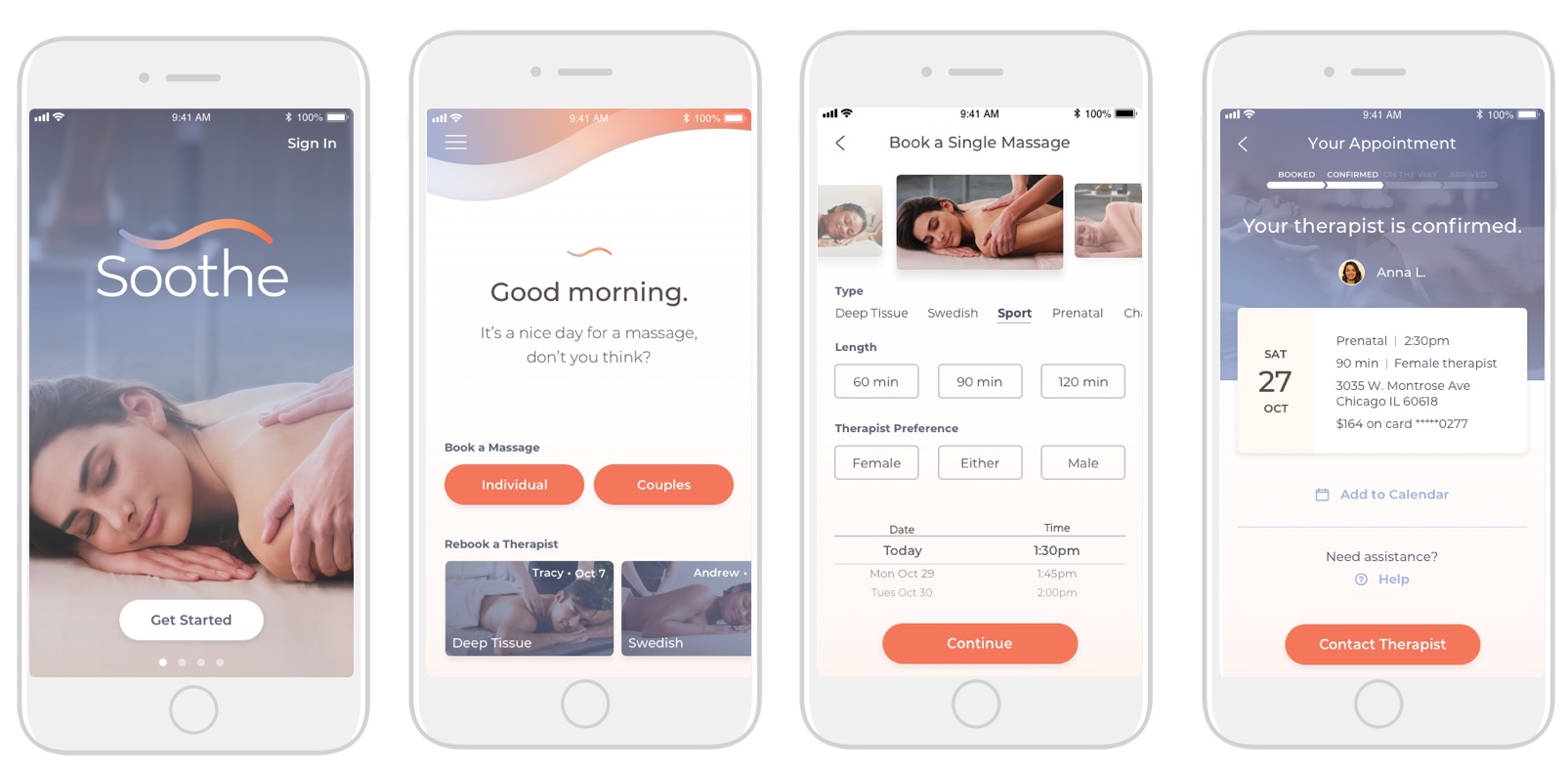
The expertise lives on both sides of that screen. Practitioners supply the hands-on skill; Soothe supplies discovery, coordination and payment. Its safety proposition includes vetted, insured providers and conduct standards. In this category, trust belongs inside the product. A stranger is coming through the front door carrying a massage table.
Twenty-nine dollars is not profit
The early numbers make the model unusually easy to picture. Forbes reported in March 2016 that a standard hour cost $99 and the therapist received $70. The $29 difference belonged to Soothe before its own expenses. It was a spread from which a company still had to be operated.
*Remaining before platform expenses. Not profit, and not a current price quote.
Kauffman told Forbes, “we have profitable unit economics.” The same report said Soothe was losing money overall and expected to continue doing so. Both statements can be true. A booking can contribute money while expansion, recruitment and the machinery behind the marketplace consume more than the bookings collectively produce.
That distinction matters when looking at the funding. A $35 million Series B arrived in 2016. Two years later came a $31 million Series C from Riverside. Capital financed the attempt to make a locally delivered service work across many markets. It did not make a therapist’s travel time disappear.
Current prices vary by location and service and appear through the booking process. Soothe also offers SoothePass, a monthly membership with discounts and points. Repeat appointments give that subscription a purpose; customers still need to judge the actual local price against how often they will book.
The spa becomes the customer
The intriguing turn came when Soothe started helping the establishments that might once have looked like its competition. In October 2022, it announced a Woodhouse Spas partnership. Franchise locations could offer shifts to independent professionals through Soothe Pro. The spa already had customers and rooms. Soothe could help locate the missing person.
What had failed here was the fit between demand and staffing. The partnership announcement pointed to an industry confronting substantial vacancies while customers returned. That is different from saying consumers had stopped wanting massages. For an operator, an unavailable professional can be the bottleneck even when the rest of the business is ready.
The room is ready.
The hour is disappearing.
In April 2023, Soothe formally launched its hospitality platform after a beta involving more than 100 properties. It reported filling 92% of requested partner spa shifts during 2022. Treat that as a company-reported historical result. It nevertheless explains the pitch more clearly than a download count: a requested shift became a staffed shift.
of requested partner spa shifts filled in 2022, according to Soothe.
A room without a spa
The hospitality product also addressed properties without treatment facilities. A branded concierge booking tool could sit inside a partner’s website, connecting guests with providers. Existing spas could post shifts. Hotels without spas could offer access to services. The same network answered two different questions: who can staff this room, and who can bring the service here?
By April 2025, Soothe was describing residential programs with wellness events, resident discounts, concierge offerings and integration into resident portals. An apartment building could add access to treatments without recreating an entire spa operation. The commercial customer was now a property manager as well as a spa director or employer.
That expansion suggests a useful move for other service businesses: examine the capacity you already organize before inventing another product. A practitioner’s skills can serve a home appointment, an office event or a hotel shift. Each buyer has a different reason to pay for the same underlying expertise.
The neighborhood still decides
Soothe’s alternatives include Zeel, local practitioners and conventional spas. Its appeal depends on the job. A customer may value staying home; a spa manager may value covering Saturday’s appointments. A familiar local therapist or a full spa visit can be preferable when continuity or the setting matters more than delivery.
There are also hard limits to the idea. Provider guidance explicitly ties commercial opportunities to local requests and demand. A membership cannot create a nearby specialist. A booking integration cannot supply missing expertise. Soothe’s wider menu gives a skilled hour more places to go, but the decisive match still happens between particular people, in a particular place, at a particular time.
App design image: Philip Lowe, archival Soothe portfolio. Explore the design work.