When Stephen Silverstein stepped away from the restaurant chain he had founded, he bought its first restaurant. There is something pleasingly awkward about that transaction. Most business success stories move briskly toward the exit. This one stopped in Dartmouth, Massachusetts, and asked for the keys.
In March 2018, after almost a quarter century building Not Your Average Joe’s, Silverstein returned to the original dining room. It would become Joe’s Original. He had missed the conversations with guests, the employees, the pleasure of working on food. The job had grown; some of the things he liked about it had become harder to reach.
That decision supplies a useful way into his career. Silverstein has built a chain, raised capital and handed power to a successor. He has also spent years finding fresh uses for familiar places around New Bedford. The interesting question is what survives as the size and shape of the business change.
A clothing store’s second life
Before the menus came the family store. His great-grandfather founded Silverstein’s Clothing in 1900, and it became a New Bedford institution. Stephen belonged to a family whose trade required an everyday knowledge of customers. Selling something was only part of the work. Giving people a reason to come back was the longer assignment.
His own route initially led through accounting. A Tabor Academy alumnus from the class of 1977, he began his career as a CPA. He later returned to the family business and noticed a gap close to home: appealing neighborhood dining at prices that allowed a person to become a regular. An accountant had identified an appetite.
He opened the first Not Your Average Joe’s in July 1994. He had never worked in a restaurant. This was a substantial omission on the résumé, though a useful reminder that experience with customers can arrive wearing different clothes. The concept offered a casual, festive setting and food with some imagination, without requiring the evening to become an occasion.
There was a specific commercial proposition underneath the friendly name. Silverstein wanted the price to remain familiar while the food and atmosphere gave guests something different. The suburb did not have to be a consolation prize for people who preferred eating downtown. It could have its own place worth going out for.
“Make friends today, make money tomorrow.”
A maxim Silverstein carried from the family business
Creativity meets the operations manual
A neighborhood restaurant depends on people having room to exercise judgment. A chain depends on people being able to reproduce a result. As Joe’s expanded, Silverstein had to accommodate both instincts. Each could make a persuasive case. Neither was especially interested in doing the other’s paperwork.
By 2008, the company had standardized specials that individual chefs had once created themselves. The change made costs and execution easier to manage. It also removed a little of the freedom that had attracted cooks to the company. Culinary chief Chris Bodington developed the menu while meeting regularly with the restaurant chefs.
Joe’s found an outlet in a cooking competition. Chefs received a secret ingredient and a protein, then had two hours to produce an appetizer and an entrée. Over successive rounds, colleagues became competitors. In 2008, Acton chef Scott Martin won with a coriander-and-honey-seasoned flat iron steak and a trip to Napa Valley among the rewards.
The contest was a small but revealing piece of management. A standardized menu could coexist with a chance to experiment. People who had been hired for their creativity needed somewhere to use it. Silverstein was trying to preserve a reason for chefs to care about the work even as the company put more instructions around it.
A secret ingredient. A protein. An appetizer and an entrée. A little competitive mischief inside an increasingly organized restaurant company.
Money without an address
The next lesson was more expensive. During an early attempt to accelerate expansion, Silverstein raised $6.5 million and added headquarters staff. Yet the company lacked a sufficient pipeline of restaurant sites. It had prepared to grow without securing enough places where that growth could happen.
After a credit card breach in 2007 and the recession that followed, he stopped expanding and spent two years improving the restaurants already open. By 2010, he was trying again with a stricter process. Prospective sites needed to support $4 million in annual sales and a 35 percent return on investment.
The revised approach also put resources closer to the dining room. General managers earned roughly 10 percent above market rates, and new openings used managers and chefs who had proved themselves inside Joe’s. By 2013, sales reached $65 million. In early 2014, the chain counted 19 restaurants in four states.
The figures describe a correction as much as an expansion. Capital alone had not solved the problem. Better site selection and experienced people gave it somewhere to go. For a founder interested in the guest’s evening, the less romantic disciplines of real estate and staffing had become inseparable from hospitality.
The handover happened over lunch
Succession at a founder’s company can become an exercise in delicate phrasing. Silverstein and Peter D’Amelio gave theirs a practical setting: lunch. They had spoken for a year and a half before D’Amelio joined as president. When he succeeded Silverstein as CEO in 2018, the lunches continued every week at a Joe’s restaurant.
Silverstein retained a board seat and an advisory role at the time of the transition. D’Amelio brought extensive restaurant operating experience, including years at The Cheesecake Factory. He also had criticisms of how Joe’s had evolved: menus had become too complicated, and training needed attention. Familiar comfort food deserved more room.
The arrangement allowed a founder’s perspective and a successor’s judgment to remain in conversation. That matters because an affectionate origin story cannot settle every operating question. A dish still has to arrive promptly. A new employee still needs to know what to do. Loyalty to an idea requires maintenance.
Meanwhile, the original Dartmouth restaurant gave Silverstein a place to work directly again. Buying it back made the succession unusually tangible. He could step away from running the larger organization while staying close to the work that had persuaded him to open a restaurant in the first place.
A place he remembered from 1975
The Sail Loft in Padanaram had caught Silverstein’s imagination long before he owned restaurants. In 1975, it offered the combination he would keep returning to: chef-prepared comfort food, a strong drink and a convivial room with familiar faces. Some customers came to eat. Others had a more liquid agenda.
When it became available in 2021, he took the opportunity. He and his wife, Judy, transformed it with an updated boatyard feel, keeping the idea of a neighborhood gathering place at the center. The attraction lay partly in the building and partly in the social habit it represented.
There is a difference between preserving a place and asking it to stand perfectly still. An old favorite has to earn new visits. Silverstein’s version of the Sail Loft paired its local identity with changes to the room, menu and drinks. Memory could bring someone through the door; the current evening still had to work.
The souvenirs made it onto the wall
At the National Club in New Bedford, another old gathering place acquired a new purpose. The former fishermen’s bar became a Mexican cantina in November 2025. Its historic exterior remained part of the project, while the interior was extensively changed. A recognizable name stayed attached to a different kind of evening.
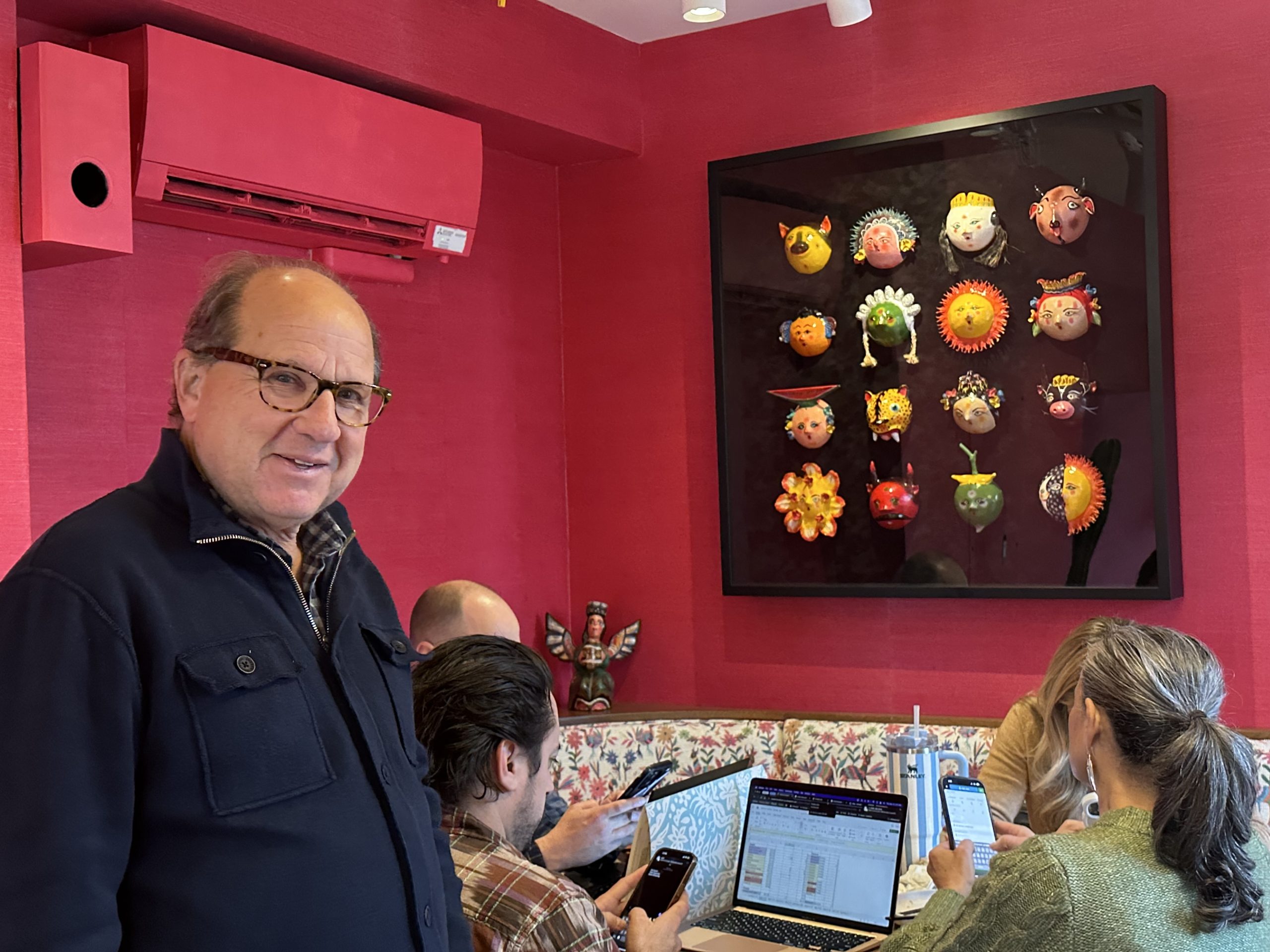
Judy oversaw the design. Coconut masks the couple collected in Mexico appeared on a wall, alongside a broader program of art and decorative detail. Here was a restaurant owner’s travel collection with an unusually public afterlife. Most souvenirs must make do with a shelf.
“I believe that all great restaurants start with great design,” Silverstein said. The National Club put that conviction into a room looking toward New Bedford’s waterfront. Its location, close to the island ferries and at the edge of downtown, made the renovation part of the city’s public face as well as a private enterprise.
Still looking toward the water
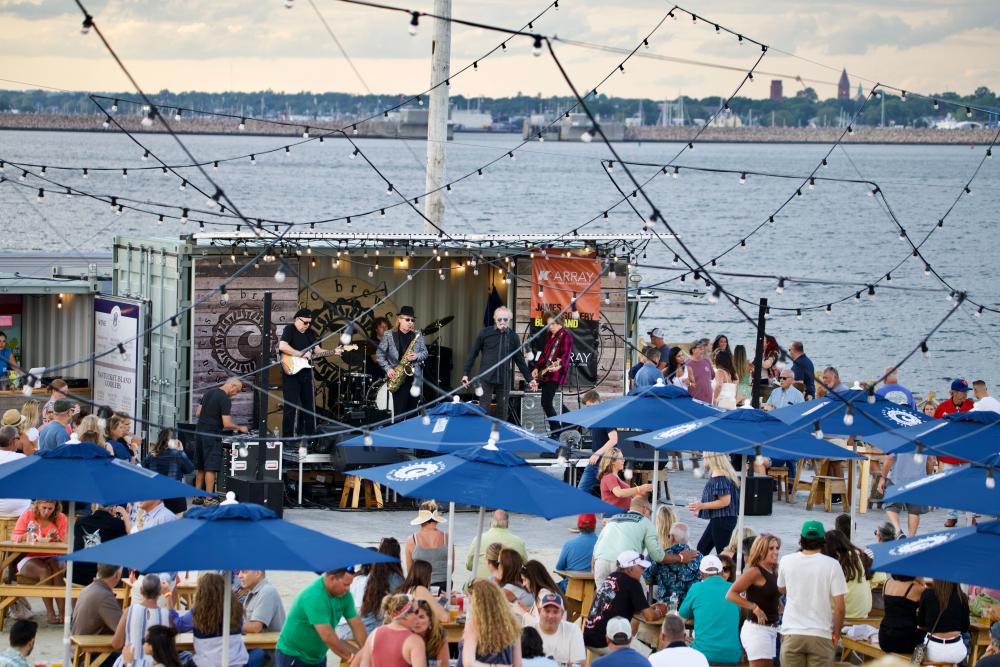
Silverstein’s ambitions also extend to State Pier. A public development proposal described Homeport, a boat-to-table restaurant connecting diners with seafood landed locally. The proposal made the relationship between the working waterfront and the dinner table explicit. A port city has something to serve that cannot be manufactured by decorating a wall.
In October 2026, another prospective project appeared on Nantucket. Servedwell Straight Wharf, an entity linked to Silverstein, sought restaurant and entertainment licenses for One Harbor at the former Tavern and Gazebo location. Servedwell already operated the Brotherhood of Thieves on the island. The application marked another possible chapter, rather than an opening to put in the diary.
Across these projects, the through line is the gathering place: a Dartmouth dining room, a village tavern, a waterfront cantina. They have different menus and histories. Each depends on persuading people to spend time together in a particular room. For someone who once left the family clothing business, Silverstein has remained remarkably close to its central transaction: welcoming a customer back.