Omer Horev had the listing. Jennifer had the buyer. Their agreement was simple: finish the property deal, then go on a date. Real estate supplied the introduction; breakfast helped make the case. Jennifer remembers the elaborate, colorful breakfasts he cooked for her, and a level of enthusiasm that suggested his side project deserved considerably more of his attention.
They met in 2014. Pura Vida, the café Omer had opened in Miami Beach in 2012, already existed. What followed was a change in commitment. Jennifer encouraged him to concentrate on the business he cared about, and eventually left her own real estate career to join him. The couple who had negotiated a sale began working on a rather longer proposition: somewhere people would want to return tomorrow.
That distinction runs through Horev’s story. A restaurant can be an occasion. His ambition has been to become part of a routine. The coffee between appointments. A table for a conversation. A familiar place in a neighborhood where much else may be changing.
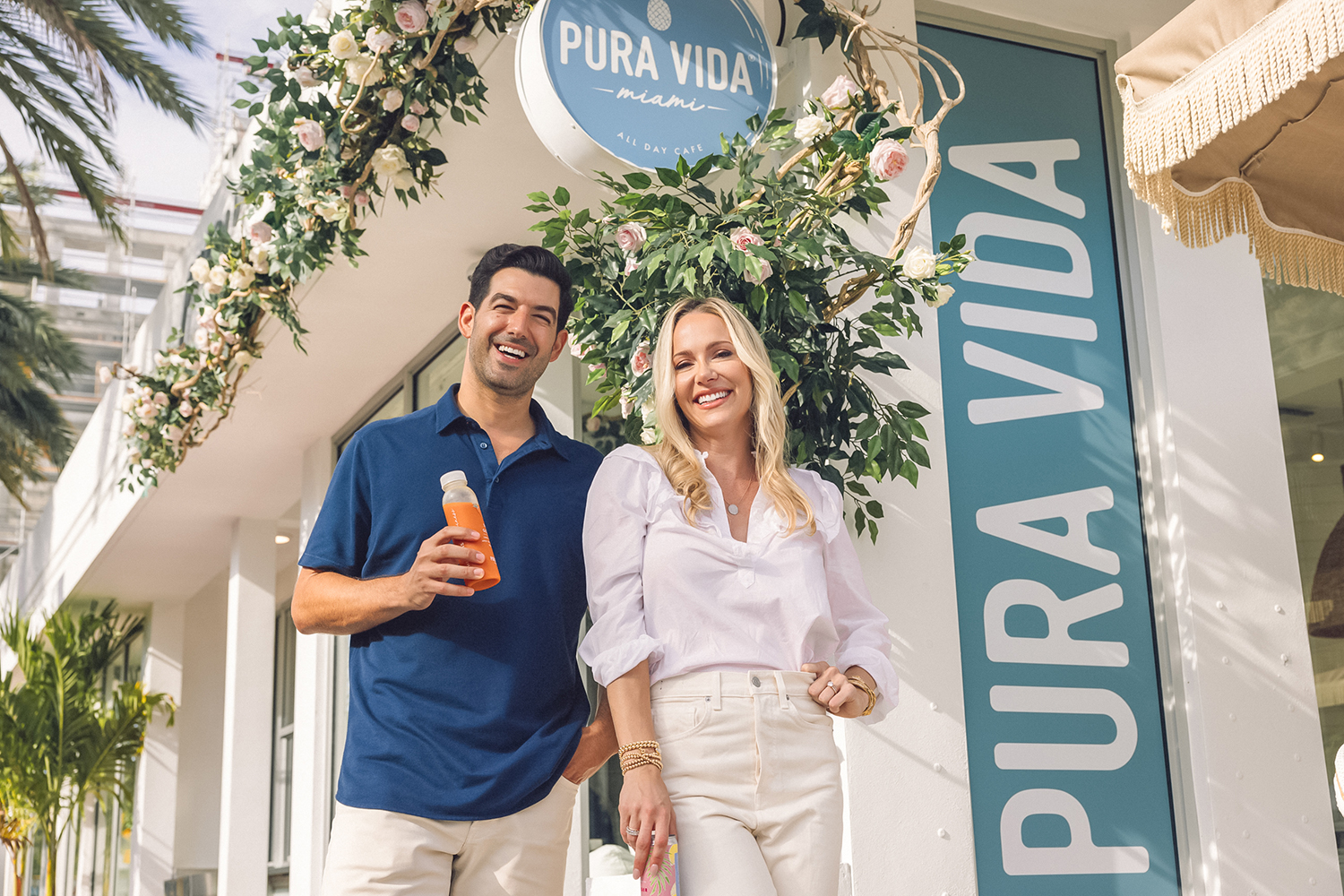
Before the first counter, a family table
Horev was born and raised in Israel. His recollections of childhood return to his mother’s and grandmother’s kitchens, Friday markets and the preparations for Shabbat dinner. Vegetables were central to those meals. Food arrived with the movement and noise of family life around it.
He has also described the similarities between Tel Aviv and Miami: the coast, the mix of languages, the different culinary traditions living beside one another. In Miami, as in his childhood, he enjoyed being near the ocean with family and friends. The change of country offered a different setting for familiar pleasures.
His early working life in South Florida was in property. After the financial crisis, he assembled investors to buy distressed real estate. He worked across residential homes and multifamily buildings. That background gave him practice thinking about locations and the people around them, experience he would carry into restaurant expansion.
In 2012, however, the undertaking was smaller and more personal. He wanted a neighborhood café he could use himself. South of Fifth, at the southern end of Miami Beach, became the starting point. Coffee was an everyday need. A place worth sitting in was another.
Two real estate careers, one café
The founders’ account of the early years is full of ordinary work. They revised the menu, reworked the brand and spent their time in the South Beach store listening to customers. All-day breakfast, bowls, salads and sweet things expanded the reasons to come in. A café that could serve several parts of the day had several chances to become familiar.
Jennifer dates her departure from real estate to 2015. She became the chief brand officer, shaping the visual world of the business. Omer took responsibility for property, operations, finances and expansion. They have described the arrangement as an effort to respect each other’s strengths while supporting one another.
It is an unusually visible division of labor. Customers can see the interiors Jennifer oversees; Omer’s work is often buried in a lease, a staffing decision or the calculations behind the next address. Both sides meet at the table. A beautiful room still needs the order to arrive.
Their marriage in 2018 added another kind of partnership to the existing one. Opening the Design District café displaced their honeymoon. “I owe her a honeymoon,” he joked in 2021. Hospitality does have a way of arranging a splendid time for everyone except the hosts.
“I owe her a honeymoon.”
Omer Horev, 2021
On opening a café instead of taking a honeymoon
A room with a reason to return
Pura Vida’s visual vocabulary is easy to recognize: coastal colors, greenery, light interiors, places to linger. Jennifer has described customers who value consistency and attentive service, whether they visit in Florida or New York. The setting gives those expectations a physical form before anyone picks up a fork.
Omer talks about cafés as places to work, meet friends and gather with family. In his account, hospitality extends beyond the transaction at the counter. Asked in 2021 about his proudest accomplishment, he pointed to creating jobs, and to employees progressing far enough to buy cars or homes. Those were the milestones he chose to describe.
The distinction matters in understanding his ambition. More cafés mean more addresses, but they also mean more teams who have to deliver the same welcome. The everyday nature of the business makes that task unforgiving. A regular customer has a very good memory for what happened yesterday.
The little house and the other restaurant
Horev’s interests also produced Abbalé, founded with chef Samuel Gorenstein. The restaurant opened in South Beach in 2021. Its name comes from Abba, Hebrew for father, and its cooking draws on Mediterranean and Middle Eastern traditions. The idea of home appears again, this time in a restaurant made for sharing dishes around a table.
Gorenstein brings a different history: he was born in Colombia, has Syrian heritage and built his own Miami restaurant career. Their partnership joins a restaurateur concerned with spaces and service to a chef with his own culinary point of view. Horev Hospitality now encompasses Pura Vida Miami, Abbalé and Gelato by Pura Vida Miami.
A small house in South of Fifth helped set Abbalé in motion. Omer and Jennifer had walked past it and imagined doing something there. When it became available, the opportunity connected a particular building with a family’s food memories. For a former property professional, the ingredients included an address.
When the name travels
Expansion also brought a public setback. In October 2023, pro-Israel posts on Horev’s Instagram prompted boycott calls against a Pura Vida café in Qatar. The local partner ended the relationship, and Horev announced that Pura Vida Doha would cease operations. In his statement, he acknowledged that his comments had led to controversy. The episode connected his personal public voice to a business operating far from Miami.
The subsequent American expansion moved into new territory. Pura Vida opened in New York’s NoMad neighborhood in July 2024. The café carried its Miami design into Manhattan, including outdoor seating. Further New York addresses followed. The question was becoming whether an atmosphere associated with one coastal city could fit into another city’s daily habits.
By September 2026, an additional Upper West Side location was being reported as forthcoming. Existing New York outposts included NoMad, NoLita, Bryant Park, the Upper East Side and Flatiron. Each neighborhood gave the company another opportunity to find regulars, and another set of expectations to learn.
- 2012First café
Miami Beach - 2024New York
NoMad opens - 2025TSG joins
Minority investor - 202650th café
Short Hills, NJ
Fifty front doors, and new people behind them
In November 2025, Pura Vida accepted a minority growth investment from TSG Consumer. Omer and Jennifer retained majority ownership and their roles as chief executive and chief brand officer. The transaction added a financial partner to a business then operating more than 40 locations across Florida, New York City and Southern California.
The deal’s financial terms were undisclosed. Its announced purpose was national expansion. For Horev, the arrangement meant pursuing a larger footprint while continuing to lead the company with Jennifer. Ownership and operating responsibility remained connected.
California supplied another address in January 2026, when the company opened its third location in the state at South Coast Plaza in Costa Mesa. At 2,172 square feet, with a patio, it put the familiar coastal interior inside a shopping destination. Warm wood, natural textures and greenery made the trip west.
Then, on April 16, 2026, the company announced its 50th café at The Mall at Short Hills in New Jersey. It was the brand’s first New Jersey location and brought it into a fifth state. The site occupied more than 3,500 square feet. A café conceived for one Miami Beach neighborhood had reached a milestone in a suburban mall.
That move puts an interesting demand on the founder. The original location could develop through direct conversation with customers. At 50, the conversations happen in many rooms at once. The next stage requires people who can make good decisions when the founders are somewhere else.
Company-owned cafés targeted by the end of 2027.
A September 2026 goal, not a completed count.Learning to host from farther away
In June 2026, Horev and Jennifer added three executives in newly created roles. Andrew McCaughan, a Shake Shack veteran, became chief development officer. Chad Brauze, formerly head of culinary at Sweetgreen, became chief culinary officer. Bruno Cardinali, previously global chief marketing officer at Oakberry, joined as chief marketing officer.
The appointments covered property development, the menu and how the company reaches customers. Brauze’s previous work also included Chipotle and Burger King; McCaughan brought more than 16 years at Shake Shack. The founders were bringing in people who had already worked through the complications of operating across many locations.
September brought Donnie Upshaw as chief people and culture officer after eight years at Wingstop. His remit included developing leaders, attracting talent and strengthening retention. The announcement placed people management alongside the development and culinary work already being expanded. More stores require more people able to run them.
Later that month, the reported count stood at 57 locations. The Horevs expected 65 by the end of 2026 and 100 by the end of 2027, all company owned. Those were ambitions, rather than completed openings. “Growth is very seductive,” Omer said. It is a revealing admission from someone whose calendar presumably contains a considerable number of proposed leases.
The distance between the original café and the next opening is now measured in more than miles. There are new colleagues, an investor and layers of responsibility between Horev and the customer’s table. Yet the early work offers a practical standard to return to: listen to the people using the place. Give them a reason to come back. Then be ready when they do.
Keep the conversation going
The restaurants, the people and a few longer conversations.