Tim McEnery went to a winery and found a business idea in the part of the evening that came afterward. He and his girlfriend, who would become his wife, were visiting Lynfred Winery in Roselle, Illinois. He liked the wine. He liked the place. Dinner, however, meant going somewhere else. Why couldn’t the winery have a restaurant?
It was an uncomplicated question with a rather complicated answer. Wine needed making, food needed cooking, a building needed financing, and someone had to persuade people that these activities belonged together in suburban Illinois. McEnery eventually put them under one roof. In October 2005, he opened the first Cooper’s Hawk in Orland Park, the community where he had grown up.
The intriguing part is what happened to that original question. Over the next two decades, McEnery kept finding reasons to extend the visit: a tasting, a monthly bottle, a dinner, a trip, another restaurant. His career became an extended inquiry into how people choose a place, and what makes them come back.
The restaurant that wasn’t there
Hospitality had occupied him long before wine did. At 11, he washed dishes at Green Garden Country Club in Chicago’s southern suburbs. He got rides with a neighbor who was a golf professional. During high school, he worked on banquets and catering. The education involved plates before it involved a degree.
He later studied Restaurant and Hotel Management at Purdue University and worked at Aramark. At Lynfred, he could study the practical relationship between production, retail and guests. An attractive tasting room was one thing. Knowing what had to happen behind it was another. He was preparing to become responsible for both.
The preparation was lengthy and decidedly unglamorous. McEnery described getting up before work to develop his business plan, then spending evenings on investor calls and details. A restaurant idea is pleasant company until it starts asking for your mornings. He kept making room for it.
Lynfred also gave him people to learn from. Founder Fred Koehler and winemaker Andres Basso became important guides. Years later, that early relationship returned in a bottle: the two companies collaborated on Origins in 2018. His apprenticeship had become part of the menu of experiences he could offer his own customers.
First, make the wine
McEnery began as the original restaurant’s sole winemaker. The opening wine catalog had 11 varietals. Working with executive chef Jose Esparza, he also helped assemble a 64-item menu. Mexican Drunken Shrimp, Pistachio-Crusted Grouper and Jambalaya were among the dishes that stayed with the business. There was plenty to learn on either side of the kitchen door.
The geography was part of the appeal. The company could source grapes from wine-growing regions and introduce guests to the finished wines in Illinois. Customers did not need to organize a California holiday to spend an afternoon tasting before dinner. In that sense, McEnery was rearranging access to an experience as much as designing a restaurant. The tasting room, bar, dining room and shop each offered a different way to participate. A guest could arrive curious, ask a question and choose what to try. The building gave that curiosity somewhere to go next, with dinner close enough to settle the question that had started everything. For a restaurant operator, that arrangement also made the spaces depend on one another. The meal had to justify staying, and the tasting had to leave a guest interested enough to consider another glass.
He has been willing to describe how basic that learning could be. Early equipment arrived before he knew how to operate its pumps. On another occasion, fixing winemaking machinery required fishing waders. An investor visited while he was in the middle of the job and encouraged him to consider how far the concept might go.
The picture is useful: a future chain executive dressed for a troublesome piece of machinery. Expansion required getting beyond that arrangement. McEnery eventually handed winemaking responsibilities to specialists. A founder who does everything personally places a fairly firm limit on the number of things the company can do.
A wine club with a dining room attached
Cooper’s Hawk gave the winery visit a recurring appointment. Members received a monthly wine selection. Picking it up could turn into a tasting, a glass at the bar or dinner. The bottle supplied a reason to arrive; the rest of the building supplied reasons to linger.
Consider how much of an ordinary restaurant visit depends on a fresh decision. Someone suggests going out. Someone proposes a place. Everyone negotiates. A monthly pickup puts a familiar destination back into consideration before that conversation begins. McEnery had connected the errand to the evening.
By 2019, the wine club had about 400,000 members. Membership also supported dinners and travel experiences, giving customers ways to spend time with the brand beyond an individual restaurant reservation. A wine club could become a group with somewhere to go together.
That same year, Ares Management invested in Cooper’s Hawk. McEnery remained CEO. He spoke about extending travel services and the trust members placed in the company. The opportunity carried a responsibility: each new experience would borrow from a relationship built at earlier tables.
“Doing it well and keeping it interesting is the goal.”Tim McEnery, 2015
His phrasing makes a useful companion to the growth figures. Doing something well asks for repetition. Keeping it interesting asks for change. A company selling a monthly discovery has to manage both without making the familiar place feel unfamiliar.
Learning who should hold the tools
There are more people in this story than its founder. Esparza helped shape the original food. Winemakers developed the portfolio. Servers had to translate the wine into a conversation guests could enjoy. The company’s food menus use bin numbers to suggest pairings, offering a practical starting point for a decision that can otherwise feel like an examination.
McEnery has emphasized staff learning as continuing work. In an early interview, he described regular employee focus groups at restaurants to discuss what was working and what might change. Listening to the dining room meant listening to the people spending their shifts in it.
Collaboration also became visible in the wine itself. Jean-Charles Boisset, a friend and wine producer, worked with McEnery on several releases. Their Vin de Deux appeared in the June 2021 wine club newsletter. Members received a product whose story included the relationship behind it.
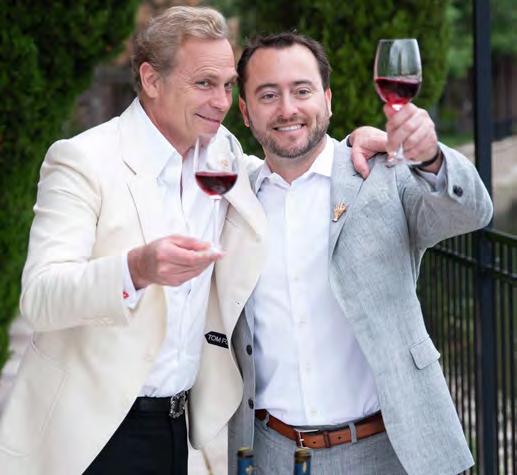
As the operation grew, McEnery described investing in talent, technology, digital capabilities and data warehousing. These are less picturesque subjects than wine-country dinners. They are also part of delivering one reliably. The machinery of hospitality extends well beyond the pumps.
The people on the other side of the table
In April 2024, McEnery told members about his Aunt Maggie. She had been an early window into hospitality, an influence from his childhood into his early twenties. Over the years, they had drifted out of regular contact. He and his cousin eventually traveled to Arizona to see her.
The visit gave him a small, specific idea. Eligible members would receive complimentary glasses of sparkling wine during an April promotion, with an invitation to reconnect with someone. A family reunion had become an occasion customers could arrange for themselves.
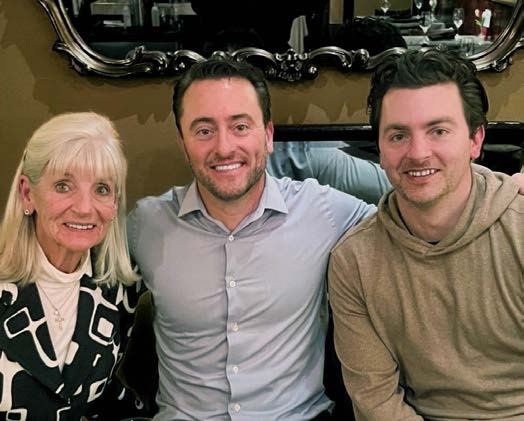
It helps explain what he means when he talks about connection. The word becomes easier to understand when it has a person attached to it. Someone has been meaning to call. Someone has been meaning to visit. A restaurant can provide the table once an invitation finally gets sent.
Rome, then another room
The founder’s habit of paying attention on other people’s premises continued. On a trip to Rome with his wife, McEnery visited Piccolo Buco near the Trevi Fountain. Its Neapolitan-style pizza, with its high, pillowy rim, caught his attention. He saw an experience Cooper’s Hawk members might enjoy.
In 2022, he partnered with Luca Issa to bring Piccolo Buco to Chicagoland. The wine-club relationship could travel into a different restaurant format, with members able to use benefits there. By November 2025, the concept had reached Tampa, carrying the name of a small Roman pizzeria into another American market.
The resemblance to the original winery visit is hard to miss. McEnery enjoyed something and began considering how to make it available closer to home. This time, he had an existing membership and a restaurant organization behind him. The first audience no longer had to be assembled from scratch.
A larger table, with familiar questions
Another partnership arrived in December 2025. Curated Icons began with a 2023 Cabernet Sauvignon made with Cakebread Cellars, connecting Cooper’s Hawk’s twentieth anniversary to Cakebread’s fiftieth harvest. McEnery described it as a chance to work with wineries that had inspired him. A second collaboration, a Carneros Chardonnay, featured in the October 2026 newsletter.
Expansion also shows up in more ordinary occasions. In August 2026, Cooper’s Hawk introduced a rotating Monday-through-Thursday dinner menu at Illinois locations except Springfield, with different prices for members and other guests. The company reported 76 locations and 888,000 wine club members in that announcement. A large membership still needs something appealing to do on a Tuesday.
at the start in 2005
in August 2026
in August 2026
The numbers show the distance traveled. The newer projects show a continuing interest in what might bring people through the door: a familiar dinner, a Roman pizza, a wine made with someone he admires. McEnery’s first question concerned where to eat after a tasting. Two decades later, he is still working on the evening that follows.