The interesting number in American Litho’s pressroom is a maintenance bill. In a case study published by equipment supplier Kao Collins, digital imaging manager Mickey Baraban described replacing aging inline print systems. The payoff: approximately $1 million saved in refurbishment costs during the first year. Before a customer opened an envelope, something consequential had already happened.
- American Litho connects customer data, personalized printing and postal logistics.
- Its customers include marketers in finance, insurance, retail and healthcare.
- The useful lesson: improve the entire mailing process, then test what customers actually answer.
That is a good way into this Illinois company. Printing is visible. Its economics are harder to see. A campaign can lose money through equipment upkeep, wasted paper, awkward formats or expensive postal preparation. American Litho sells help with that connected set of problems. The finished letter is simply the part that leaves the building.
01 / The trouble with selling ink
Mike Fontana and Chris Joyaux founded American Litho in 1994, according to a 2019 Printing Impressions profile. By 2011, commercial printing was becoming increasingly commoditized. The founders expanded toward direct mail and acquired Berlin Industries, enlarging their production footprint. Personalized campaigns offered more decisions to solve than putting the same image on every sheet.
That shift explains the business today: a privately held supplier of printing, marketing data services, lettershop work, packaging and fulfillment. Customers buy coordinated projects through estimates and consultations. A bank might need personalized acquisition mail; an insurer, targeted offers; a retailer, catalogs and packaging. The company sits where marketing strategy meets industrial production.
02 / Fix the expensive part you already own
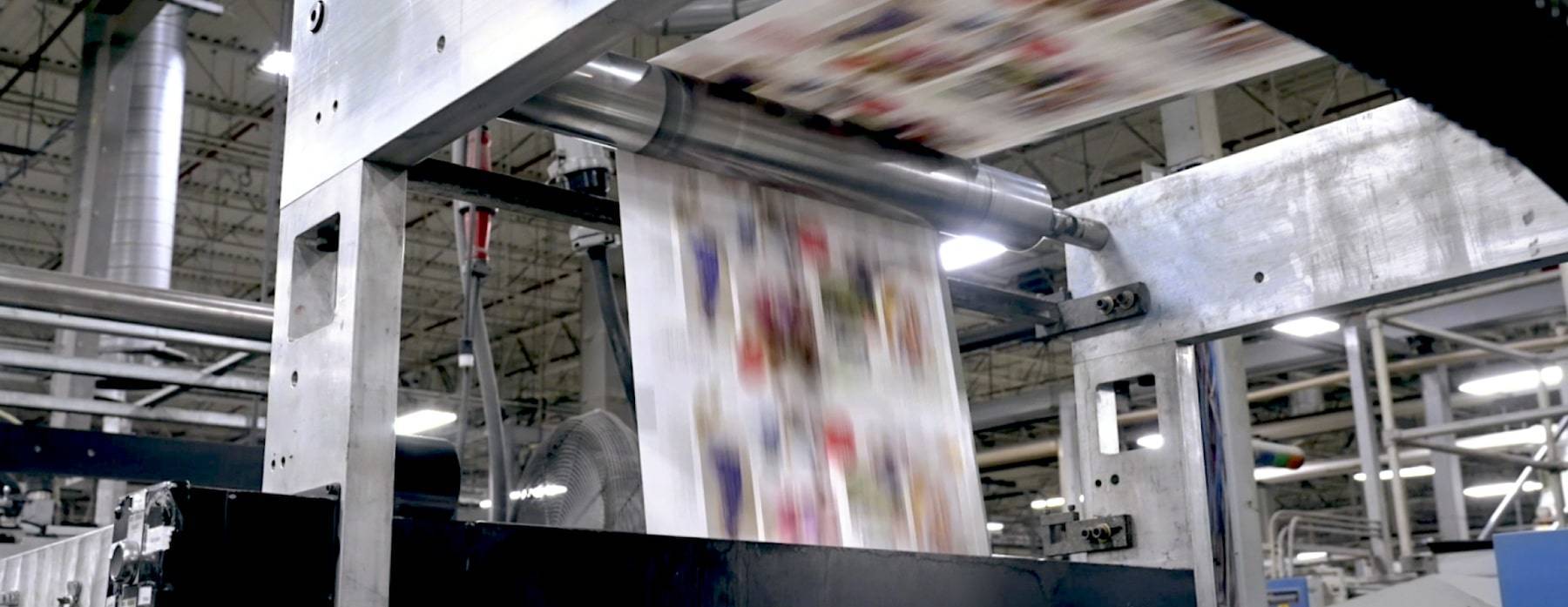
The Kao Collins account supplies a specific example. American Litho wanted better productivity from an existing production line. Its aging Prosper systems brought refurbishment expense, downtime and waste. After evaluating alternatives, it fitted modular X-BAR printing equipment to existing analog presses. The appeal was practical: compatibility with equipment already on the floor.
The supplier reports a 40-50% reduction in ink consumption on that setup, alongside the avoided refurbishment costs. Wider print bars also allowed full-width letters without stitching together narrower printed areas. These are operating results from one installation. They tell a buyer what to investigate, rather than what every installation will save.
“Within the first year, we saved approximately $1 million in refurbishment costs.”
Mickey Baraban · Digital Imaging Manager
In the Kao Collins case study
The purchase price is a separate question. Those savings do not reveal the equipment bill, financing costs or net return. For a buyer, the sensible calculation compares maintenance, ink, waste and usable capacity against the full cost of the change. American Litho’s example makes the maintenance line worth another look.
Indexed illustration of Kao Collins’ reported 40-50% reduction. Previous use = 100.
03 / The letter has to leave the factory
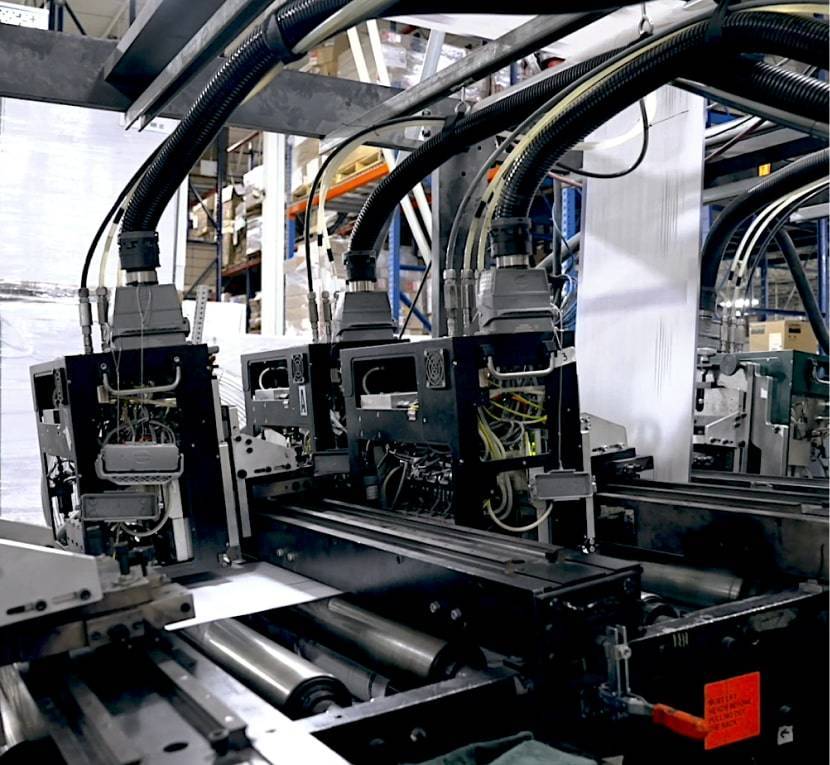
A fast press needs a compatible downstream operation. MBO’s account describes American Litho pairing an HP PageWide T240 HD with high-speed finishing equipment. Cutting, folding and assembling the output belong in the same capacity conversation as printing it. Otherwise, buying speed upstream can simply move the queue.
Postal preparation adds another layer. American Litho has a USPS Detached Mail Unit on its premises, allowing verification and acceptance on site. Its services include address cleansing, presorting, co-mailing, commingling and co-palletization. These terms sound like the small print in a shipping agreement. For a campaign budget, they deserve a much larger typeface.
Format design connects those worlds. American Litho’s team builds full-color comps, supplies placement templates and coordinates production specifications. A fold affects appearance, but it also affects handling. The company’s February 2016 catalog case reported $3.3 million in annual savings and halved cycle times for an unnamed Fortune 100 customer after examining manufacturing and shipping together.
04 / Start with the person receiving it
Amerlytics, the company’s proprietary analytics suite, handles the earlier questions: whom to contact, which offer to use and what action should trigger a message. Its advertised capabilities include predictive modeling, variable names and images, addressable geofencing, web-to-print programs and retargeting. Mail becomes one element of a campaign that can also reach screens.
There is a responsibility attached to that work. On August 13, 2026, American Litho announced completion of its annual SOC 2 Type 2 audit, performed by KirkpatrickPrice for the period ending March 31, 2026. For organizations handing over customer information, the controls around production matter alongside the quality of the printed result.
05 / Teach the buyer where the money goes
The company’s most appealing service may be its published American Litho University program. The two-day client seminar brings together print specialists and outside experts, with production-floor visits and sessions on paper, formats, data and postal logistics. It is advertised as free for serious clients. Teaching buyers the mechanics makes the next conversation more precise.
That collaborative approach extends outside the plant. American Litho’s partnership with Fidelity Print Communications includes shared equipment, facilities and best practices. Internally, the company promises one customer service representative and a consistent production team across a client’s projects. Its operating argument is continuity: fewer explanations repeated at each handoff, with more knowledge retained for the next job.
A marketer can copy the method without copying the factory. Define the audience and desired response. Review the format with production and postal specialists before finalizing the artwork. Then run a measurable test. American Litho offers short-run digital production to compare designs, copy, prices and offers before a larger mailing.
The limits follow from the same logic. An irrelevant offer remains irrelevant when beautifully personalized. A fast press cannot repair weak customer data, and an unmeasured response cannot settle whether a campaign paid. American Litho is useful where those moving parts need coordination. Its most transferable idea is to look at every cost and decision between the customer record and the mailbox.