Consider the conference badge. It promises access to a meeting, but it also predicts a remarkably busy wallet: a bed, breakfast, coffee between sessions, a banquet, perhaps something to do after the speeches. Ryman Hospitality Properties has built its hotel business around that sequence. The room brings people in. The gathering gives them reasons to spend the rest of the day there.
- Own resorts that can host the whole event.
- Let Marriott manage the hotel operation.
- Give guests more reasons to stay, eat and be entertained.
The result is an unusual company to encounter through a booking website. Guests see Gaylord or JW Marriott. Music fans see the Grand Ole Opry, Ryman Auditorium, Ole Red or Category 10. Behind those names sits a Nashville real estate investment trust making a fairly specific wager: the occasion surrounding a purchase can be as valuable as the purchase itself.
A meeting is a coordination problem
For a meeting planner, a hotel is partly a logistics system. Hundreds of people need to arrive, find their rooms, reach the correct session and eat on schedule. Spread those tasks across a city and every transfer becomes another opportunity for delay. Put bedrooms, ballrooms, restaurants and gathering places together and much of that friction disappears.
Ryman’s five Gaylord resorts serve this market in the Nashville, Orlando, Dallas, Washington and Denver areas. Its expertise lies in owning and improving properties designed for large groups. Corporate meetings and association conventions supply delegates; families and other leisure guests supply another reason to use the pools, restaurants and attractions. The same buildings can serve different occasions.
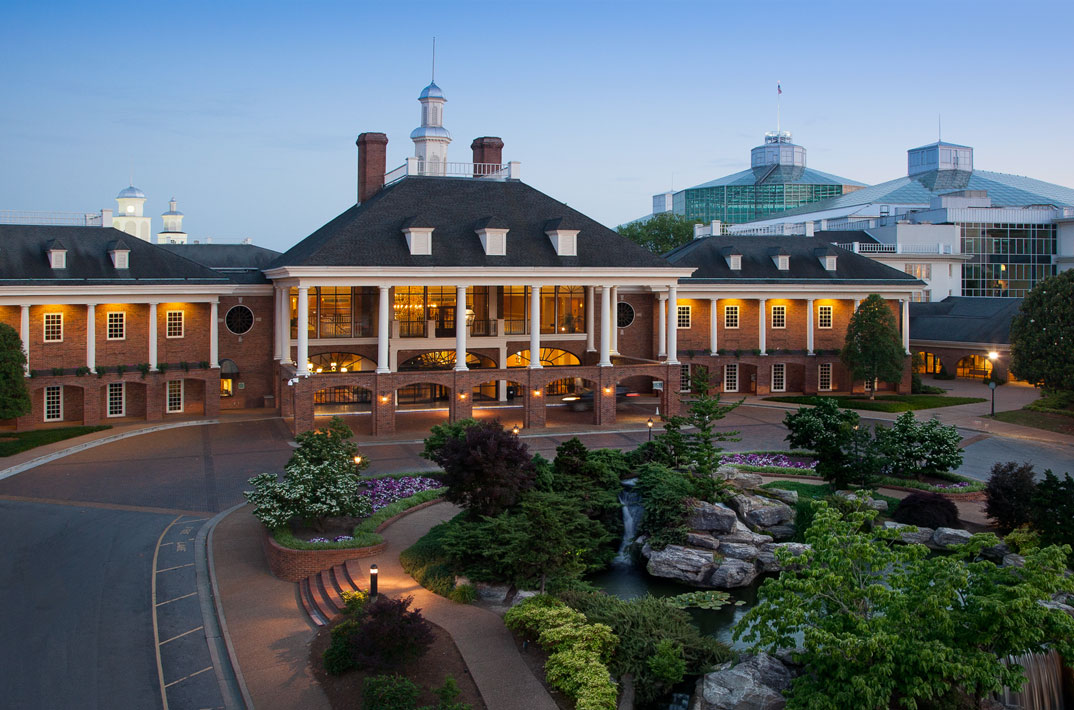
That makes the relevant competitor bigger than another hotel room. A downtown convention center with surrounding hotels can do the job. So can another substantial resort. Ryman’s proposition is the convenience of keeping the event together, with enough amenities to make staying on the property appealing. For a small meeting or a traveler intent on exploring a city, that scale may offer less value.
The number beyond the room key
Hotel shorthand can hide this business. Revenue per available room, or RevPAR, measures room revenue against available room inventory. Total RevPAR adds other hotel revenue. At Ryman’s same-store hospitality properties in the second quarter of 2026, the first measure was $201.67. The second was $524.05. Both use available rooms as the denominator; neither is an individual guest’s bill.
Total includes rooms and other hotel revenue. Measures overlap; do not add them.
The distance between those numbers is the story. Catering, beverages and other services make the property more than sleeping inventory. A planner buys the ability to assemble people; the owner earns from several parts of that assembly. The useful idea for another business is to map the customer’s whole occasion, then identify adjacent needs it can credibly serve.
For an organizer comparing venues, the practical questions follow naturally: can the property house the group, feed it at the right time and accommodate its sessions? Then comes the total event budget. A room discount alone says little about the cost of assembling everyone. For the owner, the corresponding question is how much of that budget the property can earn.
The $210 million handoff
Ryman’s present structure came from a decision to divide ownership from operation. In October 2012, Marriott paid $210 million for the Gaylord brand and hotel management company. The property owner retained the hotels, adopted the Ryman name and began operating as a REIT in January 2013. Marriott took responsibility for day-to-day hotel management.
Management’s contemporary presentation explains the attraction: reduce overhead, obtain operating savings and reach customers through Marriott’s distribution and loyalty network. It anticipated about $55 million in one-time conversion, transaction and severance expenses. Those were forecasts, rather than a final invoice. The choice was consequential: managing the buildings itself was no longer essential to owning their economics.
It was also contested. Two major shareholders opposed the transaction before shareholders approved it. There is no need to invent a sudden conversion in anyone’s thinking. The public case was practical: a small hotel portfolio carried corporate costs, while a larger operator offered reach and operating infrastructure.
The stage is a different kind of property
The music business complicates the picture in a useful way. Through Opry Entertainment Group, Ryman controls venues and brands that give visitors something specific to travel for. The Grand Ole Opry and Ryman Auditorium sell performances and tours. Ole Red connects dining and live music with Blake Shelton; Category 10 draws on Luke Combs.

In June 2022, Atairos and NBCUniversal invested $296 million for a combined 30% of OEG. Ryman retained control. The entertainment operations sit within a taxable REIT subsidiary, allowing this business to coexist with the lodging REIT. By August 2026, Ryman was evaluating greater OEG independence and talking with potential investors; that update announced no completed agreement.
Big occasions require big checks
Expanding the resort approach is expensive. Ryman paid approximately $865 million for JW Marriott Desert Ridge in Phoenix in June 2025. In September 2026, it paid approximately $1.38 billion for Grande Lakes Orlando, whose JW Marriott and Ritz-Carlton together contain 1,592 rooms. The Orlando purchase was financed with stock-offering proceeds, senior notes and cash.
“This property expands our group customer rotation opportunities”Mark Fioravanti · September 2026
The logic is that a group can return to the owner’s portfolio while changing destinations. But the buildings need capital long before the next banquet begins. Ryman’s 2025 consolidated revenue reached approximately $2.6 billion; its scale does not remove financing costs, renovation disruption or the risk of buying more capacity than customers need.
The distinction matters when comparing Ryman with other lodging REITs. Its concentration in large group resorts gives an investor a particular exposure to conventions and event spending. A broader hotel portfolio may serve a different mix of trips. Choosing between them requires a view on the demand underneath the buildings.
First, the calendar empties
March 2020 exposed the dependency beneath the model. Cancellations increased, then operations at most assets were temporarily suspended. The gathering disappeared before the property did. Ryman worked to rebook canceled events and secured credit-covenant relief. Rooms, restaurants and stages offered different purchases, yet all depended on people being able to assemble.
That is the condition attached to the lesson. Serving adjacent needs works when customers have a reason to congregate and enough demand supports the fixed costs. Without those conditions, extra amenities become extra obligations. Ryman’s interesting achievement is making the entire gathering a business. Its continuing task is paying for the place before everyone arrives.
Follow the gathering
Explore the resort portfolio, see Opry shows and tours, or browse the Ryman calendar.