The recruitment pitch came with an unusually agreeable expense category: beer money. Sonny Sehgal was at Imperial College London when he recruited university friends to help deliver a software project. In his telling, the recruitment pitch was brisk. He had found some work. They could help build it. The compensation would not trouble a banker’s calculator.
The banker, however, had already entered the story. Sehgal recalls spotting a project at Chase Manhattan, working late on a possible solution, then calling the bank on a Monday. A coffee became an eight-hour meeting. The meeting became a commission. In 1984, a student had discovered that making something useful could get him through a door his résumé might have struggled to open.
Four decades later, he is still running the business that grew from those beginnings. Transputec, built with his brother Rickie, works across managed IT, cybersecurity and AI. Its name preserves an early enthusiasm for Inmos transputers. Technology has moved on considerably. The name has sensibly declined to update its wardrobe.
Build something useful. Find people who can deliver it. Keep learning when the tools change.
The syllabus was only the beginning
Sehgal studied computer science at Imperial and has described the course as the place where his coding skills accelerated and his sense of possibility expanded. He says Transputec took shape in his first university year. A childhood liking for gadgets had found a commercial outlet.
There is a revealing distinction between liking a machine and wanting to put it to work. Sehgal’s account of his beginnings consistently returns to applications: a problem inside an organisation, a piece of software, a chance to make something happen. The bank project gave that inclination a customer. University supplied a setting in which he could gather capable people around it.
The resulting career has required repeated changes of technical vocabulary. A person can become very attached to the tools that first made him useful. Sehgal’s business has had to accommodate customers whose needs now include cloud operations and security as well as software development. The original enthusiasm has needed a succession of new subjects.
A brother at the other end of the table
Rickie Sehgal has been there throughout. Today he is Transputec’s chairman, while Sonny is its CEO. In a 2025 interview, Sonny described their responsibilities with the affectionate lack of ceremony available to siblings: Rickie concentrated more on commercial matters and compliance; Sonny went to customers, developed ideas and worked on bringing them into being.
A decade earlier, Rickie had made the partnership’s meaning unusually explicit. Receiving an IT and Technology award in 2015, he said the credit should be shared equally with Sonny. He recalled their student beginnings and the pleasure of still working and inventing together roughly thirty years later.
It is a small moment, but an instructive one. An award ceremony normally directs attention towards a single person. Rickie used his turn to point sideways. Sonny’s working life makes more sense with that second chair in view: a continuing relationship through changes in products, customers and the size of the operation.
Impatience needs good company
Sehgal is willing to make fun of his own suitability for routine management. In his retrospective on the business, he describes impatience and a preference for innovation over administrative work. His solution has been to identify people whose management abilities exceed his own and give them responsibility.
“Stay curious. Stay impatient. Stay a student.”
Sonny Sehgal, December 2025
That admission gives some texture to the usual founder virtues. Curiosity is easy to put in a biography. Impatience is more awkward: excellent company when a project needs starting, less entertaining when someone must maintain the schedule. Recognising the difference creates room for colleagues whose strengths lie elsewhere.
He has also described a direct, accessible approach to staff. “I lead by example,” he said in 2020, explaining that he kept an open door, set clear expectations and wanted people to develop their skills. He credited his parents with giving him the education, guidance and confidence to take risks.
His advice to someone starting out was conspicuously practical. Establish a direction. Research it. Plan the finances and the people required. Consider the worst case. The enthusiasm for moving quickly came with an insistence on knowing what the business could withstand. Even the impatient founder wanted the arithmetic done.
A trophy, then back to work
In 2021, Sehgal received MSDUK’s Entrepreneur of the Year award, sponsored by EY. His response thanked the organisers, judges and his team, with whom he shared the recognition. The award put his name in the foreground; his acknowledgment widened the frame again.
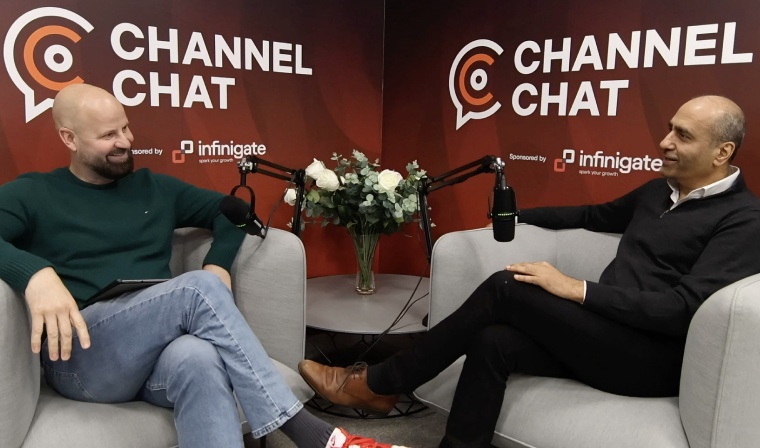
By January 2025, he was discussing the longer journey with Marc Sumner on Channel Chat. The conversation returned to the family business, difficult periods and the opportunities emerging in AI. His stated ambition was to extend Transputec’s reach while developing services around the circumstances of individual customers. The early appetite for building had acquired a much longer list of obligations.
The unglamorous detail that earns its keep
Read Sehgal on cloud computing and an unexpected character appears: the unnecessary bill. In February 2026, he wrote about businesses paying for oversized resources, systems running longer than required and environments nobody could see clearly enough to manage. His concern was the distance between buying cloud capacity and getting value from it.
The remedies he discussed were workmanlike: match resources to workloads, establish ownership, monitor usage and make spending visible. They suit a founder whose preferred starting point is a customer’s problem. A cloud environment may be technically impressive and still contain an expensive collection of things nobody remembers ordering.
In a separate essay that January, he argued for treating more IT capabilities as services. Specialist teams could look after infrastructure, databases and security while a customer’s own people concentrated on business decisions. It is a commercial argument from someone who sells those services, and a continuation of his interest in assigning work to the people equipped to do it.
Now the software can do something
AI gives Sehgal a fresh version of that allocation problem. Before Kuhnic’s launch, he was already talking about voice-based systems for inbound enquiries, including work aimed at housing associations and call centres. His emphasis was on turning an unfamiliar technology into something a customer could use with confidence.
Transputec launched Kuhnic as a dedicated AI division in May 2025. Sehgal described a scope extending beyond standard office assistants: connecting company information and existing systems so an agent could help someone complete a task. His examples included answering a caller, sending documentation or making a booking.
The progression matters. An answer can be read, considered and ignored. A booking changes a diary. An email leaves the organisation. Software with access to business systems needs boundaries suited to the work it performs. The attraction for Sehgal is practical, and so are the questions that follow it.
Kuhnic’s leadership page places him alongside AI strategist Gytis Kandrotas and operations technologist Jorge Del Castillo. Both colleagues’ biographies describe building AI businesses later acquired by Transputec. That adds another form of learning to the picture: bringing people with particular experience into an established company.
Who remembers the customer?
Acquisition also figured in Transputec’s June 2025 announcement that it had bought Armadillo Managed Services. The company said Armadillo’s leadership and delivery team would remain, preserving knowledge and continuity. Sehgal welcomed the additional capability; the announcement linked the expanded security offering with the newly launched AI division.
His August 2026 writing supplied an interesting companion to that promise. He described hearing from a technology leader whose provider had been acquired. The contractual terms remained familiar, yet the service felt harder to navigate. Sehgal’s concern was the gradual loss of familiarity when accounts, teams and responsibilities move around.
He did not dismiss larger providers. He asked customers to examine who understood their systems, who owned the relationship and whether service was measurably improving. An asset register, a recovery test or an overlooked account can sound like background detail. To the person relying on the service, those details are the substance of the promise.
That is a demanding standard for a business making acquisitions of its own. Keeping a team in place is an observable commitment. Making sure the customer continues to feel understood requires attention after the announcement has disappeared from the news feed.
Still taking the next lesson
By September 2026, Sehgal’s public writing was addressing agentic AI directly. His accompanying commentary asked what businesses were prepared to allow AI to do, with attention to access, monitoring and human oversight. The interest in opportunity remained. So did the insistence that somebody understand the machinery well enough to take responsibility for it.
That makes a fitting continuation of his university story. The young programmer brought a possible answer to a bank. The experienced executive now has to consider what happens when a computer receives authority to carry an answer out. There is more at stake than whether the demonstration works.
Sehgal still calls himself a student. It is a useful title for someone whose working life has crossed several generations of technology. Graduation would suggest the learning had a finish line. His customers keep presenting another assignment.
Follow the conversation
Continue with Sehgal’s writing, his businesses and the full interview.