When Mark Brooks-Wadham bought the cybersecurity business Pentesec, he had yet to meet its people in person. There had been plenty of meetings, certainly. They had all happened on Microsoft Teams. By January 2021, conversations conducted through a screen had become an acquisition, and the new colleagues were already helping design a security operations centre. For someone whose business was built around helping people communicate, the arrangement had a certain economy.
It also catches him at an interesting point in his career. Charterhouse, the business he had co-founded in 1993, was acquiring specialists, extending its reach and bringing more services under one roof. Later that year, he would make another consequential decision: someone else would become chief executive. After 28 years, Brooks-Wadham was preparing to contribute from a different seat.
Before there was a board to join
His entrepreneurial life began before Charterhouse. He started his first business in 1987 and sold it after five years. Looking back, he identified it as London Office Systems, working in voice telecoms and print. He recalled starting at 22 and having about 100 people by 25. The young founder’s estimate of his own prospects had kept pace with the payroll.
“I thought I was probably the next Lord Hanson.”
Mark Brooks-Wadham, recalling his first business
It is a good joke, delivered at the expense of his younger self. It also gives the career a useful starting point: someone enjoying the speed of building something. By 1993, he and David Doherty had founded Charterhouse Voice & Data. This time, the business would occupy almost three decades of his working life.
That span matters. A founder who stays for 28 years has to manage a business through successive versions of its market. The company name retained “Voice & Data”, while the work expanded into networks, hosting, collaboration and cybersecurity. Its customers’ requirements gave the business plenty of reasons to keep changing.
The business behind the dial tone
Charterhouse worked in a part of technology that people tend to notice when it stops working. A communications system must connect colleagues and customers. A network has to carry the traffic. Security has to protect the arrangement. A pleasing product demonstration is only the beginning of that relationship; the customer still needs everything to work next Tuesday.
The business combined services sold on multi-year contracts with hardware, software and consultancy projects. For corporate customers, that meant an ongoing relationship as well as individual purchases. For Brooks-Wadham, it meant building an organisation capable of supporting what it sold. The commercial model placed delivery and continuity alongside the initial sale.
By the time August Equity invested in 2018, Charterhouse served customers in Britain and internationally. Its customer list included Tottenham Hotspur, CBRE, Canary Wharf Group and M&C Saatchi. Those names show the range of organisations buying the services. Behind the familiar names were practical requirements: communication, data, hosting and protection, supplied to businesses with their own work to get done.
A partner, then a wider map
August Equity’s investment arrived in November 2018. Brooks-Wadham remained CEO. The partnership gave the next phase of growth a particular shape: further development of the existing business, supported by selected acquisitions. He emphasised the fit between the two organisations and the investor’s experience in helping companies expand their services.
There is a useful distinction between selling a business and leaving it. In this case, the transaction opened another period of leadership. Brooks-Wadham would continue making operating decisions while bringing other businesses into the group. The founder who had grown Charterhouse over many years was now working with a partner whose acquisition experience formed part of the plan.
One practical addition came through a commercial partnership. In May 2019, Charterhouse joined 8x8’s UK partner programme, adding cloud communications capabilities. Brooks-Wadham described a gap in the portfolio for a pure cloud provider. Creditsafe became an early customer, signing within six weeks of Charterhouse joining the programme. The explanation was refreshingly workmanlike: there was something missing, and a partner could supply it.
The acquisition programme addressed other gaps. In January 2020, Charterhouse announced its purchase of Croydon-based NETconnection Systems, a managed IT services business with more than 30 staff and over 100 customers. Its networking expertise, including work for public-sector organisations, extended what Charterhouse could offer. The attraction was a team with established technical abilities and customer relationships.
Lloyds Business Communications followed in February. Based in St Helens, it brought more than 45 staff and Microsoft capabilities, alongside a presence in the North of England. Brooks-Wadham said the companies had known each other for a long time. For the growing group, geography and expertise were becoming closely connected: more places to support customers, and more services to provide when it got there.
Each purchase had a job to do
Early 2021 brought two further additions, Symity and Digital Exchange Products, known as DXP. Their roles were different. Symity contributed expertise in Microsoft Teams and meeting rooms, including complex projects for large organisations. Lancashire-based DXP extended the group’s presence in the North. A deal could deepen a technical specialism, widen the map, or do a little of both.
Symity’s leadership described its own side of the bargain. Growing an organisation brought demands in sales, marketing and back-office processes, beyond the specialist work it knew well. Charterhouse offered support for that expansion. It is an instructive detail about Brooks-Wadham’s position as a buyer: the acquired team needed room and resources to keep doing the work that made it worth buying.
By January 2021, he described Charterhouse as having more than £50 million in annual turnover and around 250 employees. Those figures belong to that stage of the story. A later appointment biography described the expanded business at £65 million and more than 300 employees. The numbers mark a change in scale; the sequence of purchases explains some of the work behind it.
- 01Connect
NETconnection’s networking expertise; Lloyds and DXP adding skills and regional reach.
- 02Collaborate
Symity’s Microsoft Teams and meeting-room capabilities.
- 03Secure
Pentesec’s cybersecurity team and the planned security operations centre.
Pentesec completed the picture in another way. The Peterborough business, established in 2014, brought a cybersecurity team into the group. Its acquisition was announced on 25 January 2021. By then, Charterhouse had added networking and communications specialists; security gave those services another layer. Helping people connect also created an obligation to protect the connections.
Brooks-Wadham wanted an in-house security operations centre running around the clock, with Pentesec forming its backbone. He treated collaboration and cybersecurity as increasingly connected disciplines. That was a concrete operating ambition, involving people, premises and services. A security story had to become a service customers could actually use, with a team responsible for delivering it.
The Pentesec negotiations had occupied much of the previous year. Technical and cultural fit both featured in his account of the search. He was looking for the right partner, with plans for the combined operation already being worked through before completion. The screen-mediated deal at the beginning of this story was therefore part of a longer process of finding people whose work could fit together.
Twenty-eight years, then a handover
On 18 October 2021, Charterhouse announced that Brooks-Wadham was stepping down as CEO. David Brooks would take over. Earlier that year, the founder had decided to move into a non-executive board role and pursue what he called a plural career. The business would keep growing under another chief executive, while he continued contributing at board level.
Chairman Peter Manning and August Equity had been involved in the search for a successor. The change therefore had people and a process around it, as well as a departing title. Brooks-Wadham welcomed the incoming CEO and said he looked forward to working with him on the board. After nearly three decades in charge, he was putting his experience into a relationship with the next person in charge.
The chronology gives the decision its weight. The investment had come first, followed by an active acquisition programme. The handover came after that period of expansion. Within one career at one company, Brooks-Wadham had been a co-founder, a long-serving operator and a CEO working with private equity. A board role added another way to take part.
Another founder, another chair
In February 2023, he joined Guildhawk as chairman. Its founder and CEO, Jurga Zilinskiene, was developing a business in AI translation. Guildhawk’s expansion included GAI, its translation software, and work in Hong Kong. Brooks-Wadham entered a different technology business alongside a founder with her own history and ambitions.
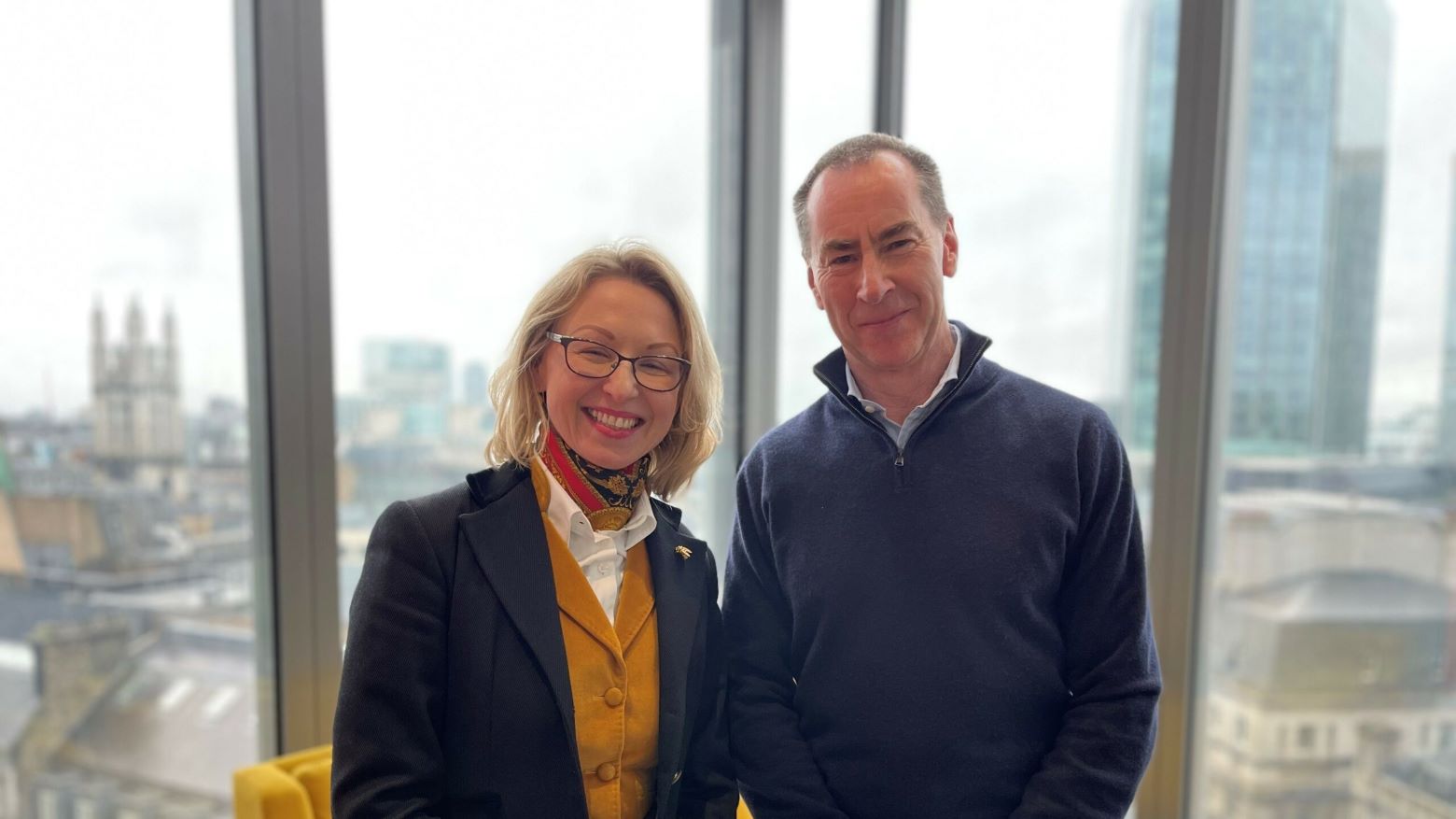
The appointment brought him into a company combining language expertise with software development. Guildhawk’s work involved private data, AI translation and human expertise; its partnerships included Gammon Construction in Hong Kong. Ian Miller moved to the CFO role as part of the company’s development. Brooks-Wadham’s arrival sat within those wider changes, rather than being an isolated addition to a list of directors.
“I love scaling businesses”
Mark Brooks-Wadham, on joining Guildhawk
The line is an economical explanation of the move. The familiar task was growth, now approached from a chairmanship. GAI Translate’s team page continues to list him as Guildhawk’s chairman. His working life had carried him from office systems to communications infrastructure and then into a business translating across languages.
Away from business, he cycles and runs, and enjoys family life with his wife and two daughters. These are modest details beside the transactions and job titles, but they return the story to a person with interests outside a company. His career has included starting, selling, buying and handing over. There is room in that sequence for a bicycle, too.