Ofer Smadari’s company once buried a monument to an obsolete software category outside a security conference. The category was SOAR, short for security orchestration, automation, and response. In an industry fond of promising that yesterday’s products are finished, Torq had brought funeral arrangements. A slide presentation would have been easier to carry.
The joke suits a business that has already outlived one version of itself. Before Torq became a security automation company, it was StackPulse, aimed at reliability engineering. Before Smadari started that business, he had helped build another one and sell it to Symantec. His career has involved several opportunities to declare a job finished. He keeps finding reasons to reopen the file.
By January 2026, Torq had announced a $140 million funding round at a $1.2 billion valuation. Those numbers supply a tidy ending to a startup story. Smadari’s more interesting decisions happened earlier: choosing the same partners again, recognizing that a product needed a different market, and building a sales operation that could function beyond the founder’s own conversations.
A successful exit, then a blank page
Smadari arrived at entrepreneurship with a background in the less photogenic parts of technology: security operations, infrastructure, sales, and the work of getting businesses to buy something. He held operational security positions in financial services and managed sales and business operations at Adallom, which Microsoft acquired. These jobs put technical problems and commercial decisions within the same field of view.
At Luminate Security, he joined Leonid Belkind and Eldad Livni to tackle access to corporate applications. The company’s approach belonged to the zero-trust movement: give people access to the applications they need, with controls around that access, rather than relying on a traditional network perimeter. It addressed a practical complication of corporate computing as applications spread across cloud and hybrid environments.
Symantec acquired Luminate in February 2019. For the founders, that transaction supplied experience they could bring to another business. It also gave them a particular sort of knowledge about one another. They had worked together while their choices still had consequences beyond a meeting room.
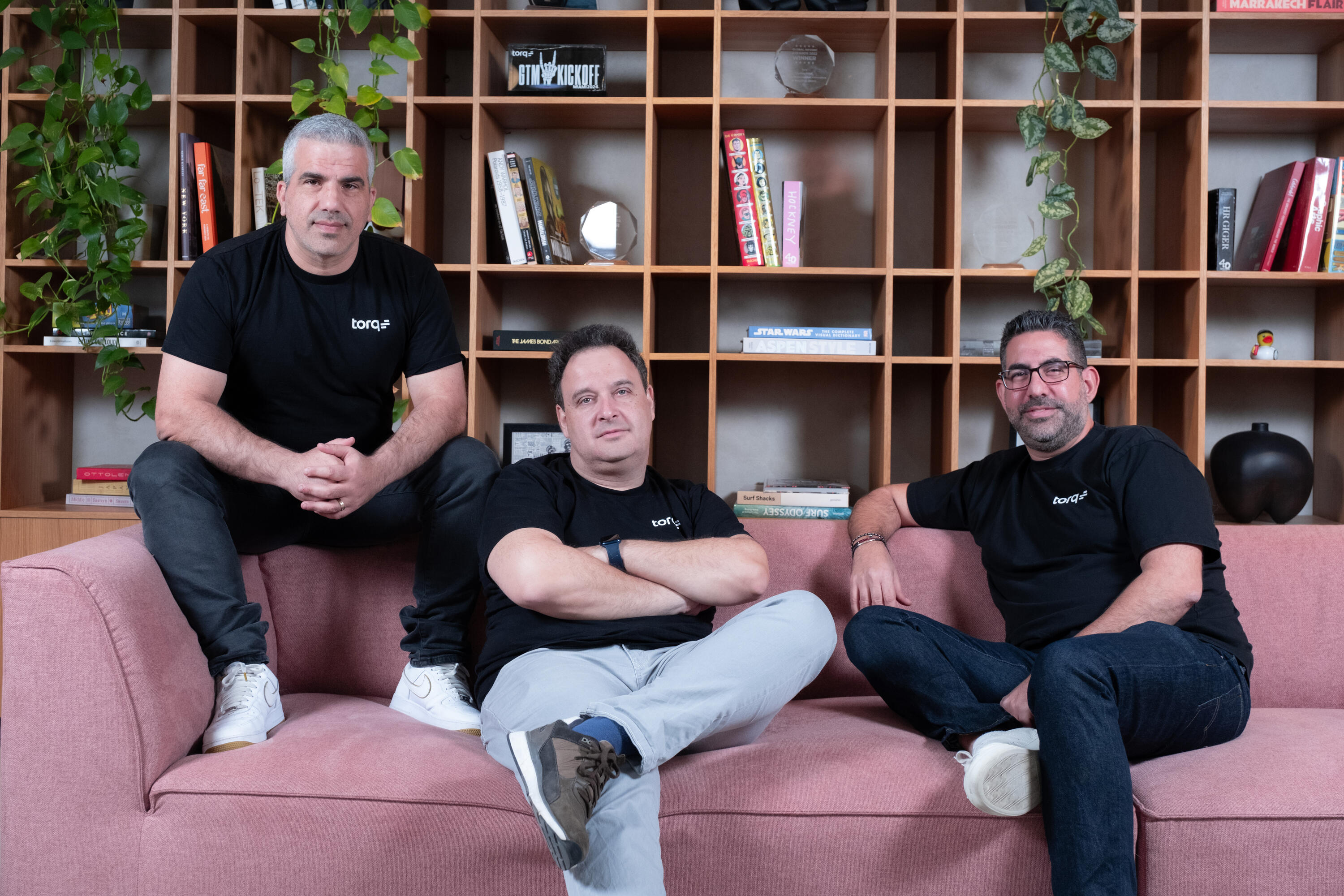
In 2020, the three founded the company that became Torq. Smadari became CEO, Belkind CTO, and Livni would serve as chief innovation officer. Their reunion is the durable relationship in this story. Products and market descriptions changed; the founding partnership continued.
“We know how to work together”
Ofer Smadari, 2022
When Smadari described that advantage in 2022, he connected it to their previous company and the platform they had built together. Familiarity offered a working foundation. The new company would still have to earn its place with customers, who tend to be less moved by a founder’s previous exit than a founder might reasonably hope.
The customers changed the plan
StackPulse began around reliability engineering and incident response for developers. That is a recognizable problem: a service fails, somebody must establish what happened, and a series of actions must put things right. The team was building technology to coordinate that work.
But building a useful system and building a repeatable business around it are separate tasks. In his accounts of the pivot, Smadari has described the difficulty of gaining the traction the team wanted. Security teams emerged as a more promising audience. The founders changed direction toward a market they understood from their own careers.
Seen from the comfortable distance of a later valuation, the change looks straightforward. At the moment of decision, a pivot requires the people running a company to revise the explanation they have already given employees, investors, and themselves. A founder must persuade others to continue while acknowledging that the original plan needs replacing.
By September 2022, Smadari said Torq had reached 50 customers after eight months of selling the product. That is a more revealing milestone than the vocabulary attached to the software. Buyers had begun committing to the revised direction.
He also had to make selling teachable. A public account of a Bessemer panel describes him spending roughly a year selling personally, then returning to Gong call recordings as he developed the sales team. He listened, adjusted the approach, and repeated the process. It is a small, concrete picture of the CEO’s work: less ceremonial bell-ringing, more listening to a conversation again.
- 2019Symantec acquires Luminate Security.
- 2020The same founders start again.
- 2026Torq announces its Series D.
The work between the warnings
Smadari’s argument for Torq begins with the person sitting between security tools. An alert needs context. Information has to be checked somewhere else. A decision has to become an action, which may require another system. Repeating those steps across an expanding queue makes the human being an integration layer with a chair.
In his January 2026 writing, Smadari argued that defenders could not keep answering increasingly automated attacks by adding manual effort. His proposed response was an AI-driven security operations center, or SOC, in which software takes on more triage, investigation, and response work. The ambition concerns the sequence from warning to resolution.
A customer example gives that ambition a less abstract scale. Torq’s Valvoline case study reports six to seven analyst hours saved each day. It describes a team dealing with difficult integrations and time-consuming phishing reviews, then using automation to move information and initiate containment actions. That is a reported customer result, with the useful modesty of being about a particular team.
Analyst time saved in Torq’s Valvoline case study. A customer-reported result, rather than a promise for every deployment.
During 2026, the product announcements followed the same operational concern into different corners. Agentic Builder, introduced in March, lets security professionals describe an intended outcome in natural language, then uses that instruction to plan, build, and test workflows. It extends the automation argument to the people who otherwise have to construct the automation.
Torq’s May acquisition of Jit added context graph technology. The aim was to give investigations a current picture of assets, identities, relationships, and the state of an organization. An alert on its own tells an incomplete story. Context determines what the alert means to the business receiving it.
In July came SOC Brain, which Torq described as a learning layer drawing on historical cases and analysts’ decisions. Its Recall, Reflex, and Retrospect components address precedent, team judgment, and earlier investigations. The company says each customer’s learning remains separate. Smadari’s stated distinction was between retrieving history and drawing new conclusions from it.
These choices raise the standard for his own proposition. Once software helps investigate and act, customers need ways to examine the reasoning, correct the result, and retain control. Torq describes confidence-based escalation and auditable decisions as part of that design. The ordinary question remains wonderfully stubborn: can the team trust what happens next?
A skeleton at the software conference
Trust is serious business. Torq’s public presentation leaves room for a joke. At Black Hat in 2026, the company arrived with a 20-foot inflatable skeleton, tattoos, hot dogs, and a live news desk. The marketing department had evidently decided that the conference floor could accommodate both software demonstrations and a modest carnival.
The buried SOAR monument belongs to that same approach. Smadari discussed it while talking about the company’s direction and its argument against older automation methods. A physical stunt gives a category debate something people can remember. It also puts a rather public obligation on the vendor to explain what should replace the thing it has pronounced dead.
His leadership advice is more restrained than the scenery. He has emphasized maintaining standards when choosing leaders, and leading transparently and courageously while the business moves quickly. That advice fits a company whose own history includes changing its premise. People need to understand why the direction has moved and what is expected of them afterward.
A larger company needs a larger circle
Torq’s January 2026 financing was led by Merlin Ventures and brought its announced total funding to $332 million. Smadari identified expansion into United States federal and public-sector markets among the priorities. The capital gives the company resources to pursue that plan; turning the plan into deployments involves a different set of relationships.
Announced January 2026. Financing figures describe Torq.
Some of those relationships begin with users. In February, former Virgin Atlantic CISO John White joined as Field CISO after using Torq at the airline. His role includes helping other security leaders evaluate and implement the approach. A person who has carried responsibility for a deployment brings a different conversation from someone introducing a product for the first time.
In September, Merlin named Torq a technology partner for federal SOC modernization and said it was supporting the company’s path toward FedRAMP authorization. That wording matters: pursuing the authorization is part of the work. Federal expansion brings procurement, compliance, and implementation requirements along with the opportunity.
October brought REV, Torq’s Revenue Enablement Velocity partner program. Smadari’s position was that partners should retain the customer relationship and build services businesses around the platform. The founder who once sold the product himself was describing how other organizations could sell, implement, and operate it.
There is a pleasing tension in that trajectory. Smadari argues for removing repetitive work from security teams, while his own job keeps accumulating new forms of work: selecting leaders, revising a market, learning how to sell through others. The experience of building Luminate gave him partners for the return trip. Building Torq required them to change the route together.