Som Ray liked his bicycle. The hill was becoming a problem. Riding between Park Slope and the Brooklyn Navy Yard had initially been a pleasure; repeated trips up Vanderbilt Avenue made the arrangement less charming. He wanted some assistance, but he also wanted to keep the bicycle. A perfectly sensible request, unless the answer involved buying another one.
The eventual result was CLIP, the company he co-founded with Clément de Alcala in 2018. Its removable motor gives compatible bicycles electric assistance. The idea sounds compact enough to fit on a business card. Getting there required a longer journey through architecture, urban research, software and a few different versions of the daily commute.
Ray’s story is interesting for the change in scale. An architect can begin with the arrangement of a city and end up paying close attention to someone’s thumb on a handlebar button. Both concern how people move. One looks persuasive in a plan. The other has to help somebody get home.
The city before the motor
He grew up in Chandigarh and cycled to school. The compact city, associated with Le Corbusier’s modernist planning, helped shape his interest in urban form. He also had an artistic ambition and a national art scholarship. His mother supported the art; his father questioned its prospects as a career. Architecture offered a meeting place for drawing, science and engineering.
After studying architectural design in Delhi and practicing there, Ray continued his education at Columbia University in New York. He describes that experience as expanding his sense of what architecture could address: a city, a space, an object, the relationships between them. The building was one possible scale of the assignment.
There was also the less elegant education provided by a crowded bus. During two years of commuting in New Delhi, he remembers holding onto the doorway until passengers got off and space appeared inside. The routine supplied a view of urban movement from somewhere considerably less comfortable than a drafting table.
In his own account of that period, Ray revisits the assumptions behind his architectural education. He had been drawn to cities conceived as orderly mechanisms, with people moving between their functions. Yet the commuter had to live inside the mechanism. The distance between a well-arranged diagram and a tolerable journey became part of his design problem.
That is a useful tension in his biography. He could appreciate a city’s formal ambition while remembering what it felt like to negotiate its transport. A person waiting for room on a bus does not experience a flow. They experience a wait. Any design that hopes to improve the journey eventually has to answer to that distinction.
A hill edits the brief
At MIT, Ray joined the Smart Cities group led by William Mitchell. The research included folding and stackable cars, attempts to reduce the space vehicles occupied as well as their environmental footprint. It was an invitation to apply design thinking beyond a conventional architectural practice.
He later came to question the automobile’s place at the center of the exercise. Making a car smaller still left the car as the starting assumption. The bicycle offered another starting point, with a familiar relationship between rider, machine and street. Reconsidering that ordinary object meant reconsidering the problem itself.
In 2009, after MIT, he returned to India and started an electric auto-rickshaw venture. Looking back, he says the battery technology was too early. The detail matters because CLIP did not emerge from an uninterrupted series of neat conclusions. A transport idea has to meet the technology available to build it.
His work also spread across other forms. He founded the consultancy Dplay and the data visualization platform Timescape, whose customers included UNESCO and the World Wildlife Fund. In Brooklyn, he worked as creative director at Midnight Commercial on consumer experiences for brands including Target, Samsung and Cartier.
The range suggests a recurring interest in the encounter between a person and a system. A map, a brand experience and a vehicle present different problems, but each must be understood and used. The eventual bicycle motor brought those questions into a particularly direct relationship: attach an object, press a button, keep pedaling.
Then came the Brooklyn commute. A conversion kit could provide power, but Ray wanted an attachment he could remove easily. Replacing a wheel or making a lasting alteration did not match the brief. His bike was still useful. The climb needed an amendment.
The five-second proposition
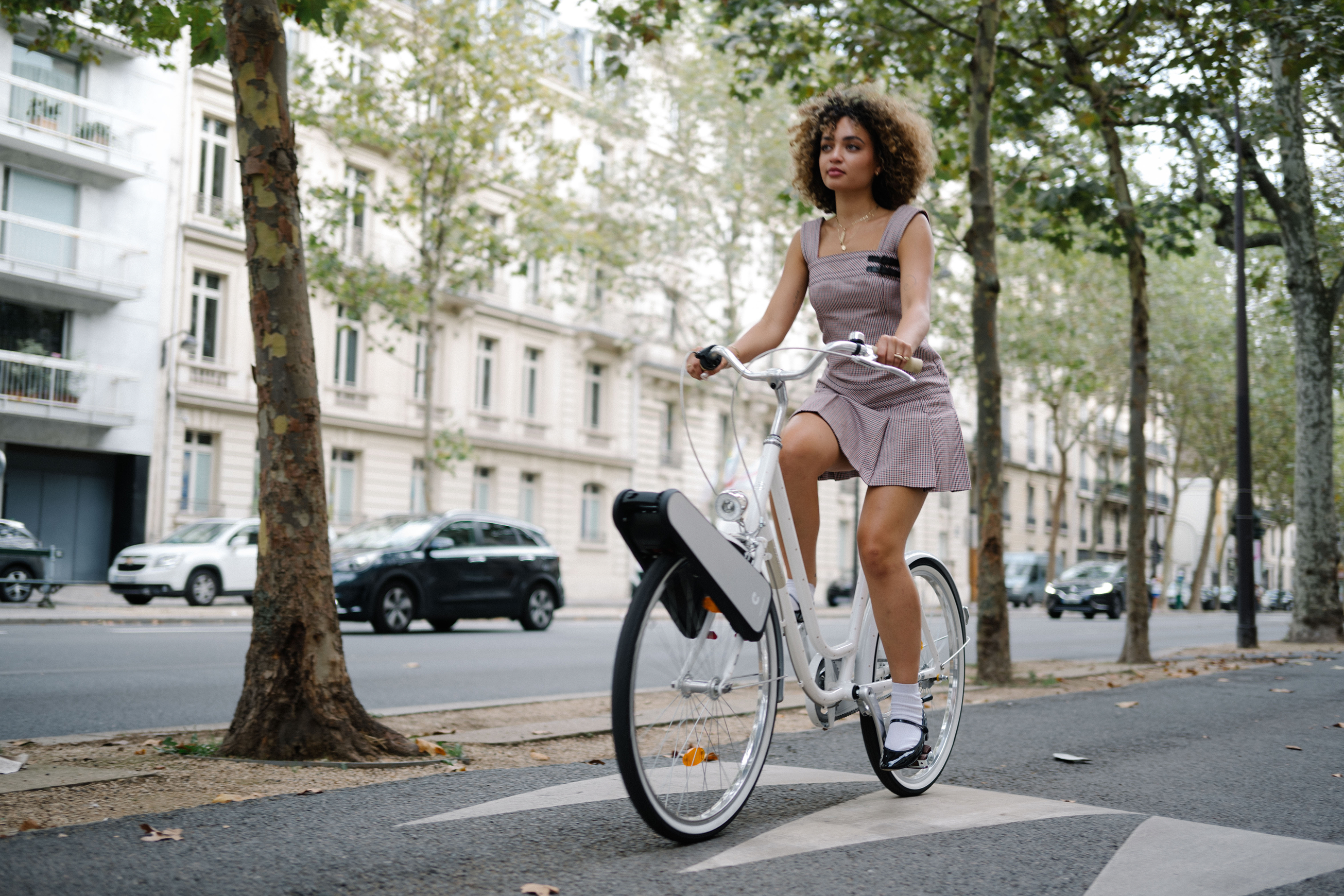
CLIP attaches at the front fork of a compatible bicycle. A friction-drive roller acts on the tire, and a small handlebar controller lets the rider request assistance. The motor and battery travel together in a removable unit. Its advertised five-second attachment time makes the physical act of using it central to the pitch.
Compatibility remains part of that physical reality. CLIP’s own guidance excludes cargo bikes and bicycles with front suspension. The appeal of an adaptable device does not make bicycle geometry disappear. A useful product has to fit the machine standing in front of its customer.
A removable motor also changes what a purchase asks of someone. The rider can keep a familiar frame and saddle. Electric assistance can be present for a commute and absent for another ride. The bicycle retains a life outside the device, an appealing arrangement for anyone reluctant to turn every outing into an equipment decision.
An early demonstration put that premise to work in Mexico City. CLIP was one of six finalists chosen from 108 applicants for the FIA Smart Cities Global Start-Up Contest. Poray Bikes lent the team a rental bicycle for the presentation. The alpha prototype fitted it without difficulty, giving Ray a practical example of the adaptability he was trying to explain.
Back in Brooklyn, another audience supplied money as well as attention. In June 2019, CLIP won the Make It in Brooklyn Future of Transportation pitch contest and its $5,000 prize. The early proposition had found judges willing to back it. A pitch trophy cannot manufacture a product, but it can give the next round of work a little more room.
An introvert makes an entrance
Ray does not describe himself as a natural performer. “I’m an introvert at heart,” he wrote while reflecting on speaking at What Design Can Do in Delhi. Public appearances brought excitement and a measure of panic. For that talk, he chose to ride a CLIP-equipped bicycle onto the stage.
He credited Xander Straat with the suggestion and described the entrance with amused self-awareness. It was a rather literal way to bring a subject into the room. The bicycle could make its case before the speaker had settled into making his.
The anecdote offers a more particular picture than the usual founder photograph beside a product. Ray had something to show, and showing it required him to step into a role he found effortful. The humor was part of his telling. He seemed quite aware that riding into a talk about mobility was both useful and a little ridiculous.
At the Bharat Mobility AutoExpo in Delhi, he also gave an interview in Hindi to an enthusiastic local YouTuber. Ray was pleased that his Hindi held up, and tickled by the interviewer’s repeated description of CLIP as “Dhasoon.” He treated the exchange as evidence that people connected with the possibility of affordable electric mobility in India.
Those public moments bring the design back into conversation. An audience can ask what it costs, whether it fits and how it would be used. A founder talking about a familiar journey has to listen to other people’s journeys too. The device is portable; its meaning changes with the person considering it.
The commuter he used to be
Affordability became a further assignment. With BOLT, CLIP began developing a lower-cost motor unit aimed at emerging economies. Global Citizen’s 2025 account described it as a pilot. The ambition was to reach people for whom the original device still represented too large a purchase.
The question is personal in Ray’s telling: what would have been within reach of his younger self, commuting in Delhi? A product priced for a Brooklyn customer could leave that earlier commuter outside the conversation. Lowering the entry cost requires decisions about the object and about how people obtain it.
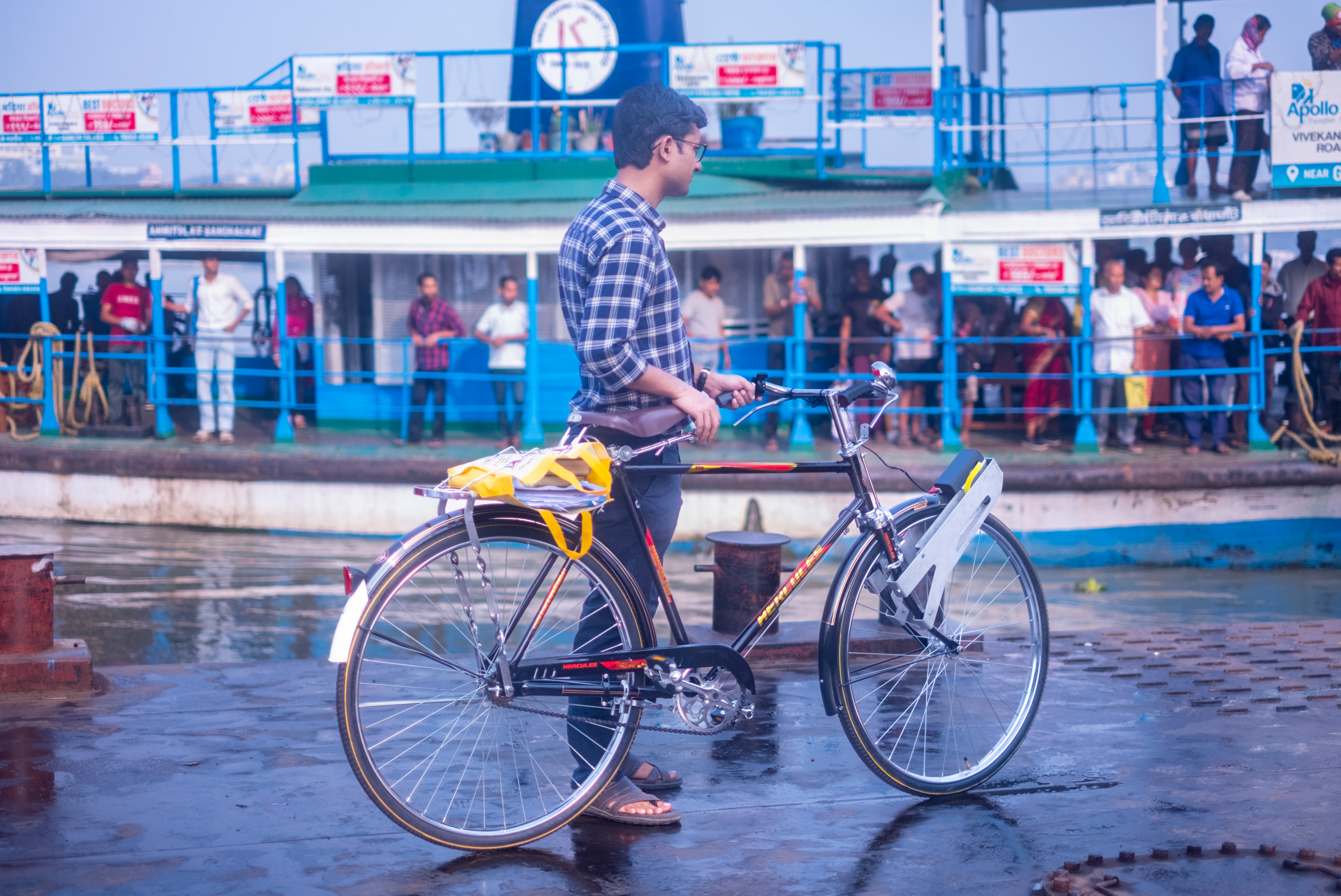
In January 2026, CLIP’s next possibilities included a planned New York lending-library pilot for areas with limited transport access. Borrowing a device introduces a different relationship to electric assistance. The initial question becomes whether someone can use it when needed, with ownership no longer the only route into the experience.
The plans also reveal how much of the work sits outside the motor. Distribution, availability and maintenance shape whether a device becomes part of a routine. An elegant attachment is useful only when it reaches a rider who can afford it and has a reason to use it.
Ray’s team includes de Alcala as COO, David Krawczyk as product lead and Sorah Park in partnerships and communications. Their roles reflect those wider requirements. A commuter meets one finished object; behind it sit engineering, commercial work and the task of explaining it clearly.
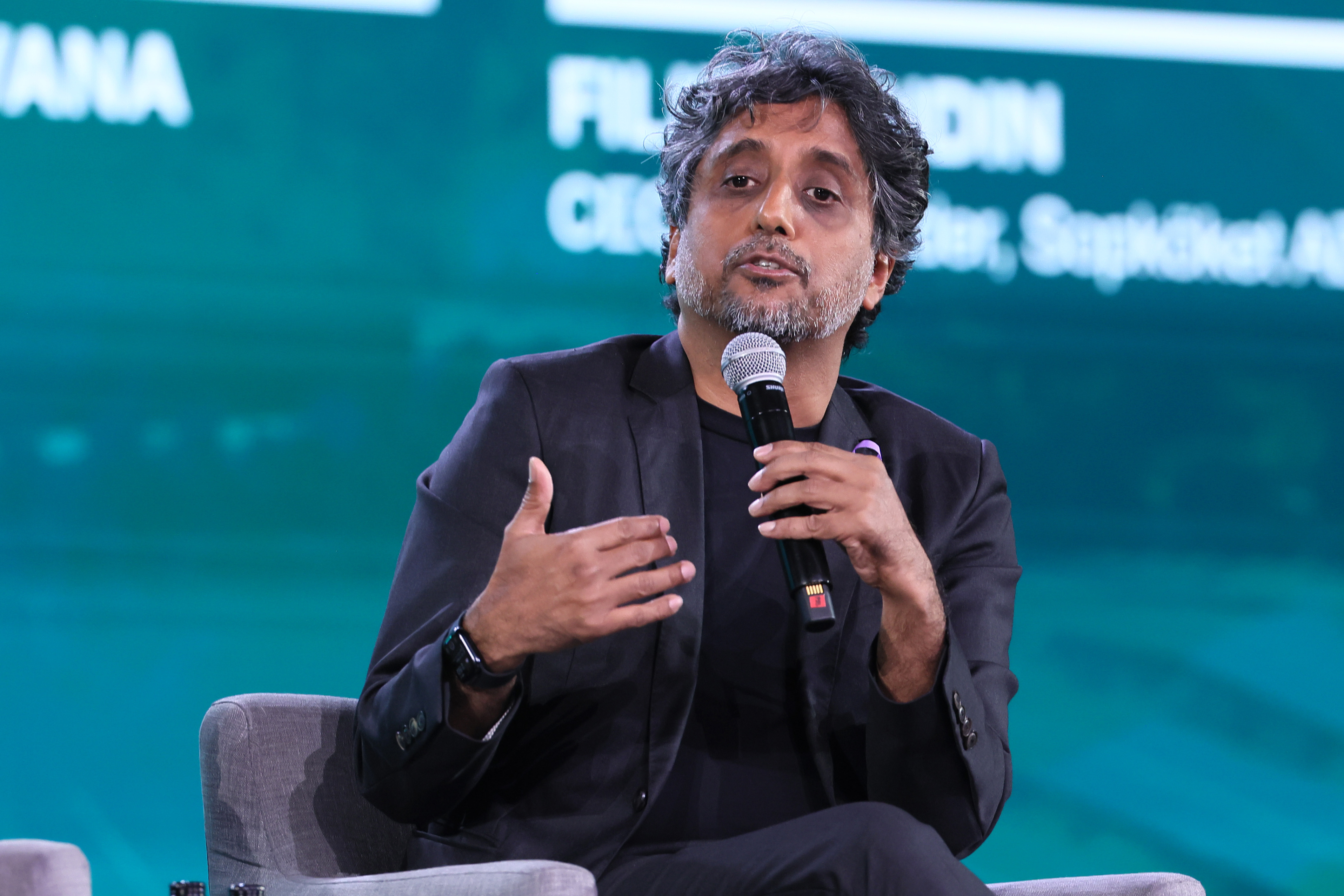
In November 2025, Ray received a Global Citizen and PayPal Small Business Impact Award, with a $25,000 grant. He appeared at Global Citizen NOW in Johannesburg. Recognition had taken him well beyond his original route to work, while the subject remained the ordinary trip.
A sign addressed to the future
There is another journey in Ray’s writing: walking toward the United Nations with his son for a climate march. His son’s sign showed flames and asked that their home be saved. A familiar environmental message acquired a different weight when his own child was carrying it.
Ray connects fatherhood with a more personal relationship to the future. The horizon extended beyond his own lifetime. In explaining his motivation, he asks which part of a large, urgent problem his experience equips him to address. His answer stays close to urban movement and the bicycle.
“From the start, CLIP’s mission has been to make urban commuting cleaner and more accessible not just in one city, but globally.”Som Ray
By October 2025, he was also making a commercial argument for conversion. In an essay about e-bike business models, he questioned the expense and complexity of asking riders to replace entire bicycles. His case placed installation, shipping and the existing bike at the center of the discussion. Design choices had become business choices too.
What holds the story together is a willingness to return to an object he already knew. The school bicycle, the crowded bus, the research car and the Brooklyn climb each supplied a different view of movement. CLIP carries one particular response: preserve the bicycle and add help when the journey calls for it.
Somewhere between the city plan and the ride home, Ray found a smaller place to work. The hill stayed where it was. He changed what he could bring to it.