A sanctions-screening system has a deceptively simple job: decide whether a name deserves a closer look. The difficulty lives in the details. A date of birth travels through a data transformation. An address arrives incomplete. Two names look almost alike. Turn the sensitivity up and investigators inherit a queue of innocent people. Turn it down and the wrong person may slip through.
- Risk specialists who sell software and hands-on consulting.
- Tools for testing models, governing AI and investigating financial crime.
- Arachnys adds research and evidence capture to the 2026 product picture.
In a published Solytics Partners case study, the work began with those details. The team checked input sources and transformation rules, built text-analytics tests around names, addresses and birth dates, and stress-tested matching scores. Only then did it recommend production settings. The company reports fewer false positives and improved screening effectiveness. The sequence is the interesting part: inspect the plumbing before admiring the engine.
01The people who ask awkward questions
Solytics operates in the space between quantitative consulting and enterprise software. Banks, insurers, lenders and other financial institutions buy its help with credit risk, model validation, financial-crime compliance and data analytics. Its products turn portions of that specialist work into repeatable workflows. A risk team can commission a validation project, adopt a platform, or combine the two.
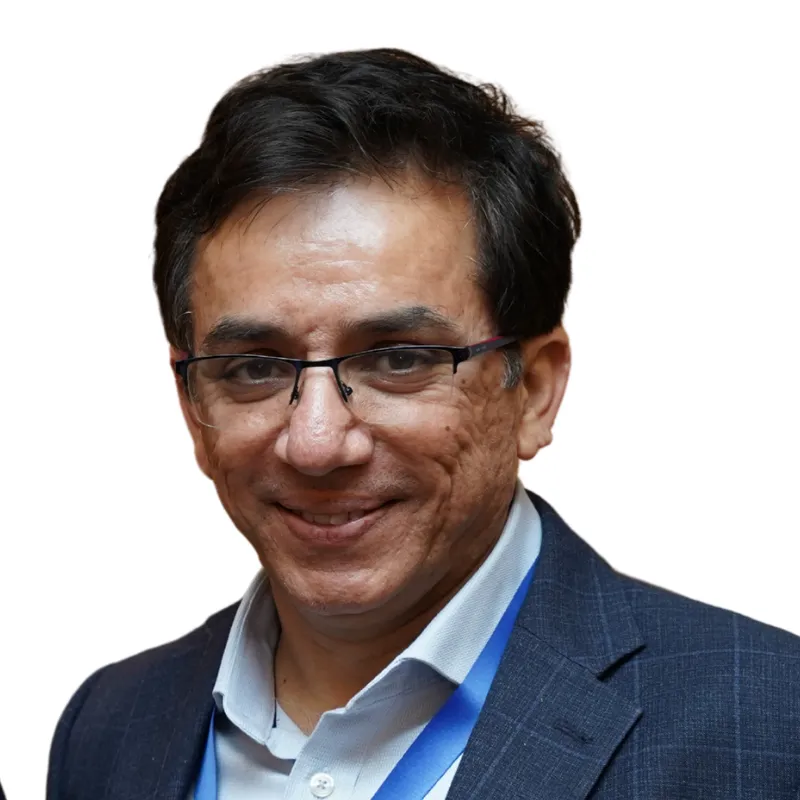
Founder and CEO Vikas Tyagi came to the business after leading the quantitative analytics practice of an S&P Global subsidiary. His conference biography describes a career helping financial institutions across the US, Europe and Asia. The leadership team includes chief analytics officer Dr. Manish Kumar and technology and innovations head Prithivinath Prabhunath. Senior adviser Agus Sudjianto previously headed model risk at Wells Fargo.
That background matters because a model has several audiences. Its developer wants it to perform. Its validator wants to challenge its assumptions. An auditor wants a retrievable record. Selling to all three requires more than a convincing demonstration. It requires an understanding of how institutions disagree, approve changes and remember what happened.
02A model needs a passport
Consider the division of labour in Solytics’ model-risk products. NIMBUS Uno supports development, validation, performance monitoring and automated documentation. MRM Vault manages inventory, ownership, approvals, findings and lifecycle workflows. MoDeVa supplies testing and validation libraries. One product performs analytical work; another gives that work an institutional home.
For a lender, this can mean developing a credit-risk model, testing assumptions and documenting its limitations, then tracking approvals and later performance. NIMBUS Uno advertises prebuilt solutions for expected credit losses, stress testing and other financial-risk tasks. MRM Vault lets institutions configure workflows around their own policies and model jurisdictions.
The same logic now extends to generative AI. Solytics’ AI-governance offering combines inventory and risk tiering with evaluation, observability and runtime controls. Its published capabilities include checking accuracy, bias and hallucination risk. The proposition is understandable: an organisation adopting an AI application should be able to identify its owner, examine its tests and follow its behaviour after release.
SAS offers model inventory and governance too. Solytics therefore competes in an established risk-technology market. Its distinctive pitch is the combination of specialist project delivery, analytical execution and governance products within one offering. Buyers should judge that combination by how well the pieces fit their actual approval process.
Develop · validate · monitor
Inventory · approve · track
Testing · validation libraries
03The alarm is only the beginning
Screening produces questions; investigators still need answers. SAMS checks customers and payments against sanctions, politically exposed person data and adverse media. EMoT handles transaction and fraud monitoring. ATOMS tunes thresholds in rule-based monitoring systems, while RA Vault supports financial-crime risk assessment. Together, these products address different stages of the same operational problem.
On 20 January 2026, Solytics announced its acquisition of Arachnys. Arachnys brought investigation workflows, entity research and evidence capture, including its Navigator and Surveillance platforms. The stated intention was to connect screening and monitoring with the research needed to resolve cases. Solytics also committed to supporting existing Arachnys customers.
The move offers a useful clue to strategy. A detector can identify an unusual relationship, but a reviewer needs context and a defensible conclusion. Buying investigation capability broadens the work Solytics can support after an alert fires. The acquisition announcement frames that as complementary capabilities, rather than a change of business.
“AI governance is no longer optional, the challenge is controlling it at scale across GenAI, agents, and models.”
Vikas Tyagi · April 2026
04Count the weeks, then read the small print
ATOMS makes a concrete time claim: a tuning and validation exercise lasting four to six weeks can become a two-to-four-week task. Its process covers data sourcing, parameter analysis, threshold optimisation, sampling and documentation. Those are company estimates, useful for framing a pilot rather than predicting every implementation.
The business sells enterprise platforms alongside consulting and execution services. For eligible fintech startups, there is a specific entry offer: SAMS access for twelve months with 10,000 screening credits. Applicants must have incorporated in April 2021 or later, have a website, and be new customers. Transaction screening can consume multiple credits; custom enhancements are excluded unless accepted.
InCred Insight adds another route to customers. The firms announced a strategic partnership in October 2024, joining Solytics’ analytics and technology with InCred Insight’s financial-services advisory expertise. The collaboration illustrates the company’s commercial position: technical products accompanied by people who understand the institutions buying them.
05Copy the order of operations
The most transferable lesson is in the screening case. Start with the source data and the transformations. Build tests that resemble troublesome inputs. Examine sensitivity. Adjust scores with evidence. Preserve the reasoning. Teams can copy that order even when they use different software, because it makes the decision reviewable.
There are conditions attached. Threshold tuning depends on representative data and meaningful sampling. An inventory depends on teams registering systems and keeping ownership current. A workflow depends on someone acting on findings. These are practical implications of the products’ design: automation can organise the work, while the institution must supply the judgement and responsibility.
Solytics’ careers page advertises hybrid working, employee stock options, mentoring and learning opportunities. Its Indian entity is listed as Great Place to Work certified. Such details suit a business whose software encodes specialist labour: retaining the people who understand the problem helps preserve the knowledge behind the tools.
The appeal of Solytics is easiest to understand at the moment a model’s answer becomes a business decision. Someone must know where the data came from, why the result passed its tests and who approved its use. Solytics has built a business around making those questions easier to ask - and harder to evade.
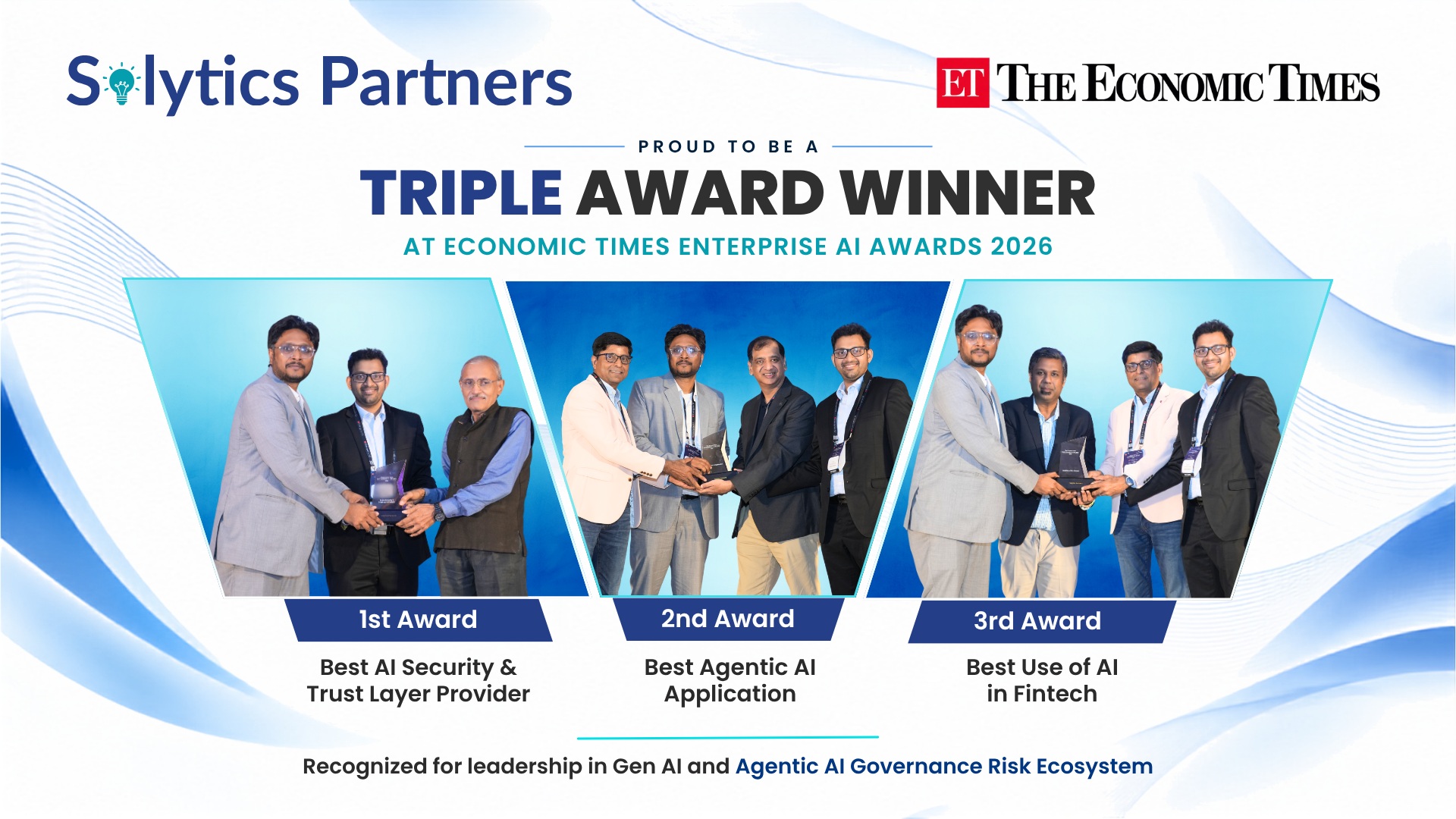
Website, case studies and news, LinkedIn and YouTube channel.